Side Dishes
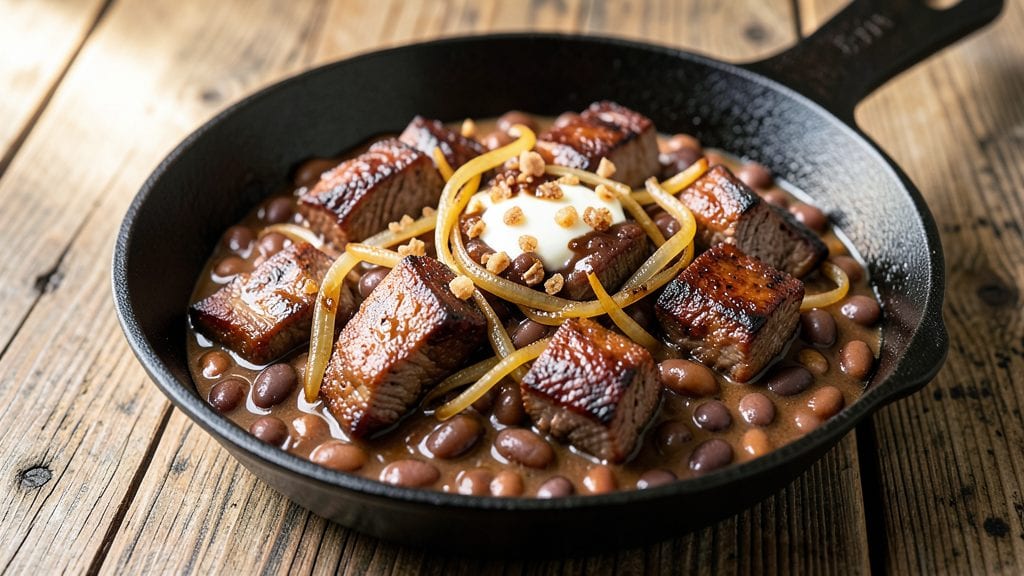
This baked beans with brisket recipe transforms humble ingredients into a smoky-sweet masterpiece that brings barbecue flavors to your table without the grill. The secret lies in slow-cooking brisket until fork-tender while developing deep, caramelized bean sauce—two components that become one unforgettable dish when combined.
I’ve perfected this method over years of testing, ensuring the brisket stays juicy and the beans achieve that perfect balance of sweetness and smokiness.
The process begins with a low-and-slow approach for the brisket, using just salt, pepper, and time to break down tough fibers into melt-in-your-mouth perfection. Meanwhile, the beans simmer with molasses, brown sugar, and spices until thick and rich, absorbing all the brisket’s rendered juices.
This isn’t just a side—it’s the heart of your meal, where every bite delivers layers of flavor that stand up to bold, hearty proteins.
By the time you plate this dish, you’ll have golden-brown beans glistening with caramelized edges, their sweet-savory sauce clinging to tender brisket slices.
The aroma alone will have everyone gathering at the table, and the first bite proves why this recipe deserves a place at your holiday spread or weekend dinner. Ready to create a dish that tastes like it came from a pitmaster’s kitchen?
This recipe delivers restaurant-quality results with minimal effort—just a few hours of hands-off cooking and a cast-iron skillet or Dutch oven. Whether you’re feeding a crowd or treating yourself to a slow-cooked feast, the combination of tender brisket and velvety beans creates a dish that’s both comforting and impressive.
Let’s get started on a meal that’s as rewarding to make as it is to eat.
Ingredients for baked beans with brisket
Six hearty ingredients transform into smoky-sweet baked beans that pair perfectly with tender brisket.
| Ingredient | Amount | Notes |
|---|---|---|
| Dry Navy Beans 🥫 | 2 cups | Unsoaked, rinsed thoroughly |
| Beef Brisket 🥩 | 3 lb | Flat cut, trimmed of excess fat |
| Unsalted Butter 🧈 | ½ cup | Cold, cut into chunks |
| Molasses 🍯 | ½ cup | Dark, unsulphured preferred |
| Light Brown Sugar 🍚 | 1 cup | Packed firmly |
| Yellow Onion 🧅 | 1 whole | Medium, diced |
| Garlic Cloves 🧄 | 6 cloves | Peeled, minced |
| Kosher Salt 🧂 | 2 tbsp | Diamond Crystal preferred |
| Smoked Paprika 🌶️ | 1 tbsp | For authentic smokiness |
| Ground Black Pepper 🌶️ | 1 tsp | Freshly cracked |
| Apple Cider Vinegar 🍎 | ¼ cup | For tangy depth |
| Dried Thyme 🌿 | 1 tsp | Or 1 tbsp fresh |
| Bay Leaves 🍃 | 2 whole | For aromatic complexity |
| Beef Broth 💧 | 1 cup | Low-sodium preferred |
| Hot Sauce 🔥 | 1 tbsp | Optional, for heat |
The brisket is the backbone of this dish—look for a well-marbled flat cut at your butcher or grocery store's meat counter. Costco and Whole Foods often carry excellent options, but don't overlook your local butcher for the freshest cut. Trim any thick fat caps to about 1/4-inch thickness for even cooking. The beans? Navy beans are traditional, but pinto or great northern work too—they just need slightly longer soaking. If you're short on time, use canned beans (drained and rinsed) and add them during the last hour of cooking. For the molasses, unsulphured is key—it has a cleaner, richer flavor that won't overpower the dish.
No molasses? Substitute with 1/4 cup maple syrup plus 1/4 cup brown sugar for a similar sweetness profile. Short on beef broth? Water plus 1 tsp soy sauce works in a pinch. The smoked paprika can be swapped for regular paprika plus a pinch of liquid smoke (about 1/4 tsp), but you'll lose some depth. For the vinegar, apple cider is ideal, but white vinegar or red wine vinegar will do. Need extra heat? Add cayenne pepper to taste—start with 1/4 tsp and adjust. The thyme can be fresh or dried (use half the amount if fresh), and the bay leaves should be removed before serving unless you're a fan of their subtle flavor.
This dish tastes even better the next day as flavors meld. Store leftovers in an airtight container in the fridge for up to 5 days, or freeze portions for 3 months. For reheating, add a splash of broth or water to loosen the sauce—microwave on high for 2-3 minutes or warm in a skillet over medium heat. The beans will thicken as they cool, so don't be shy about adding a little liquid when reheating. Double the recipe if you're feeding a crowd—it's perfect for potlucks or holiday gatherings where everyone wants seconds.
Why You'll Love This Recipe
- One-Pot Magic: I swear by this recipe when I’m too tired to scrub pots. Soak the beans overnight, toss everything in a Dutch oven—brisket, molasses, brown sugar—and let the oven do the work. No flipping, no stirring, just boom, done.
- Molasses-Kissed Richness: That slow-cooked brisket falling apart in a sauce thickened with butter and molasses? It’s like a hug in a bowl. Sweet, smoky, and just salty enough to make you lick the spoon.
- Game-Day Crowd Pleaser: Between us, this is my go-to for tailgates or lazy Sundays. The beans hold up for hours, and the brisket’s tender enough that even my picky uncle asks for seconds. (Yes, even on a Tuesday night.)
- Budget-Friendly Feast: Dry beans and brisket stretch this into meals for days. I make a double batch, freeze half, and still have leftovers that taste better the next day. Frugal? Absolutely. Delicious? Ridiculously.
Step-by-step instructions for baked beans with brisket
This slow-cooked masterpiece delivers deep smoky-sweet flavors that develop over hours of gentle heat.
Prepare the Beans and Brisket
Start by rinsing the 2 cups dry navy beans under cold water until the water runs clear. This removes any debris and prevents cloudy cooking water. Place the beans in a large Dutch oven along with the 3 lb beef brisket, cut into 1-inch chunks. The brisket should be completely submerged—if not, add water to cover by 1 inch.
Bring the mixture to a boil over high heat, then immediately reduce to a gentle simmer. Let it cook uncovered for 30 minutes, skimming off any foam that rises to the surface. This initial simmer helps soften the beans and begin breaking down the brisket's connective tissue. I like to stir occasionally to prevent sticking, but don't worry if some bits cling to the bottom—they'll release later.
Build the Flavor Base
In a medium bowl, combine the 0.5 cup unsalted butter, 0.5 cup molasses, 1 cup packed light brown sugar, 1 whole yellow onion diced, 6 cloves minced garlic, 2 tbsp kosher salt, 1 tbsp smoked paprika, 1 tsp ground black pepper, 0.25 cup apple cider vinegar, 1 tsp dried thyme, and 2 whole bay leaves. Mix until the butter and sugar dissolve into a thick paste—this ensures even distribution of flavors throughout the beans.
After the initial 30 minutes of simmering, carefully pour the flavor mixture into the Dutch oven, stirring gently to combine. The beans should be partially softened but still firm to the bite. Add the 1 cup beef broth and 1 tbsp hot sauce (if using), then bring everything to a gentle simmer again. Here's where the magic begins—the molasses and vinegar will create that signature tangy-sweet balance while the smoked paprika infuses deep, smoky notes.
Slow-Cook to Perfection
Cover the Dutch oven tightly with a lid and transfer to a preheated 325°F oven. Cook for 4 hours, checking occasionally to ensure there's always liquid present—add water or broth if needed to keep the beans submerged. The beans will gradually soften as the brisket breaks down into tender, flavorful pieces.
After 4 hours, remove the lid and increase the oven temperature to 350°F. Let the mixture cook uncovered for another 30-45 minutes until the liquid reduces slightly and the beans reach a creamy consistency. You'll know it's ready when the sauce thickens enough to coat the back of a spoon and the beans are fork-tender with no resistance. The brisket should pull apart easily, releasing its rich, meaty essence into the beans.
Rest and Serve
Once the beans reach the perfect texture, remove the Dutch oven from the oven and let the mixture rest for 15-20 minutes before serving. This resting period allows the flavors to meld completely and the beans to absorb any remaining cooking liquid, resulting in a richer, more cohesive dish.
Garnish with additional smoked paprika or fresh thyme if desired, and serve warm with cornbread or crusty bread to soak up every last bit of that smoky-sweet sauce. The beans should be tender yet hold their shape, with the brisket pieces falling apart at the touch. Each bite delivers a perfect balance of sweet, smoky, tangy, and savory notes that make this dish unforgettable.
Pro Tips For Making Baked Beans With Brisket
- PARBOIL BEANS FIRST: Skip the overnight soak—just boil dry Navy beans for 2 minutes, drain, then cover with fresh water. This cuts down on bloating later, and the beans stay creamier when they bake with the brisket. (Yes, I know it’s faster than soaking, but trust me, the texture’s worth it.)
- SEAR THE BRISKET IN BATCHES: Don’t crowd the pan—work in 2-3 batches for a proper crust. A hot, dry sear locks in flavor, and those caramelized edges melt into the beans during baking. I learned this the hard way when my first attempt came out greasy instead of golden.
- DILUTE THE MOLASSES: Mix the molasses with a splash of hot broth or water before adding it to the beans. Pure molasses sinks like syrup and burns easily, turning your sauce bitter. Stir it in early and let it blend—your future self will notice the difference.
- USE BUTTER AT THE END: Fold in the unsalted butter in the last 15 minutes of baking, not the start. This keeps it from breaking down into grease, adding richness without making the beans soggy. (I used to add it early, and the texture suffered—now I treat it like a finishing touch.)
Common mistakes when making your baked beans with brisket
Skipping the Soak
I’ve made this mistake more times than I’d like to admit—skipping the soak for navy beans and expecting them to soften properly. Dry beans need time to rehydrate, and without it, they’ll remain tough and chalky even after hours of cooking.
If you’re short on time, use canned beans (drained and rinsed) and add them during the last hour of cooking. Never skip the rinse, though—it removes debris that can make your beans bitter. 🌱
Overcrowding the Pot
Packing too many beans into your Dutch oven can lead to uneven cooking and a mushy texture. The beans should have room to move and absorb the flavorful liquid.
I recommend using a large Dutch oven (like a Lodge 5.5-quart) and filling it no more than ¾ full when adding the initial liquid. Overcrowding also traps steam, which can make the beans watery instead of creamy. 🔥
Ignoring the Foam
Those bubbles that rise to the surface during the initial simmer aren’t just annoying—they’re protein and starch that can make your beans cloudy and gummy. Skim them off with a spoon during the first 30 minutes of cooking.
I use a fine-mesh skimmer or a slotted spoon to remove as much as possible. This step is especially important if you’re using canned beans, which often have more starch. 🧹
Rushing the Cooking Time
One of the biggest mistakes is pulling the beans out of the oven too soon. The brisket and beans need that 4-hour slow cook at 325°F to break down properly. Cutting it short leaves the brisket tough and the beans undercooked.
If you’re short on time, consider using a slow cooker on low for 8 hours—it achieves the same result without babysitting the oven. Patience is key here! ⏳
Adding Salt Too Early
Adding all the salt at the beginning of cooking can toughen the beans and make them absorb too much liquid, diluting their flavor. Instead, add half the salt during the initial simmer and save the rest for later.
I like to sprinkle the remaining 1 tbsp of salt over the beans in the last 30 minutes of cooking. This ensures the beans season perfectly without becoming waterlogged. 🧂
Skipping the Resting Phase
Serving the beans immediately after baking is a common mistake that leads to a runny, uneven texture. The resting period lets the flavors meld and the beans absorb the juices from the brisket. Always let the dish rest for 15-20 minutes before serving.
If you’re in a hurry, tent the Dutch oven with foil to keep it warm while it rests. Trust me, this small step makes a huge difference! 🕒
Nutrition facts
Frequently asked questions
Can I make this recipe without a Dutch oven?
A Dutch oven is ideal, but you can use a large oven-safe pot or even a slow cooker. For the oven method, choose a pot with a tight-fitting lid. In a slow cooker, combine all ingredients (except butter) and cook on low for 8 hours, then stir in the butter during the last 30 minutes on high. The texture will be slightly different but still delicious!
How do I know when the brisket is tender enough?
The brisket should pull apart easily with a fork or two fingers when pressed. If it still feels tough, return it to the oven for another 30-45 minutes covered. A good test is to cut a small piece - it should shred like pulled pork, not require chewing. Patience here makes all the difference!
Can I prepare this ahead of time?
This dish tastes even better the next day! Store leftovers in an airtight container in the fridge for up to 5 days. Reheat gently in a skillet with a splash of broth or water until warmed through. For freezing, portion into containers and freeze for up to 3 months. Thaw overnight in the fridge before reheating.
What's the best way to serve these beans?
Pair them with classic barbecue sides like cornbread, crusty bread, or pickled vegetables to balance the richness. For a complete meal, serve with mashed potatoes or grilled corn. The smoky-sweet beans stand up well to bold flavors, so don't be afraid to experiment!
Why do my beans turn out watery?
Watery beans usually mean either too much liquid was added or the beans weren't cooked long enough. Start with just enough liquid to cover the beans by 1 inch, then reduce uncovered in the last 30 minutes. If needed, simmer uncovered for 10-15 extra minutes to thicken. Skim foam during initial cooking to prevent excess starch from making them gummy.