Sauces & Condiments
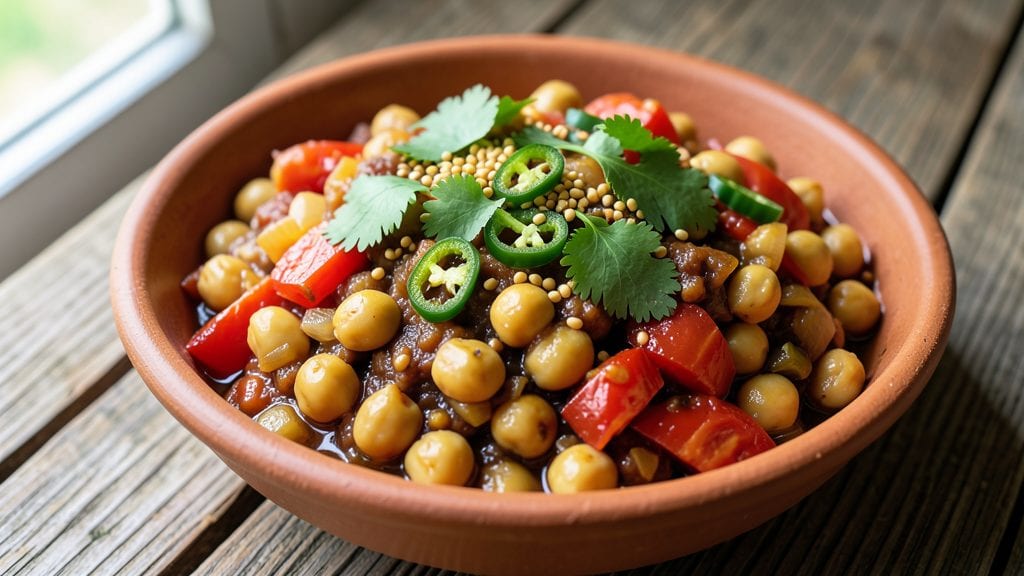
This vegan bean chutney recipe transforms simple chickpeas into a thick, tangy spread that elevates everything from dosas to sandwiches. The blend of spices, lemon, and tomatoes creates a bold, spreadable texture that stays fresh for days in the fridge.
I developed this version after realizing how versatile a good chutney could be—far beyond just curry accompaniment.
The secret lies in proper soaking and blending techniques that create a smooth yet chunky consistency. A quick tempering with mustard seeds and curry leaves adds depth, while lemon juice keeps it bright and tangy.
This chutney works as a dip, sandwich spread, or curry base—proof that plant-based condiments can be just as rich and complex as traditional ones.
What you’ll end up with is a vibrant, aromatic spread with perfect balance—spicy, tangy, and slightly sweet. The texture is thick enough to cling to bread or vegetables but still spreadable for quick meals. It’s the kind of condiment that transforms ordinary dishes into something special with minimal effort.
Store it in an airtight container for up to 5 days, or freeze for longer shelf life. Here’s how to make it—simple steps for a chutney that tastes like it came from a South Indian kitchen.
Ingredients for bean chutney
Simple pantry staples and fresh spices transform into this vibrant, tangy bean chutney.
| Ingredient | Amount | Notes |
|---|---|---|
| Dried Chickpeas 🌾 | 1 ½ cups | Uncooked, soaked overnight |
| Fresh Tomatoes 🍅 | 2 medium | Ripe, peeled and chopped |
| Yellow Onion 🧅 | 1 whole | Medium, finely chopped |
| Green Chilies 🌶️ | 2 whole | Fresh, seeded and chopped |
| Fresh Coriander Leaves 🌿 | ½ cup | Stems removed, chopped |
| Mustard Seeds 🌱 | 1 tbsp | For tempering |
| Curry Leaves 🌿 | ¼ cup | Fresh, packed |
| Ginger 🌿 | 1 inch | Fresh, peeled and chopped |
| Garlic Cloves 🧄 | 4 cloves | Peeled, chopped |
| Lemon Juice 🍋 | 2 tbsp | Freshly squeezed |
| Cumin Seeds 🌱 | 1 tsp | Toasted lightly |
| Turmeric Powder 🌶️ | ½ tsp | Freshly ground preferred |
| Asafoetida 🌿 | ¼ tsp | Pinch for aroma |
| Salt 🧂 | 1 tsp | Adjust to taste |
| Coconut Oil 🫒 | 2 tbsp | For tempering |
Chickpeas are the base—soak them overnight for a smoother texture. Trader Joe's or Whole Foods carry good-quality dried chickpeas, but any store brand works if they're labeled 'organic'. For the tomatoes, grab the ripeness—they should be firm but yield slightly when squeezed. Fresh coriander and curry leaves make all the difference, so if you're buying them, check that they're bright green and not wilting. The mustard seeds and curry leaves are non-negotiable for that authentic tempering flavor—don't skip them!
No fresh curry leaves? Dried curry powder at half the amount works, but it won't have the same aroma. Short on green chilies? Red chili powder at one-third the amount gives heat without the fresh bite. For the ginger and garlic, fresh is best, but jarred paste in a pinch will do. The lemon juice should be freshly squeezed—bottled just doesn't cut it. If you're making this ahead, add the lemon juice last to keep it bright. The asafoetida is optional but adds that signature umami depth—skip it if you're sensitive to strong flavors.
This chutney keeps in the fridge for 5-7 days if stored in an airtight container. The texture thickens as it sits, so add a splash of water if it gets too stiff. For longer storage, freeze in ice cube trays—thaw and blend with a splash of water to restore consistency. I always make a double batch because it disappears fast—perfect for sandwiches, wraps, or as a dip with veggie sticks.
Why You'll Love This Recipe
- No-Soaking Nightmare: I swear by this trick—just toss dried chickpeas in boiling water for 10 minutes, then simmer until tender. No overnight prep, no forgotten jars in the pantry. That’s 2 hours saved right there, and honestly? The flavor’s richer for it.
- Tangy-Spicy Magic: The tomatoes and green chilies blend into something dangerously addictive—bright, with just enough kick to wake up your taste buds. Between us, the coriander at the end ties it all together like a little herb hug. My husband steals bites straight from the pot.
- Weeknight & Party Star: Slather it on toast for a lazy breakfast, mix it into rice for a quick lunch, or serve it as a dip with store-bought crackers when friends drop by. (Yes, even on a Tuesday night.) It’s the kind of chutney that doesn’t need a fancy occasion to shine.
- Pantry Goldmine: A single batch lasts me weeks—I keep it in the fridge and it only gets better over time. Chickpeas and onions are dirt cheap, and tomatoes stretch further than you’d think. My budget and my taste buds thank me every time.
Instructions for spiced, tangy bean chutney
Here's how to make this vibrant chutney that's perfect for sandwiches, curries, or as a dip.
Soak and Cook the Chickpeas
Start by soaking the 1.5 cups dried chickpeas overnight in plenty of water. The next morning, drain them and rinse well. In a pressure cooker, combine the chickpeas with 4 cups fresh water, 1 tsp salt, and 0.5 tsp turmeric powder. Cook on high pressure for 2 whistles or until the chickpeas are soft and tender. If using a regular pot, simmer for about 45-50 minutes until they're fork-tender.
Drain the cooked chickpeas and set them aside. You want them to be soft but not mushy—this ensures your chutney has the right texture. If they're too firm, cook them a little longer. The chickpeas will be the base of your chutney, so getting this step right is crucial for the final consistency.
Prepare the Spiced Tempering
Heat 2 tablespoons coconut oil in a large pan over medium heat. Add 1 tablespoon mustard seeds and let them sizzle for about 30 seconds until they start popping. Next, add 1 teaspoon cumin seeds and let them toast for another 30 seconds—you’ll smell their warm, earthy aroma.
Now add 0.25 cup curry leaves and 1 inch peeled and chopped ginger. Sauté for 1-2 minutes until the curry leaves turn crispy and the ginger becomes fragrant. Finally, add 4 cloves chopped garlic and 2 whole seeded and chopped green chilies, cooking for another 30 seconds until the garlic turns golden. This tempering step is what gives the chutney its deep, aromatic base.
Blend the Base Ingredients
In a blender, combine the cooked chickpeas, 2 medium peeled and chopped fresh tomatoes, 1 whole finely chopped yellow onion, and 0.5 cup chopped fresh coriander leaves. Add 2 tablespoons freshly squeezed lemon juice and 0.25 teaspoon asafoetida. Blend until smooth, scraping down the sides as needed. You want a thick, paste-like consistency—if it's too thick, add a splash of water to help it blend evenly.
Taste the mixture and adjust the seasoning with salt if needed. The chutney should be tangy, slightly spicy, and well-balanced. This is your chance to tweak the flavors before adding the tempering. If it's too bland, add a little more lemon juice or salt; if it's too sharp, a pinch of salt can help mellow it out.
Combine and Simmer
Pour the blended chickpea mixture into the pan with the tempering. Stir well to combine, then let the mixture cook over low heat for 5-7 minutes, stirring occasionally. The chutney will thicken as it simmers, and the flavors will meld together beautifully. You’ll notice the aroma becoming richer and more complex—this is the moment when all the spices and ingredients come together.
Once the chutney has thickened to your desired consistency (it should coat the back of a spoon but still be spreadable), remove it from the heat. Let it cool slightly before transferring it to a serving bowl. If you prefer a smoother texture, you can blend it again briefly. This chutney tastes even better after it's had time to rest for about 30 minutes, allowing the flavors to fully develop.
Pro Tips For Making Bean Chutney
- SOAK CHICKPEAS OVERNIGHT: I learned this the hard way—rushing the soak means tough, mealy beans that won’t blend smoothly. Use 4 cups water per 1 cup dried chickpeas, add a pinch of baking soda (trust me), and let them sit 12+ hours. The longer they soak, the creamier your chutney will be.
- ROAST ONIONS UNTIL CARAMELIZED: Skip the raw onion hack—roast thinly sliced yellow onions in 1 tablespoon oil on medium heat for 10-12 minutes until deep golden and sticky. This adds sweetness that cuts through the acidity of tomatoes and balances the earthy chickpeas.
- BLANCH TOMATOES FIRST: Toss halved tomatoes into boiling water for 30 seconds before blending—they’ll release their juices and soften faster. No more fighting a thick, stubborn pulp that refuses to break down, even after 10 minutes of blending.
- RESERVE CORIANDER STEMS: Sounds weird, but it works: chop the stems separately and add them to the blended base before mixing in the leaves. The stems pack more flavor and prevent the chutney from turning watery when you add the fresh leaves later. (Your future self will thank you.)
Regional styles of this dish
South Indian Style
In Tamil Nadu and Kerala, bean chutneys often feature black-eyed peas instead of chickpeas for a nuttier flavor. I swap the chickpeas for 1 cup soaked black-eyed peas and add 1 tsp grated coconut to the blend.
The tempering stays the same, but I include 1 tsp fennel seeds with the mustard for a sweet, licorice note. Serve this version with filter dosas or as a dip for mango slices—it’s a staple at South Indian breakfast tables. 🌶️
Andhra Coastal Twist
The coastal regions of Andhra Pradesh take chutneys in a tangier direction. I boost the acidity with 3 tbsp extra lemon juice and add 1 tsp tamarind paste for depth.
The tempering gets a kick with ½ tsp black peppercorns and 1 dried red chili, then simmer the chutney with ½ cup coconut milk for a creamy finish. This version pairs perfectly with seafood curries or puri—its bold tang cuts through rich dishes beautifully. 🍋
Maharashtrian Spiced
Maharashtrian chutneys are all about bold, earthy flavors. I use ½ cup roasted peanuts blended with the chickpeas for crunch, and the tempering includes 1 tsp shahi jeera (caraway seeds) instead of cumin. The chutney gets a touch of ½ tsp amchur (dry mango powder) for tang.
This version is thicker and works as a sandwich spread or with vada pav—its nutty, spiced profile stands up to street food flavors. 🌰
Bengali Mustard Seed
Bengali chutneys often highlight mustard seeds for a sharper kick. I increase the mustard to 2 tbsp and add 1 tsp grated jaggery for sweetness. The blend includes ½ cup fresh mint leaves alongside the coriander, and the tempering gets a pinch of asafoetida for umami.
This chutney is perfect with luchi (deep-fried bread) or as a dip for veggie pakoras—its complex layers of heat and sweetness make it unforgettable. 🌿
Modern Fusion
For a contemporary take, I blend in ½ avocado for creaminess and add 1 tsp smoked paprika to the tempering. A splash of apple cider vinegar replaces some lemon juice for a fruity tang.
This version works as a spread for toast or a dip for sweet potato fries—it’s a crowd-pleaser that bridges traditional and modern tastes. 🍃
Nutrition facts
Frequently asked questions about bean chutney
Can I make this chutney without soaking the chickpeas?
Soaking is essential for the best texture—it prevents the chutney from becoming grainy. If you're short on time, try quick-soaking: Boil the chickpeas for 2 minutes, then let them sit in hot water for 1 hour before cooking. For a smoother result, pressure cooking is ideal—it ensures even softness without overcooking.
How do I adjust the spice level?
Start with 1 green chili for mild heat, then increase to 3-4 for medium spice. For extra kick, add ½ tsp red chili powder to the blend or a pinch of cayenne to the tempering. Always taste as you go—you can't remove spice, so build gradually.
Can I substitute black-eyed peas for chickpeas?
Black-eyed peas work beautifully—they add a nuttier flavor and slightly sweeter taste. Use the same quantity (1.5 cups) and soak them first. For extra authenticity, add 1 tsp grated coconut or ½ tsp fennel seeds to the tempering. This version pairs perfectly with dosas or mango slices.
Why did my chutney turn out too thin?
Thin chutney usually means too much liquid in the blend or insufficient simmering. Next time, reduce the water when blending or simmer uncovered for 5-7 minutes to thicken. For an instant fix, mix in 1 tbsp cornstarch dissolved in water and cook until thickened. Always taste before serving!
How long can I store this chutney?
Keep it in an airtight container in the fridge for up to 5-7 days. The flavors deepen over time! For longer storage, freeze in ice cube trays—thaw and blend with a splash of water to restore texture. Label with the date to track freshness.