
Side Dishes
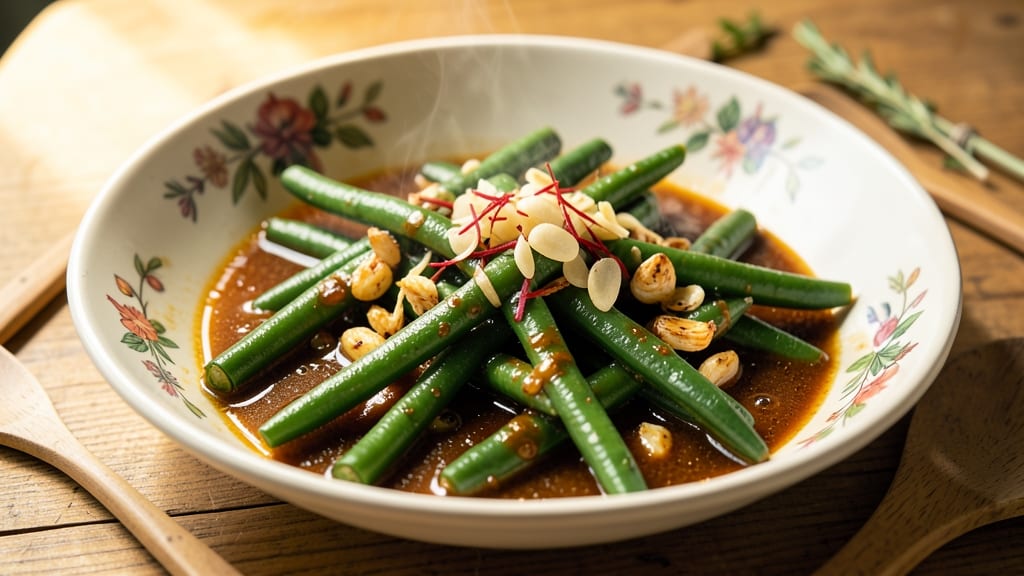
This Filipino string beans recipe transforms simple green beans into a garlicky, soy-kissed side dish that brings authentic monchong flavor to your table in just 20 minutes. The secret lies in balancing sweet soy sauce, aromatic ginger, and crisp-tender beans—no complicated techniques, just bold Filipino taste.
I first discovered this recipe during a family gathering when my lola insisted on making it for our Sunday lunch, and it’s been a staple ever since.
The beauty of this dish is its versatility—it works as a quick side for grilled meats, a light soup base (sabaw), or even a standalone snack. The beans stay crunchy from the quick stir-fry, while the soy-ginger sauce adds depth without overpowering.
Filipino cooking often relies on simple ingredients elevated by technique, and this recipe proves that with just a handful of pantry staples, you can achieve restaurant-quality results at home.
What you’ll love most is how the garlic and ginger infuse every bite with warmth, while the soy sauce adds a subtle umami richness. The dish is ready in under 20 minutes, making it perfect for busy weeknights or last-minute meals.
Whether you’re serving it alongside adobo, sinigang, or even as a side for fried rice, this recipe delivers bold flavor with minimal effort—just like lola taught me.
For extra crunch, serve it warm with a sprinkle of toasted garlic or a squeeze of calamansi. If you prefer a soup version, simmer the beans in broth with shrimp paste (bagoong) for sabaw.
The possibilities are endless, but the foundation remains the same: simple, flavorful, and undeniably Filipino. Let’s get cooking!
Ingredients for string beans filipino
These simple yet vibrant ingredients transform ordinary green beans into a restaurant-worthy Filipino side dish.
| Ingredient | Amount | Notes |
|---|---|---|
| Filipino String Beans 🌱 | 1 ½ lb | Fresh, trimmed and cut into 2-inch pieces |
| Sweet Soy Sauce 🍶 | ¼ cup | High-quality, like Golden Mountain |
| Garlic Cloves 🧄 | 6 cloves | Minced, fresh preferred |
| Fresh Ginger 🌿 | 2 tbsp | Grated, peeling optional |
| Vegetable Oil 🫒 | 3 tbsp | High smoke point preferred |
| Brown Sugar 🍯 | 1 tbsp | Light or dark, packed |
| White Vinegar 🍋 | 1 tbsp | For brightness |
| Black Peppercorns 🌶️ | ¼ tsp | Crushed, fresh preferred |
| Green Onions 🧅 | 2 whole | Sliced thin, white and green parts separated |
| Calamansi or Lemon Juice 🍋 | 1 tbsp | Calamansi preferred for authentic taste |
| Sesame Oil 🌾 | ½ tsp | Toasted, for aroma |
| Diamond Crystal Kosher Salt 🧂 | ½ tsp | For seasoning |
The string beans are the star—look for bright green, crisp varieties at Asian markets or your grocery store's produce section. Filipino markets often carry them pre-trimmed, but if not, just snap off the ends and cut into even pieces. For the soy sauce, Golden Mountain or Lee Kum Kee brands add that authentic sweetness. Fresh ginger and garlic? Grab them from the refrigerated section—they should smell pungent and vibrant. The green onions add a fresh finish, so save the white parts for cooking and the greens for garnish.
No sweet soy sauce? Substitute light soy sauce plus 1 tsp brown sugar—it won’t be identical, but it’ll work. Fresh ginger too strong? Dried ginger at half the amount gets you close, but fresh is ideal. Out of calamansi? Lemon juice works perfectly, though it’ll lack that signature tang. The sesame oil is optional but adds incredible aroma—toast it in a dry pan for 30 seconds before using for extra depth. For a spicier kick, add a pinch of sichuan peppercorns or red pepper flakes.
This dish stays best when served immediately, but it reheats beautifully—just toss with a splash of water or soy sauce. Keeps in the fridge for 3-4 days in an airtight container, though the beans soften over time. For meal prep, portion into containers with a drizzle of sesame oil on top to preserve freshness. Freezes for up to 2 months, though texture changes slightly. The sauce gets even better the next day—lola’s secret!
Why You'll Love This Recipe
- Here’s what sold me: the sweet soy sauce caramelizes into those beans, turning them glossy and addictive. Add a splash of vinegar at the end, and boom—tangy, umami-packed perfection that tastes like a hug.
- No-Chop Needed: I swear by this—just rinse the beans, mince the garlic, and grate a thumb-sized ginger. That’s it. No fancy prep, no peeling, no stress. The beans practically cook themselves while you stir.
- Sweet-Savory Magic: Here’s what sold me: the sweet soy sauce caramelizes into those beans, turning them glossy and addictive. Add a splash of vinegar at the end, and boom—tangy, umami-packed perfection that tastes like a hug.
- Leftover Hero: Between us, this dish begs to be made extra. Reheat the next day with a fried egg on top, or toss cold into rice bowls. My kids even ask for it for lunch—no complaints, just seconds.
Step-by-step instructions for garlicky soy-ginger string beans
Here's how to transform simple string beans into a vibrant, restaurant-worthy dish with bold flavors.
Prepare the Aromatic Base
Heat the 3 tablespoons vegetable oil in a large wok or deep skillet over medium-high heat until shimmering. Add the 6 cloves minced garlic cloves and 2 tablespoons grated fresh ginger, stirring constantly for 30 seconds until the garlic turns golden and fragrant—this prevents burning while building flavor. Be patient here; garlic burns faster than you might expect.
Add the 0.25 teaspoon crushed black peppercorns and stir for another 10 seconds until you can smell their earthy warmth. The peppercorns should sizzle slightly but not darken. This aromatic base forms the flavor foundation for the entire dish, so don't rush this step. I like to press down gently with a spatula to release all those essential oils.
Cook the String Beans
Add the 1.5 pounds trimmed and cut Filipino string beans to the wok, tossing them with the aromatic mixture to coat evenly. Stir-fry for 3-4 minutes until the beans begin to soften slightly but still maintain a crisp texture. You're aiming for tender-crisp beans that hold their shape while absorbing the sauce.
Here's the thing—don't overcrowd the pan. If your wok is too full, the beans will steam instead of sear. Work in batches if needed, keeping the cooked beans warm while you finish the second batch. The beans should be vibrant green with just a hint of color change along their edges by this point.
Build the Sauce
Pour in the 0.25 cup sweet soy sauce and 1 tablespoon white vinegar, stirring vigorously to combine. The vinegar adds brightness that cuts through the richness of the soy sauce. Add the 1 tablespoon brown sugar and toss everything together, letting the mixture simmer for 1-2 minutes until slightly thickened.
Now's the time to add the 1 tablespoon calamansi or lemon juice—this gives the dish that signature Filipino tang. If using lemon, you might want to add an extra ½ teaspoon since calamansi is more acidic. Stir well and let the sauce coat the beans completely. The sauce should cling to the beans rather than pool at the bottom of the pan.
Finish and Garnish
Remove the wok from heat and drizzle in the 0.5 teaspoon toasted sesame oil. Give everything one final toss to distribute the oil evenly. The sesame oil adds a nutty aroma that elevates the dish from good to exceptional. Taste and adjust seasoning with the 0.5 teaspoon diamond crystal kosher salt if needed—this is where you can really fine-tune the balance of flavors.
Garnish with the 2 whole green onions, sliced thin and separated into white and green parts. The white parts add subtle onion flavor while the green parts provide a fresh pop of color. Serve immediately while the beans are still vibrant and the sauce is glossy. This dish tastes best straight from the wok when the textures are at their peak.
Pro Tips For Making String Beans Filipino
- Blanch First: Toss the string beans in boiling water for 30 seconds before stir-frying—this softens them just enough to soak up the sweet soy sauce while keeping them from turning mushy. I learned this the hard way after one batch collapsed into a sad, limp pile.
- Minced Ginger, Not Sliced: Grate the ginger finely (or pulse it in a food processor) instead of chopping—it blends smoother and releases flavor faster. My grandmother swore by this, and she was right: chunky ginger just sits there while the garlic burns.
- Low and Slow for Sauce: Simmer the sauce on medium-low after adding the beans—high heat makes the sweet soy sauce cling to the pan instead of coating the beans evenly. Sounds counterintuitive, but it guarantees every bite gets that glossy, sticky goodness.
- Toast Garlic Separately: Fry the garlic in oil for 30 seconds until golden before adding ginger—this prevents it from turning bitter and adds a nutty depth the recipe doesn’t always call for. (Yes, even if you’re impatient like me, wait for that color.)
Dietary considerations for this string beans filipino
Vegetarian-Friendly Base
This Filipino string beans recipe is naturally vegetarian, relying on plant-based ingredients like soy sauce, ginger, and garlic for its rich umami flavor. The dish avoids meat entirely while delivering that signature Filipino taste.
For extra protein, consider adding tofu cubes or mushrooms to the stir-fry—they absorb the soy-ginger sauce beautifully. 🌱
Gluten-Free Adaptations
Traditional soy sauce contains gluten, but you can easily adapt this recipe for gluten-free diets. Swap the sweet soy sauce for tamari or a dedicated gluten-free soy sauce like San-J Tamari.
I’ve tested this substitution and found it maintains the same depth of flavor without compromising texture. Just ensure all other ingredients (like broth or seasonings) are certified gluten-free if needed.
Low-Sodium Options
Store-bought soy sauce can be high in sodium, so reduce the amount to 2 tablespoons and add ½ teaspoon coconut aminos for a lower-sodium alternative. Coconut aminos provide a similar sweetness and umami profile while cutting sodium by nearly 50%.
For extra flavor, add a pinch of white miso paste—just ½ teaspoon enhances depth without overpowering.
Spicy Variations
For heat lovers, add 1 teaspoon sili (Filipino chili sauce) or ½ teaspoon chili flakes to the stir-fry. I recommend Penzeys Sili for authentic heat. If you prefer a smoky kick, swap ½ teaspoon smoked paprika> for the black peppercorns. Both options keep the dish vegetarian while adding complexity.
Allergen Considerations
This recipe is typically safe for most allergens, but always check labels. The primary ingredients—string beans, garlic, and ginger—are low-risk, though soy sauce may contain traces of wheat or shellfish. For nut-free kitchens, ensure your sesame oil is processed in a nut-free facility.
If serving to guests with allergies, opt for certified allergen-free brands like Annie Chun’s gluten-free soy sauce.
Meal Prep Tips
Store leftovers in an airtight container for up to 4 days, but the sauce may thicken slightly. Reheat with a splash of water or broth to restore moisture. For meal prep, portion into individual containers with a drizzle of sesame oil on top to preserve freshness.
Freeze for up to 2 months, though texture may soften—best for soups or stews after thawing. 💡
Nutrition facts
Frequently asked questions
What makes this Filipino string beans recipe different from regular green beans?
The magic lies in the soy-ginger-garlic base and the quick stir-fry technique that keeps the beans crisp-tender. Traditional Filipino recipes use sweet soy sauce (not regular soy sauce) for depth, plus calamansi or lemon juice for that signature tang. The dish also relies on high-heat cooking to preserve texture while building flavor—unlike Western green bean recipes that often boil them until soft.
Can I use regular green beans instead of Filipino string beans?
Yes! While Filipino string beans (like monchong) are preferred for their slender shape and tender texture, regular green beans work in a pinch. Look for flat, medium-thick beans (like French green beans) for the best texture. Just trim the ends and cut them into 2-inch pieces for even cooking. The flavor profile will be similar, though the texture may be slightly firmer.
How do I make this recipe spicier?
Add 1 teaspoon sili (Filipino chili sauce) or ½ teaspoon chili flakes when building the sauce. For smoky heat, swap the black peppercorns for ½ teaspoon smoked paprika. If you love garlic heat, add an extra 2 cloves minced garlic to the aromatic base. Always taste as you go—Filipino flavors balance heat with sweetness, so adjust the brown sugar if needed.
Can I turn this into a soup (sabaw)?
Simmer the cooked beans in 2 cups chicken or vegetable broth with 1 tablespoon shrimp paste (bagoong) for 5-7 minutes. Add 1 teaspoon fish sauce (optional) for umami depth. Garnish with extra green onions and a drizzle of toasted sesame oil. The broth will absorb the soy-ginger flavors beautifully.
Why did my beans turn mushy?
Overcooking is the most common cause—string beans cook in just 3-4 minutes over high heat. Avoid crowding the pan (cook in batches if needed) and resist the urge to stir constantly, which breaks them down. For extra crunch, blanch the beans in boiling water for 1 minute before stir-frying. Also, ensure your oil is hot enough (medium-high heat) to sear, not steam.