
Side Dishes
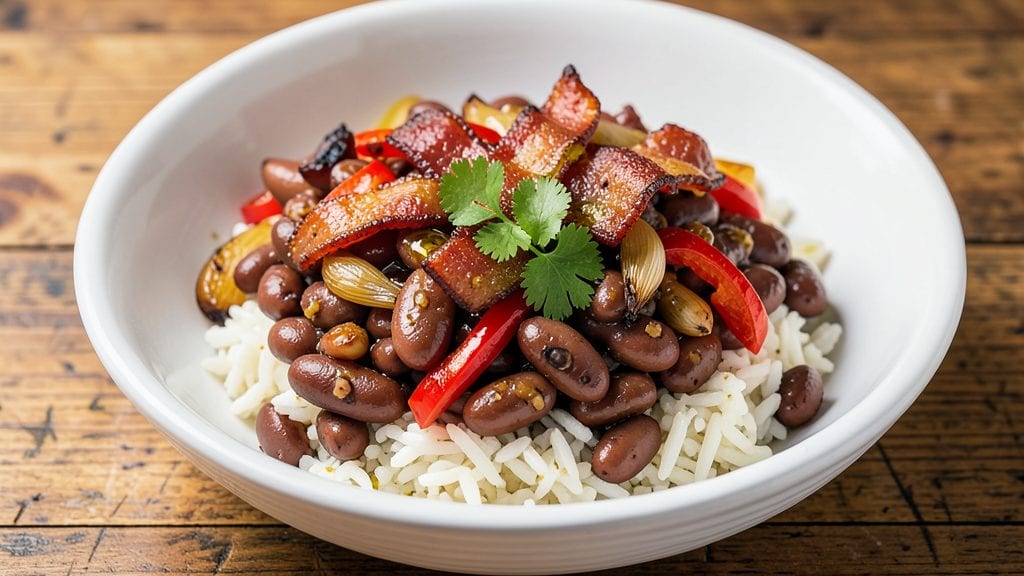
This Goya Pinto beans recipe delivers the rich, smoky depth of Puerto Rican rice and beans in one flavorful pot. The secret lies in crispy bacon, caramelized sofrito, and slow-simmered beans that absorb every layer of savory goodness.
I’ve perfected this method to balance authenticity with home-cook simplicity—no special equipment needed, just patience and a heavy pot for even cooking.
The foundation starts with a sofrito base—onions, garlic, and bell peppers sautéed until deep golden—then builds with toasted spices and bacon that adds a smoky, salty backbone.
Goya beans (or pinto beans) simmer until tender, while long-grain rice cooks directly in the same pot, absorbing the bean broth into a fluffy, aromatic side that’s as satisfying as it is traditional.
What you’ll end up with is a one-pot wonder: perfectly seasoned beans with tender rice, each bite packed with bacon’s richness and sofrito’s warmth. This is the kind of dish that elevates any meal—serve it alongside mofongo, grilled meats, or even as a standalone plate.
The flavors only deepen as it rests, making it ideal for meal prep.
For those short on time, I’ll share a quick-soak method and pressure cooker adaptations later—because even traditional recipes can meet modern needs. Let’s get cooking.
Ingredients for goya pinto beans
Pantry staples meet Puerto Rican tradition in this one-pot masterpiece—where smoky bacon and caramelized sofrito transform humble ingredients into restaurant-quality flavor.
| Ingredient | Amount | Notes |
|---|---|---|
| Goya Pinto Beans (Dried) 🌾 | 1 ½ cups | Unsoaked, rinsed thoroughly |
| Long-Grain White Rice 🍚 | 1 cup | Uncooked, medium-grain preferred |
| Thick-Cut Bacon 🥓 | 8 oz | Uncooked, cut into 1/2-inch pieces |
| Yellow Onion 🧅 | 1 whole | Medium size, diced finely |
| Red Bell Pepper 🍅 | 1 whole | Medium size, diced small |
| Garlic Cloves 🧄 | 4 cloves | Fresh, minced finely |
| Ground Cumin 🌿 | 1 tbsp | Toasted lightly for depth |
| Ground Oregano 🍃 | 1 tbsp | Mexican oregano preferred |
| Smoked Paprika 🌶️ | 1 tsp | Sweet or hot variety |
| Bay Leaf 🌿 | 1 whole | Fresh preferred, dried acceptable |
| Salt 🧂 | 1 ½ tsp | Diamond Crystal kosher salt |
| Black Pepper 🌶️ | ½ tsp | Freshly ground preferred |
| Water 💧 | 6 cups | Filtered or bottled preferred |
| Extra-Virgin Olive Oil 🫒 | 2 tbsp | For sautéing sofrito base |
| Fresh Cilantro 🌿 | ¼ cup | Chopped, for garnish optional |
The Goya Pinto beans are the heart of this dish, so source them from a reputable Latin market or specialty store like La Tienda or Despaña for authentic quality. If using regular pinto beans, ensure they're dried and uncooked—never canned, as the texture and flavor won't develop properly. For the bacon, thick-cut from a butcher shop delivers the best smoky depth, though store-brand thick-cut works in a pinch. The sofrito trio—yellow onion, red bell pepper, and garlic—should be fresh and vibrant, with no soft spots or bruising. Toast your ground cumin and oregano in a dry pan for 30 seconds before adding to the pot; this enhances their aromatic compounds significantly. Smoked paprika from Penzeys or a well-stocked spice aisle adds that signature Puerto Rican warmth.
No thick-cut bacon? Thin-cut smoked bacon works, but reduce cooking time by half to avoid over-browning. Short on bell pepper? Red onion or green bell pepper substitute equally well, though flavor will shift slightly. Mexican oregano unavailable? Regular dried oregano at double the amount suffices, though it lacks the distinctive citrusy notes. The bay leaf can be omitted entirely if you dislike its subtle bitterness, but it adds complexity that's hard to replicate. For the rice, avoid instant or pre-cooked varieties—they won't absorb the bean broth properly. And if you're using pre-toasted cumin, skip the dry-toasting step entirely; the flavor will still develop during cooking.
This dish tastes even better the next day as flavors meld, so double the batch if meal prepping. Store leftovers in an airtight container in the fridge for up to 5 days, or freeze portions for 3 months by spreading them on a tray first to prevent clumping. Reheat gently on the stove with a splash of water to restore moisture. The cilantro garnish is optional but adds a bright finish—store fresh stems in a jar of water in the fridge for up to 1 week like flowers. For pressure cooker adaptations, reduce water by 1 cup and cook on high pressure for 12 minutes after initial bacon rendering.
Why You'll Love This Recipe
- One-Pot Magic: I swear by this recipe when I’m too tired to wash pots—just toss everything in one deep skillet, let it simmer, and walk away. The rice cooks right in the bean broth, so no separate pot or measuring cups needed. Honestly, I’ve made it on nights when I’d rather be watching TV than standing at the stove.
- Smoky-Sweet Bite: That crispy bacon crumbles into the beans like little flavor bombs, while the bell pepper adds a subtle sweetness that balances the salt. Between us, the first bite always makes me pause—it’s got that perfect mix of savory, smoky, and just a hint of warmth from the onions caramelizing at the bottom.
- Meal Prep MVP: This keeps for days in the fridge, and the flavors actually get better as it sits—yes, even on day three. I double the batch on Sundays so I’ve got lunches ready for the week, and it reheats like a dream. My coworkers still ask how I stay so organized. (They don’t know it’s this easy.)
- Budget Stretch: A pound of dried pinto beans and a few slices of bacon go a long way, feeding four for under $5. I’ll be real: I’ve served this at potlucks, family dinners, and even as a side for takeout nights because it’s just that reliable. Plus, the rice stretches it even further—no one will guess it’s this affordable.
Step-by-step instructions for bacon-infused Goya pinto beans
This one-pot method delivers rich, smoky flavor with perfectly tender beans and rice.
Render the Bacon and Build the Sofrito Base
In a large, heavy-bottomed pot, cook the 8 oz thick-cut bacon over medium heat until the fat renders and the bacon becomes deep golden brown and crispy, about 8-10 minutes. Remove the bacon with a slotted spoon, leaving the rendered fat in the pot—this is your flavor foundation.
In the same pot, add 2 tbsp extra-virgin olive oil and heat until shimmering. Add the 1 whole yellow onion and 1 whole red bell pepper, diced finely, cooking for 5-6 minutes until softened and the onion becomes translucent. Stir in the 4 cloves garlic cloves, minced, and cook for 30 seconds until fragrant but not browned. This aromatic base forms the flavor backbone of your dish.
Toast the Spices and Add the Dried Beans
Reduce the heat to medium-low and add the 1 tbsp ground cumin, 1 tbsp ground oregano, 1 tsp smoked paprika, 1 whole bay leaf, 1.5 tsp salt, and 0.5 tsp black pepper. Toast the spices for 1 minute, stirring constantly, until fragrant. This step deepens their flavors and prevents bitterness in the final dish.
Add the 1.5 cups dried Goya pinto beans, rinsing them thoroughly first to remove any debris. Stir to coat the beans evenly with the spice mixture and rendered fat. Pour in 6 cups water, ensuring the beans are fully submerged. Bring to a boil, then immediately reduce heat to low and simmer for 10 minutes to partially hydrate the beans before adding rice.
Cook the Beans and Rice Together
Add the 1 cup long-grain white rice, stirring gently to distribute it evenly among the beans. Return the reserved bacon to the pot, breaking it into smaller pieces as you add it back. The bacon will infuse the beans with its savory depth as they cook. Bring the mixture back to a gentle simmer, then cover the pot with a tight-fitting lid.
Reduce heat to low and cook for 45-50 minutes, maintaining a gentle simmer. Avoid peeking or stirring—the beans need undisturbed cooking to absorb moisture evenly. The beans are done when they are tender but not mushy, and the rice is fully cooked with a slight bite. If the liquid level drops too low, add ½ cup water to prevent burning.
Rest and Garnish for Maximum Flavor
Once the beans and rice are fully cooked, remove the pot from heat and let it rest, covered, for 10 minutes. This resting period allows the flavors to meld and the beans to absorb any remaining liquid, ensuring each bite is rich and cohesive. Discard the bay leaf before serving.
Garnish with 0.25 cup chopped fresh cilantro, adding a bright, herbal contrast to the smoky, bacon-infused beans. Serve immediately with warm tortillas, cornbread, or over a bed of greens for a complete meal. The dish should have a deep, savory aroma with layers of smokiness from the bacon and spices, balanced by the fresh cilantro.
Pro Tips For Making Goya Pinto Beans
- SOAK THE BEANS OVERNIGHT: I learned this the hard way—skipping the soak leaves your beans tough and gummy. Toss them in a bowl with plenty of water (at least 3 times their volume) and let them sit for 8-12 hours. The longer they soak, the faster they’ll soften, and you’ll avoid that sad, rubbery texture in your final dish.
- CRISP THE BACON LOW AND SLOW: High heat makes bacon greasy and uneven. Instead, cook thick-cut bacon on medium-low, flipping every 3-4 minutes until golden and crisp. Save that rendered fat—it’s liquid gold for frying onions and peppers later, giving your beans a deeper, richer flavor.
- DON’T SKIP THE ONION BASE: This isn’t just flavor—it’s the foundation. Sauté the onions until they’re translucent and just starting to caramelize (about 8-10 minutes). That sweet, jammy base is what makes the whole dish sing, so resist the urge to rush it.
- USE A 1:2 BEAN-TO-RICE RATIO: Too much rice? You’ll end up with a mushy mess. Too little? Dry beans. Stick to 1 cup of rice for every 2 cups of cooked beans—this keeps the texture balanced and the dish hearty but not soggy. (Yes, even if your family eats rice like it’s going out of style.)
Regional styles of this recipe
Puerto Rican Tradition
This dish is a staple in Puerto Rican cuisine, where it’s called Arroz con Habichuelas Guisadas—a hearty, one-pot meal served at family gatherings and holidays. The beans and rice are cooked together, absorbing the same rich broth, creating a harmonious balance of smoky bacon, caramelized sofrito, and earthy spices.
In Puerto Rico, it’s often paired with pernil (roast pork) or lechón asado (roast suckling pig) for festive meals. 🌶️
Dominican Twist
In the Dominican Republic, this dish takes on a slightly different name—Habichuelas con Arroz—but the core concept remains similar. The key difference? More sofrito—often including tomatoes, cilantro, and a touch of vinegar for brightness.
Dominicans also frequently add ham hock or salt pork alongside the bacon for extra depth. The rice is sometimes cooked separately but served alongside the beans, creating a two-component dish rather than a one-pot fusion. 🍴
Cuban Adaptation
Cuban cuisine leans into moros y cristianos (black beans and rice), but their version of this dish often includes sazón—a blend of annatto, garlic, and culantro (recao)—instead of smoked paprika.
The beans are sometimes cooked with ham or chorizo, and the rice is often toasted in oil before adding liquid. Cubans also love serving it with tostones (fried green plantains) or yuca con mojo for a complete plate.
The flavors are bolder and more herbaceous compared to the Puerto Rican original. 🌿
Modern Fusion
For a contemporary take, try swapping the bacon for crispy pancetta or chorizo, and add a splash of beer or tomato sauce to the cooking liquid for extra richness. Some chefs also incorporate quinoa or brown rice for a nutty twist.
If you’re feeling adventurous, top with avocado slices, pickled onions, or a drizzle of chipotle crema for a restaurant-worthy fusion. The key is keeping the smoky-savory backbone while experimenting with textures. ✨
Nutrition facts
Frequently asked questions
Why do you rinse the Goya pinto beans before cooking?
Rinsing removes dirt, debris, and excess starch that can make the beans gummy. This step ensures your beans cook evenly and absorb the smoky bacon and sofrito flavors without turning mushy. Always rinse thoroughly under cold water before adding them to the pot.
Can I substitute regular pinto beans for Goya pinto beans?
Yes, but expect slightly different texture and flavor. Goya beans are traditionally smaller and firmer, while regular pinto beans soften more. If substituting, increase cooking time by 5-10 minutes to ensure tenderness. For authenticity, source Goya beans from Latin markets or specialty stores.
How do I prevent the rice from burning in the pot?
Keep the heat at low and maintain a gentle simmer—never a rolling boil. Stir once after adding rice, then avoid peeking or moving the pot. If the liquid level drops too low, add ½ cup water gradually. A heavy-bottomed pot helps distribute heat evenly.
Can I make this recipe without bacon?
Swap bacon for chorizo, pancetta, or smoked sausage for a similar smoky depth. For a vegetarian option, use olive oil or mushrooms**> sautéed until rich and browned. Adjust salt levels if using salt-free substitutes.
Why does the dish taste better the next day?
The flavors deepen as the spices and bacon infuse the beans and rice overnight. Resting allows the liquid to redistribute, creating a more cohesive texture and richer taste. Store leftovers in an airtight container in the fridge for up to 5 days.