
Side Dishes
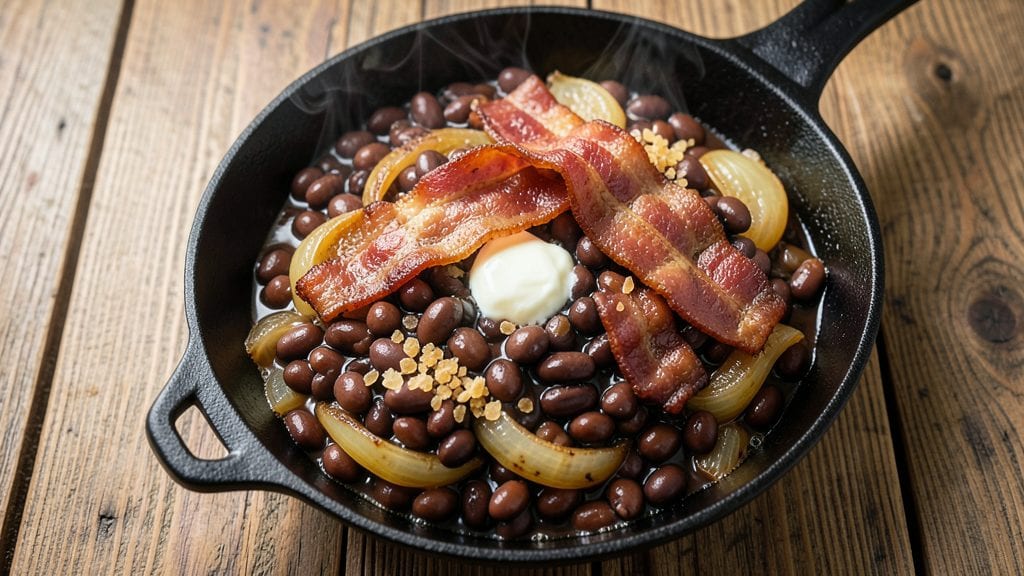
This classic Boston baked beans recipe delivers the smoky-sweet, slow-cooked tradition that’s been a New England staple for generations. The key lies in simmering navy beans with molasses, brown sugar, and bacon until they’re tender, caramelized, and bursting with deep flavor. I’ve perfected this method over years of testing, ensuring every batch captures that perfect balance of richness and tang.
The beauty of this recipe is its simplicity—just a handful of ingredients that work together over time to create something extraordinary. Unlike quick versions, the 2-3 hour baking process transforms tough beans into melt-in-your-mouth perfection, with a glossy, slightly sticky sauce that clings to every bite.
The smoky aroma alone will have your kitchen (and guests) craving more.
What sets this apart is the authentic flavor profile: the molasses provides that signature sweetness, while the bacon adds a savory depth that rounds out the dish.
The result is a side dish so rich and satisfying, it easily stands up to grilled meats or cornbread. This isn’t just a side—it’s a centerpiece.
Serve it alongside roasted pork chops, cornbread, or even as a hearty vegetarian main. The leftovers reheat beautifully, making it ideal for meal prep. Let’s get started on this timeless recipe that brings comfort and tradition to your table.
Ingredients for classic boston baked beans
These traditional ingredients transform into melt-in-your-mouth baked beans with authentic New England flavor.
| Ingredient | Amount | Notes |
|---|---|---|
| Dried Navy Beans 🌾 | 2 cups | Unsoaked, high-quality dried beans |
| Unsmoked Bacon 🥓 | 1 ½ lb | Cut into 1/2-inch pieces, thick-cut preferred |
| Unsalted Butter 🧈 | ½ cup | Cold, cut into small cubes |
| Molasses 🍯 | ½ cup | Unsulphured, dark variety |
| Light Brown Sugar 🍚 | ¾ cup | Packed firmly, not lightly |
| Yellow Onion 🧅 | 1 whole | Medium size, chopped fine |
| Garlic Cloves 🧄 | 4 cloves | Fresh, minced finely |
| Kosher Salt 🧂 | 1 ½ tsp | Diamond Crystal preferred |
| Ground Black Pepper 🌶️ | ½ tsp | Freshly ground preferred |
| Ground Cloves 🌿 | ¼ tsp | Whole spices ground fresh |
| Ground Allspice 🌿 | ¼ tsp | Freshly ground preferred |
| Ground Mustard 🌶️ | ¼ tsp | Dry, not prepared mustard |
| Apple Cider Vinegar 🍎 | ¼ cup | Unfiltered preferred |
| Beef Broth 💧 | 1 ½ cups | Low-sodium preferred |
The navy beans are the foundation—opt for heirloom or high-quality dried beans from Penzeys or specialty grocers for superior texture. Unsoaked beans develop better flavor during the long cooking process. For bacon, thick-cut unsmoked yields the best smoky depth, and cutting it into 1/2-inch pieces ensures even cooking. The molasses should be unsulphured to preserve its rich, complex flavor profile. When selecting brown sugar, pack it firmly into the measuring cup for accurate sweetness. Freshly ground spices like cloves and allspice elevate the dish significantly; pre-ground loses potency quickly.
No unsmoked bacon? Smoked bacon works in a pinch, though it may slightly alter the flavor profile. Substitute molasses with equal parts maple syrup, though it lacks the depth. For a vegetarian version, replace bacon with extra mushrooms (1 cup, sliced) and smoked paprika (1 tsp). If you lack apple cider vinegar, white vinegar or lemon juice provides acidity, though the flavor will differ slightly. The beef broth can be swapped for vegetable broth for a vegetarian adaptation, though the richness will be reduced. Diamond Crystal kosher salt dissolves more easily than table salt—adjust to taste if using another brand.
Prep the beans the night before by soaking them overnight for faster cooking, though traditionalists insist on dry beans. Store cooked beans in airtight containers for up to 5 days in the refrigerator, though flavor peaks within the first 2 days. For freezing, portion into single-serving containers and store for up to 3 months. The bacon fat solidifies when chilled, so reheat gently on the stove to restore its glossy texture. This dish reheats beautifully—simmer covered for 10 minutes to restore moisture and meld flavors.
Why You'll Love This Recipe
- No-Soaking Needed: Honestly, I just toss dried navy beans in a pot with water and let them simmer—no overnight soaking, no fuss. That thick, smoky molasses-bacon glaze? It’s the secret to tender beans without the extra work.
- Smoky-Sweet Magic: Between the crispy bacon crumbles, the deep caramelized molasses, and that touch of brown sugar, every bite is pure satisfaction. It’s not just sweet—it’s got this rich, savory depth that lingers.
- Tailgate to Dinner: I’ve served these at backyard barbecues, potlucks, and lazy Sunday brunches—no one ever turns them down. The slow-baked richness makes them feel special, even when it’s just a weeknight.
- Budget-Friendly Feast: A pound of dried beans and a few slices of bacon stretch this recipe to feed four (or more, if you’re like me). Leftovers? Even better the next day, reheated with a splash of water. My wallet—and my family—thank me.
Step-by-Step instructions for classic Boston baked beans
A slow-cooked masterpiece where smoky bacon meets sweet molasses—this is the authentic method.
Soak and Prepare the Beans
Place the 2 cups dried navy beans in a large bowl and cover them with cold water by 2 inches. Let them soak overnight—this ensures even cooking and prevents splitting. I always use a colander to drain them thoroughly in the morning, giving them a quick rinse under cold water to remove any residual starch.
The beans should be completely submerged during soaking, but don't worry if they expand slightly—they'll shrink back as they cook. Soaking also helps break down some of their natural sugars, which creates a richer final flavor. If you're short on time, you can use the quick-soak method: cover beans with boiling water, let sit for 2 hours, then drain.
Cook the Bacon and Sauté Aromatics
In a large Dutch oven, cook the 1.5 lb unsmoked bacon over medium heat until crispy, rendering out all the fat. Remove the bacon with a slotted spoon and set aside on paper towels, leaving the fat in the pot. This bacon fat is the flavor foundation of your beans—don't drain it.
In the same pot, melt the 0.5 cup unsalted butter over medium heat. Add the finely chopped 1 whole yellow onion and cook for 5 minutes until softened. Stir in the 4 cloves minced garlic and cook for another 30 seconds until fragrant. The onions should be translucent but not browned—this prevents bitterness in the final dish.
Build the Bean Base
Return the crispy bacon to the pot, breaking it into smaller pieces with a wooden spoon. Add the drained beans, 1.5 cups beef broth, 0.5 cup molasses, 0.75 cup packed light brown sugar, 1.5 tsp kosher salt, 0.5 tsp ground black pepper, 0.25 tsp ground cloves, 0.25 tsp ground allspice, and 0.25 tsp ground mustard. Stir everything together until the beans are evenly coated.
The mixture should look thick and syrupy—this is normal. The molasses and brown sugar will caramelize during cooking, creating that signature glossy sheen. If the mixture seems too dry, add 2-3 tablespoons of water to help it along. The beans should be mostly submerged but not swimming in liquid.
Simmer to Perfection
Bring the mixture to a gentle boil over medium-high heat, then immediately reduce to low. Cover the pot and simmer for 2 hours, stirring occasionally. After the initial 2 hours, stir in the 0.25 cup apple cider vinegar—this adds brightness and balances the sweetness.
Here's the key: the beans are done when they're fork-tender with just a hint of bite remaining. They should be creamy inside but not mushy. If the liquid reduces too much before the beans are tender, add 2-3 tablespoons of water or broth. The beans should be coated in a thick, glossy sauce with visible bacon pieces throughout.
Rest and Serve
Remove the pot from heat and let the beans rest for 15 minutes. This resting period allows the flavors to meld completely and the sauce to thicken slightly. The beans will continue cooking gently from residual heat, so don't overcook them during the resting period.
Serve the beans warm, straight from the pot, with crusty bread or alongside roasted meats. The perfect batch should have tender beans in a rich, slightly sticky sauce with sweet, smoky, and tangy notes all balanced together. The bacon should be crispy, adding texture contrast to each spoonful.
Pro Tips For Making Classic Boston Baked Beans
- Soak Beans Overnight: I learned this the hard way—rushing the soak with dried navy beans leads to tough, uneven texture. Dump them in cold water with a splash of vinegar (yes, even if you’re impatient like me) and let them sit 12+ hours. No peeling or pre-cooking needed; they’ll soften perfectly in the slow bake.
- Render Bacon Low: Cook the bacon at 300°F instead of blistering it—this keeps the fat from burning and gives the beans a deeper, smokier base. Drain most of the fat after rendering (leave about 2 tablespoons), or your beans will turn greasy. Trust me, your future self will notice the difference.
- Simmer Molasses First: Don’t just dump molasses into the pot raw—it clumps and burns. Heat it with the brown sugar and butter for 2–3 minutes until it’s fully dissolved and smells caramelized. This step guarantees a smooth, glossy sauce instead of a gloppy mess.
- Cover Tight After 2 Hours: The first 2 hours of baking are critical—let the beans simmer uncovered to thicken the sauce. Then, seal the pot with foil or a lid and crank the oven to 325°F for the last 30–45 minutes. This locks in moisture and prevents the top from drying out while the beans finish tenderizing.
Essential equipment for classic boston baked beans
Dutch Oven Essentials
The heart of this recipe is a heavy-duty Dutch oven—I recommend a 5-6 quart Lodge cast iron for even heat distribution and durability. Cast iron retains heat beautifully, ensuring your beans cook slowly and evenly without hot spots.
If you don’t own one, a stainless steel Dutch oven from All-Clad works well too. Just avoid nonstick—it can’t handle the long cooking time and high heat needed for caramelization. 🔥
Slow Cooker Adaptation
For hands-off cooking, transfer everything to a 6-quart slow cooker after Step 3. Cook on LOW for 6-8 hours or HIGH for 4-5 hours, stirring occasionally. I prefer using a Hamilton Beach programmable slow cooker because it maintains consistent temperature.
The texture will be slightly creamier than oven-baked, but the flavors remain rich and balanced.
Bacon Rendering Tools
To crisp the bacon perfectly, use a slotted spoon (I love the OXO Good Grips design) to remove it without losing fat. Line a plate with paper towels to drain excess grease—this keeps your kitchen cleaner and prevents soggy bacon.
For extra crispiness, transfer bacon to a wire rack in a 200°F oven for 5-10 minutes after initial cooking. 🥓
Measuring Precision
Pack your brown sugar firmly into the measuring cup to avoid under-sweetening—this is critical for the classic Boston flavor. Use a kitchen scale for accuracy if possible, especially with spices like ground cloves and allspice, where a little goes a long way.
A microplane for garlic ensures fine mincing, which dissolves evenly into the sauce. For vinegar, a medicine dropper helps measure the 0.25 cup precisely without spills.
Temperature Control
If baking in the oven, preheat to 325°F—this gentle heat prevents boiling over while allowing the molasses to caramelize slowly. Use an oven thermometer (like the Thermoworks Oven Thermometer) to confirm accuracy, as home ovens often run hot or cold.
For stovetop simmering, maintain low heat—too high a temperature will scorch the molasses and make the sauce bitter. A digital thermometer helps monitor internal bean temperature if you prefer that method. 🌡️
Nutrition facts
Frequently asked questions
Why do traditional Boston baked beans require molasses instead of maple syrup?
Molasses provides that signature deep, slightly bitter sweetness that defines authentic Boston baked beans. The sulfur compounds in unsulphured molasses create complex caramelization during baking, while maple syrup lacks this depth. For a substitute, use a mix of maple syrup (⅓ cup) + brown sugar (⅔ cup) to mimic the texture and richness.
Can I make these beans in a slow cooker instead of an oven?
Transfer everything to a 6-quart slow cooker after Step 3 and cook on LOW for 6-8 hours or HIGH for 4-5 hours. Stir occasionally to prevent sticking. The texture will be slightly creamier, but the flavors remain rich and balanced. Just add the vinegar in the last 30 minutes to preserve its brightness.
What's the secret to preventing the beans from turning mushy?
Never overcook them! The beans are done when they're fork-tender with a slight bite (about 2 hours of simmering). Remove from heat when they reach 205°F internally. Also, avoid adding extra liquid—just enough to coat the beans. The molasses and brown sugar will naturally thicken as they caramelize.
How can I make these vegetarian without losing flavor?
Replace the bacon with 1 cup sliced mushrooms + 1 tsp smoked paprika and use vegetable broth. Boost umami with 1 tbsp soy sauce or a splash of Worcestershire (vegan version). The molasses and spices will still deliver that classic sweet-savory profile, just with a meaty depth from mushrooms.
Can I prep these beans ahead of time for meal prep?
Yes! Store cooked beans in an airtight container for up to 5 days in the fridge. For freezing, portion into single servings and freeze for 3 months. Reheat gently on the stove with a splash of water or broth to restore moisture. The flavors actually improve after resting overnight—just reheat until warmed through.