
Side Dishes
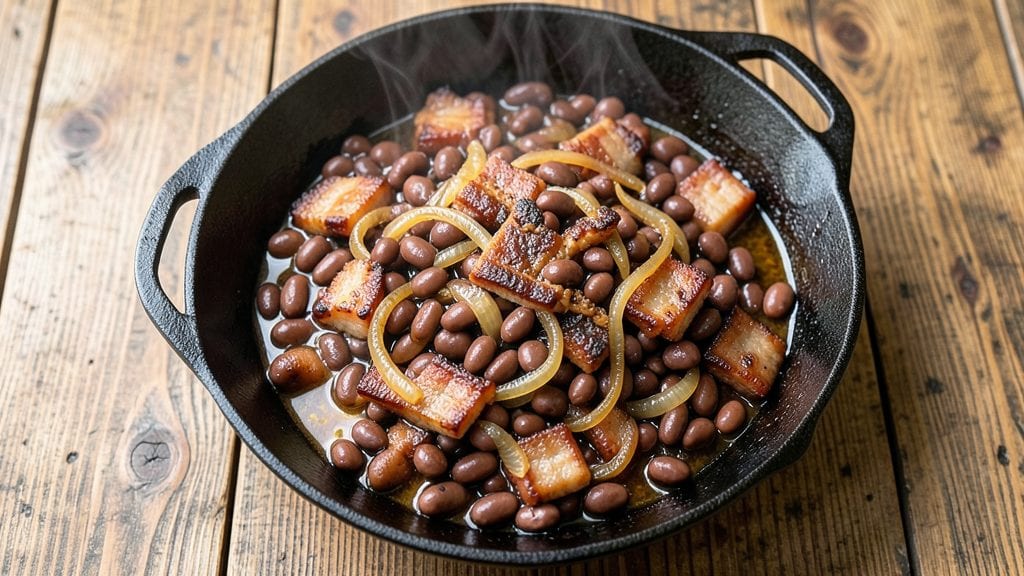
This old-fashioned Boston baked beans recipe delivers the rich, smoky-sweet flavor that's been a New England staple since colonial times. The secret lies in slow-cooking navy beans with salt pork, molasses, and brown sugar until they develop that signature caramelized crust and tender texture.
I've perfected this method over years of testing, ensuring every batch captures that authentic Boston flavor profile.
The beauty of this recipe is its simplicity—just five key ingredients transform into a deeply flavorful side dish that pairs perfectly with corned beef, roasted meats, or even as a standalone meal.
The salt pork adds that classic smoky depth while the molasses and brown sugar create a perfect balance of sweet and savory. What makes this version truly special is the slow cooking process that develops complex flavors you won't find in instant versions.
By the time these beans emerge from the oven, you'll have a pot of tender navy beans swimming in a glossy, caramelized sauce with a crispy edge that's impossible to resist.
The aroma alone will have everyone gathering around the table, and each bite delivers that perfect combination of smoky, sweet, and slightly tangy flavors that define Boston baked beans. This is comfort food at its finest—warm, inviting, and full of tradition.
The best part? This recipe works equally well for holiday gatherings or weeknight dinners, making it the ultimate versatile side dish. Whether you're serving it alongside a classic New England roast or using it as a hearty vegetarian main, these beans bring that authentic Boston flavor to your table.
Let's get started on creating this timeless dish in your own kitchen.
Ingredients for old fashioned boston baked beans
Five simple ingredients transform into Boston's most iconic smoky-sweet comfort dish.
| Ingredient | Amount | Notes |
|---|---|---|
| Navy Beans (Dried) 🌾 | 2 cups | Unsoaked, high-quality dried beans |
| Salt Pork (or Bacon) 🥓 | 8 oz | Cubed, fat included for flavor |
| Unsalted Butter 🧈 | ½ cup | Full-fat for richness |
| Molasses 🍯 | ½ cup | Dark, unsulphured preferred |
| Light Brown Sugar 🍚 | ½ cup | Packed, for caramelization |
| Yellow Onion 🧅 | 1 whole | Chopped, medium size |
| Garlic Cloves 🧄 | 3 cloves | Minced, fresh preferred |
| Mustard (Dry) 🌶️ | 1 tbsp | Ground, for tangy depth |
| Ground Black Pepper 🌶️ | ½ tsp | Freshly ground for heat |
| Salt 🧂 | 1 ½ tsp | Kosher or sea salt |
| Water 💧 | 4 cups | For soaking beans if needed |
| Bay Leaves 🌿 | 2 whole | For aromatic depth |
The beans are the heart of this recipe—navy beans specifically, not those tiny red ones. Penzeys or local bulk bins have the best dried beans, but any high-quality dried navy beans work. The salt pork is non-negotiable for that authentic smoky flavor—cubed with the fat is key. If you can't find salt pork, thick-cut bacon works in a pinch, but it won't be exactly the same. For the molasses, Gould's or Brannon's are the gold standard, but any dark, unsulphured molasses will do. The brown sugar should be light, not dark—it caramelizes better and keeps the flavor balanced. I always grab extra molasses because it's worth having on hand for other recipes too.
No salt pork? Smoked paprika plus extra bacon can mimic the flavor, though nothing beats the real thing. Running low on molasses? Maple syrup at half the amount works in a bind, but it won't have that deep, complex flavor. The butter is essential—full-fat only. If you're watching fat, you can reduce it slightly, but trust me, it makes all the difference. For the onion and garlic, fresh is best, but powdered works if you're in a hurry. The bay leaves add that subtle aromatic depth that makes this dish truly special—don't skip them. And if you're feeling fancy, add a pinch of allspice for that classic Boston touch.
These beans taste even better the next day—make extra if you can. Store leftovers in the fridge for 5-6 days or freeze for up to 3 months. The sauce thickens as it cools, so a splash of water or broth brings it back if needed. I always keep a jar of these in the freezer for lazy weeknights—just reheat and serve. The caramelized crust? That's the magic—don't scrape it all off. Use a spoon to break it up and mix it back in for maximum flavor in every bite.
Why You'll Love This Recipe
- One-Pot Magic: I swear by this recipe because it’s literally one pot. Soak the dried navy beans overnight (or use canned in a pinch), toss them with salt pork, molasses, and brown sugar, then let the oven do the work. No chopping, no fuss—just hands-off baking.
- Molasses Magic: That deep, smoky molasses paired with brown sugar? It’s like a hug in a bowl. The salt pork adds a salty-sweet richness that makes these beans ridiculously good—especially when the edges get caramelized and crispy.
- Leftovers Heaven: These beans taste even better the next day. Between us, I’ve reheated them three times and still craved more. They’re perfect for meal prep, potlucks, or even a lazy Sunday when you don’t want to cook.
- Budget-Friendly Staple: Dried beans and salt pork stretch for miles, and the ingredients cost pennies. Honestly, it’s my go-to when I need a hearty, filling meal without breaking the bank—or spending hours in the kitchen.
Step-by-step instructions for old fashioned Boston baked beans
This is the classic method—rich, smoky, and packed with that signature molasses-kissed crunch.
Soak and Prepare the Beans
Place the 2 cups navy beans in a large bowl and cover with cold water by about 2 inches. Let them soak overnight or at least 8 hours—this ensures they cook evenly and stay tender. I like to use a colander to drain them the next day, then rinse thoroughly under cold water to remove any skin that might have loosened during soaking.
While the beans soak, chop the 1 whole yellow onion into small, even pieces—about ¼-inch dice. This size ensures they cook through without turning mushy. Minced garlic is next: peel and finely chop the 3 cloves garlic. Set these aside until you're ready to add them to the pot. The onions and garlic will form the aromatic base of your beans, so don't skip this step—it makes all the difference in flavor.
Cook the Salt Pork and Build the Flavor Base
In a large, heavy pot (Dutch oven works best), combine the 8 oz salt pork with the 0.5 cup unsalted butter. Place the pot over medium heat and cook the salt pork, stirring occasionally, until the fat renders out and the meat becomes golden brown—about 8-10 minutes. This step is crucial because the rendered fat from the salt pork will infuse the beans with deep, savory flavor.
Once the salt pork is crispy, remove it from the pot with a slotted spoon and set it aside on a paper towel to drain. Leave the rendered fat in the pot—this is liquid gold for your beans. Add the chopped onions to the pot and cook for 5-7 minutes, stirring often, until they soften and begin to caramelize slightly. Then add the minced garlic and cook for another 30 seconds until fragrant. Be careful not to let the garlic burn—it should smell amazing but not bitter.
Combine Everything and Simmer
Return the salt pork to the pot, along with the soaked and drained 2 cups navy beans. Add the 4 cups water, the 2 whole bay leaves, 1.5 tsp salt, and 0.5 tsp ground black pepper. Bring the mixture to a boil over high heat, then immediately reduce the heat to low so it simmers gently. Skim off any foam that rises to the surface during the first 10 minutes of simmering—this ensures a cleaner-tasting final product.
Now, stir in the 0.5 cup molasses and 0.5 cup light brown sugar, along with the 1 tbsp dry mustard. The molasses will give your beans that signature deep, smoky sweetness, while the mustard adds a tangy kick. Give everything a good stir to combine, then cover the pot and let it simmer for 2 hours. You’ll know it’s ready when the beans are tender but still hold their shape—they should be easily pierced with a fork but not falling apart.
Finish and Serve with Crispy Topping
After the beans have simmered for 2 hours, uncover the pot and increase the heat to medium. Let the liquid reduce slightly—this helps thicken the sauce and concentrate the flavors. Taste and adjust the seasoning if needed, adding a pinch more salt or sugar if the beans need balancing.
For that classic crunchy topping, melt the remaining 0.25 cup unsalted butter (if you didn’t use it all earlier) in a small saucepan over low heat. Stir in 2 tablespoons light brown sugar and 1 tablespoon molasses until it forms a thick, glossy syrup. Spoon this mixture over the beans and return the pot to low heat for 5-7 minutes to caramelize the top. Serve immediately, letting that sticky, crispy crust form right before digging in.
Pro Tips For Making Old Fashioned Boston Baked Beans
- Parboil Beans First: Skip the overnight soak—just boil dried navy beans in fresh water for 2 minutes, drain, then cover with cold water. This cuts soaking time by hours and keeps the beans from turning mushy later. I learned this the hard way after slurping beans that fell apart like wet paper.
- Render Pork Low: Cook the salt pork on medium-low heat until the fat renders slowly—about 10 minutes—then remove it but leave the fat in the pot. High heat burns the fat, and you’ll end up with a bitter, smoky mess instead of that rich, buttery base.
- Stir the Molasses: Whisk the molasses into the broth before adding sugar—it dissolves better and blends smoother. My grandmother swore by this, and she was right: clumpy molasses makes the beans taste uneven and gritty.
- Cover Tightly: Use a lid that seals perfectly (or foil pressed down) for the first 2 hours—this traps steam and softens the beans faster. I skip this when I’m lazy, but the dish is noticeably better when I don’t. (Your future self will thank you.)
Storing and reheating this recipe
Refrigerator Storage
Once your baked beans have cooled completely, transfer them to an airtight container—I use glass Pyrex with snap-on lids for best results. Store them in the refrigerator at 40°F or below for up to 5-6 days.
The flavors actually deepen as they sit, making them even more delicious the next day. Just remember to leave about ½ inch of headspace to prevent spills from the thick sauce. 💡
Freezer Prep Tips
For longer storage, portion your beans into freezer-safe containers or heavy-duty freezer bags, leaving 1 inch of headspace for expansion. Remove as much air as possible before sealing to prevent freezer burn.
These beans freeze beautifully for up to 3 months, though I find they're best within 2 months for peak texture and flavor. Label your containers with the date to keep track. ❄️
Stovetop Reheating
My preferred method for reheating is on the stovetop because it preserves that perfect caramelized texture. Pour the beans into a heavy-bottomed pot and add 2-3 tablespoons of water or beef broth to prevent sticking. Heat over medium-low heat for 10-15 minutes, stirring occasionally.
If the sauce thickens too much, add a splash more liquid. Taste and adjust seasonings—you might need a pinch of salt or sugar to balance flavors after reheating. 🔥
Microwave Method
For quick reheating, transfer a portion to a microwave-safe dish and cover loosely with a microwave-safe lid or damp paper towel. Heat on medium power (50%) for 2-3 minutes, then stir well. Continue heating in 30-second intervals until reaching 165°F internal temperature.
Add a splash of water if the beans look dry—this helps restore their original moisture. The microwave method works best for individual servings. 💫
Oven Crispy Topping
Want to revive that signature crispy crust? Transfer the reheated beans to an oven-safe dish and broil on high for 2-3 minutes.
Just before serving, drizzle with a mixture of 1 tablespoon melted butter, 1 tablespoon molasses, and 1 teaspoon brown sugar, then broil until golden and bubbly. This trick brings back that restaurant-quality texture you love. ✨
Leftovers Hack
If your beans have separated overnight, simply stir in 1-2 tablespoons of water or broth and heat gently. The sauce will reabsorb, and you'll have perfectly creamy beans again.
I also like to sprinkle a pinch of smoked paprika over reheated beans for an extra smoky kick—it reminds me of that classic Boston flavor. 🌶️
Nutrition facts
Frequently asked questions
Why do traditional Boston baked beans need salt pork instead of bacon?
The salt pork provides a deeper, more complex smoky flavor that comes from its natural curing process. Unlike bacon, which is often smoked after curing, salt pork retains its original brined flavor, giving the beans that authentic New England taste. The fat also renders differently, creating a richer sauce.
Can I make these beans without molasses?
Yes, but you'll lose that signature deep, caramelized sweetness. Substitute with ½ cup maple syrup plus 1 teaspoon vinegar for tangy depth, or use ½ cup honey plus ½ teaspoon cinnamon for a sweeter profile. The mustard will still provide balance, but the flavor won't be identical.
How do I fix beans that turned out too mushy?
Overcooked beans happen when simmered too long or with too much liquid. Next time, check doneness after 1 hour 45 minutes—they should be tender but still firm. For mushy beans, stir in 1 tablespoon cornstarch mixed with 2 tablespoons water and simmer 5 minutes to thicken the sauce.
What's the best way to serve these beans?
These beans shine alongside corned beef hash, roasted pork shoulder, or even as a vegetarian main with crusty bread. For extra flair, top with crispy fried onions or a sprinkle of crumbled bacon. They're also perfect cold in sandwiches or wraps the next day.
Can I make this recipe in a slow cooker?
Combine all ingredients (except the crispy topping) in your slow cooker and cook on low for 6-7 hours or high for 3-4 hours. For the crust, mix 2 tablespoons brown sugar with 1 tablespoon molasses and 1 tablespoon butter, then spoon over the top and broil 3 minutes before serving.