
Side Dishes
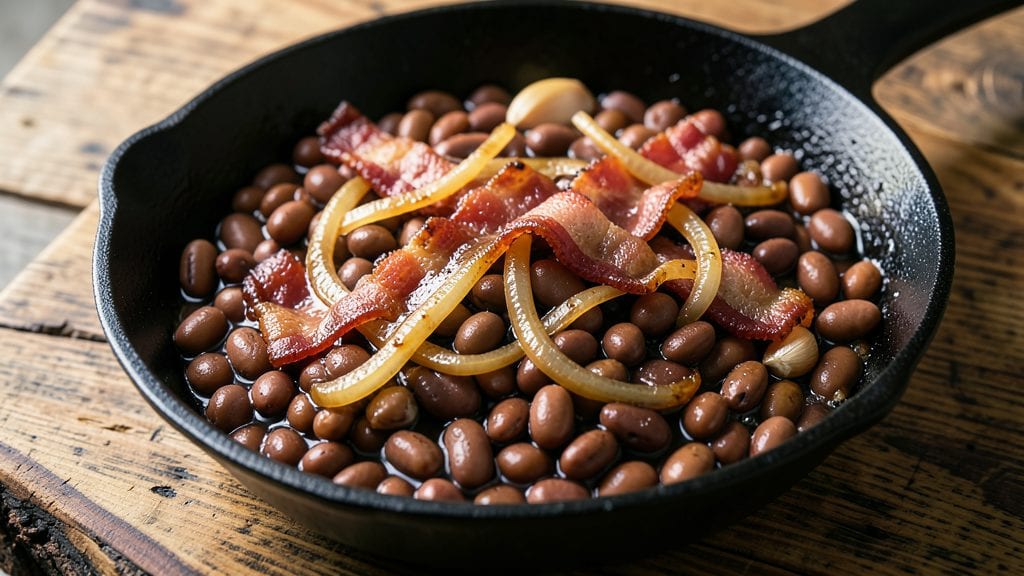
This authentic Boston baked beans recipe brings a taste of New England tradition to your table, where molasses-rich sweetness meets smoky pork in a slow-baked harmony.
The method I’ve perfected—rooted in colonial-era techniques—transforms simple ingredients into a dish so deeply flavorful it’s become a staple at family gatherings and holiday feasts.
What makes these beans truly special is the balance: tender navy beans simmered with crispy bacon, brown sugar’s caramelized depth, and molasses’ signature tang that cuts through the richness.
The process begins with soaking beans overnight, a step that ensures they cook evenly and absorb the smoky-sweet sauce without turning mushy. Browned bacon adds fat and flavor, while a blend of brown sugar and molasses creates that signature molasses-kissed crunch on the edges.
Unlike quicker versions, this recipe demands patience—slow baking for 3 hours at 325°F lets the flavors meld into a perfect harmony of sweet, smoky, and savory. The result? Beans that are tender yet hold their shape, with a glaze that’s sticky, caramelized, and impossible to resist.
What sets these beans apart is their authentic profile—no shortcuts, no artificial flavors. The molasses-brown sugar base, combined with the slow-cooked pork, delivers that unmistakable Boston touch, where the sweetness never overpowers the smoky depth.
This is the kind of dish that tastes like home, with every bite carrying the weight of history and tradition. Serve them alongside cornbread or crusty bread to soak up every last drop of that rich, caramelized sauce.
For those who love regional variations, this recipe stays true to Massachusetts roots while offering flexibility—swap bacon for salt pork if you prefer, or add a splash of vinegar for extra tang.
The beauty of baked beans lies in their versatility, but the soul of this dish remains the same: a foolproof, slow-cooked masterpiece that turns simple ingredients into something extraordinary. Ready to make the real deal? Let’s get started.
Ingredients for authentic boston baked beans
These fourteen ingredients transform into a dish steeped in New England tradition, where molasses and pork create unmatched depth.
| Ingredient | Amount | Notes |
|---|---|---|
| Navy Beans (Dry) 🍲 | 1 ½ cups | Soaked overnight for even cooking |
| Thick-Cut Bacon 🥓 | 1 ¼ lb | Cut into 1/2-inch pieces, preferred |
| Brown Sugar (Packed) 🍯 | 1 cup | Light or dark, not raw sugar |
| Molasses 🍯 | ½ cup | Unsulphured for authentic flavor |
| Yellow Onion 🧅 | 1 whole | Medium, diced into 1/4-inch pieces |
| Garlic Cloves 🧄 | 4 cloves | Fresh, minced for aromatic depth |
| Apple Cider Vinegar 🍎 | ¼ cup | For tangy balance, not white vinegar |
| Mustard (Dijon) 🌶️ | 1 tbsp | For subtle heat and complexity |
| Ground Black Pepper 🌶️ | ½ tsp | Freshly cracked for optimal flavor |
| Ground Allspice 🌿 | ½ tsp | Key spice for traditional Boston flavor |
| Ground Cloves 🌿 | ¼ tsp | Whole cloves toasted and ground preferred |
| Salt 🧂 | 2 tsp | Diamond Crystal preferred for accuracy |
| Water 💧 | 6 cups | Filtered for best flavor profile |
| Beef Broth 🍲 | 1 cup | Low-sodium preferred for balance |
The navy beans form the heart of this dish, and high-quality dry beans are non-negotiable. Whole Foods or local co-ops often carry heirloom varieties that outperform supermarket brands. Soak them overnight in plenty of water—at least 8 hours—to ensure they cook evenly and maintain their texture. The molasses should be unsulphured for that authentic, rich flavor; brands like Maine Brand deliver the signature New England taste. For the bacon, thick-cut from Applegate or local butchers renders beautifully and adds that essential smoky backbone. The brown sugar should be packed firmly into the measuring cup—lightly packed equals less sweetness and a thinner sauce.
No molasses? Substitute with equal parts dark corn syrup and a splash of vinegar, though purists will detect the difference. Running low on Dijon mustard? Whole-grain mustard thinned with water works in a pinch, but the finer texture of Dijon integrates better. Short on allspice? Cinnamon and nutmeg combined at half the amount mimic its warm complexity. The beef broth can be swapped for chicken broth with an extra pinch of salt, though it'll lose some of that deep umami. For a vegetarian twist, replace the bacon with smoked tofu or tempeh, though the dish will lean more savory than smoky. Always brown the bacon thoroughly—this step develops the flavors that carry through the slow bake.
This recipe rewards patience, and the beans can be prepared 2 days ahead for even deeper flavor development. Store them in an airtight container in the fridge, where they'll continue to meld. Reheat gently on the stovetop with a splash of water to restore moisture. The sauce thickens as it cools, so a quick stir with a splash of water or broth will restore its glossy texture. For serving, transfer to a preheated Dutch oven and broil for 2-3 minutes to achieve that signature caramelized crust. The beans keep well for 5 days in the fridge or 6 months frozen, making them perfect for meal prep.
Why You'll Love This Recipe
- One-Pot Magic: I swear by this recipe—just toss everything into a Dutch oven, let it simmer, and walk away. No fancy steps, no stress, and honestly? That smoky bacon and molasses smell alone makes my kitchen feel like a New England roadside diner.
- Sweet-Savory Balance: Between us, the brown sugar and molasses give these beans a rich, caramelized depth, while the thick-cut bacon adds that unmistakable smoky crunch. It’s the kind of flavor that makes you close your eyes and sigh—no fancy plating needed.
- Tailgate or Thanksgiving: I’ve served these at backyard BBQs, football games, and even as a side for Thanksgiving—no one ever questions why they’re on the table. They’re hearty enough for a crowd but simple enough for a lazy Sunday.
- Pantry Staple Power: Dry beans and bacon? Budget-friendly, yes. But the molasses and brown sugar stretch every bite into something special. Plus, leftovers reheat like a dream—just add a splash of water and let it bubble, and you’re golden.
Step-by-step instructions for authentic Boston baked beans
This traditional method delivers deep molasses flavor and smoky richness through precise layering and slow cooking.
Prepare the Beans and Render the Bacon
Begin by draining the soaked navy beans and rinsing them thoroughly under cold water. This removes excess starch that could make the beans gummy during cooking. In a large Dutch oven, cook the 1.25 lb thick-cut bacon over medium heat until the fat has rendered and the bacon is crispy, about 12-15 minutes. Remove the bacon with a slotted spoon and set aside, reserving all the rendered fat in the pot.
The rendered bacon fat serves as the flavor base for your beans, so don't drain it completely. You'll want about 2-3 tablespoons remaining in the pot after removing the bacon. This fat carries the smoky essence that defines authentic Boston baked beans. Once the bacon is crisp, chop it into 1/4-inch pieces and set aside for later.
Build the Flavor Base with Aromatics and Sweet Components
In the same Dutch oven with the bacon fat, add the diced yellow onion and cook over medium heat for 5-6 minutes until softened but not browned. Add the 4 cloves minced garlic and cook for another 30 seconds until fragrant. This step develops the fundamental savory foundation of your beans.
Next, stir in the 1 cup packed brown sugar and 0.5 cup molasses, allowing them to melt and caramelize slightly for 2-3 minutes. This creates the signature sweet-savory balance that makes Boston baked beans distinctive. Add the 0.25 cup apple cider vinegar, 1 tbsp Dijon mustard, 0.5 tsp ground black pepper, 0.5 tsp ground allspice, and 0.25 tsp ground cloves, stirring well to combine all ingredients.
Combine All Ingredients and Simmer
Return the chopped bacon to the Dutch oven and add the drained navy beans, 6 cups water, and 1 cup beef broth. Stir thoroughly to ensure all ingredients are evenly distributed. Bring the mixture to a gentle boil over medium-high heat, then immediately reduce to a low simmer.
Cover the Dutch oven and let the beans simmer gently for 2-2.5 hours, stirring occasionally to prevent sticking. The beans are done when they're tender and the sauce has thickened to a rich, molasses-kissed consistency. You'll know they're ready when a wooden spoon slides in easily and the beans are fully softened with no resistance.
Season and Rest for Maximum Flavor
After simmering, uncover the beans and increase the heat to medium to reduce the sauce slightly, about 5-7 minutes. This step intensifies the flavors by concentrating the sweet and smoky elements. Taste and adjust seasoning with the 2 tsp salt if needed - you may need to add a bit more to balance the sweetness.
Let the beans rest uncovered for 10-15 minutes before serving. This resting period allows the flavors to meld completely and the sauce to thicken further. Serve warm with crusty bread to soak up every last bit of that rich, molasses-infused sauce.
Pro Tips For Making Authentic Boston Baked Beans
- Soak Beans Overnight: I learned this the hard way—skipping the soak leaves you with beans that stay stubbornly firm no matter how long you bake them. Toss dry navy beans in a bowl, cover with cold water, and let them sit for at least 12 hours. Drain and rinse before cooking; this cuts the baking time by nearly half and guarantees tender, creamy beans.
- Render Bacon Low: Cranking the heat for crispy bacon ruins the beans’ slow-cooked magic. Cook thick-cut bacon on medium-low until just golden and slightly fatty, then remove it from the pot—leave the rendered fat behind. That rich grease is the base for the sauce, and it makes all the difference when you’re baking.
- Dice Onion Fine: Big chunks of onion turn to mush and leave you with a watery sauce. Pulse yellow onions in a food processor for 10 seconds, or hand-chop them into tiny, even pieces. They’ll dissolve into the beans without overpowering the sweetness, keeping the texture smooth and the flavor balanced.
- Stir Once, Then Walk: After the first 30 minutes of baking, resist the urge to poke or stir the beans. They need to develop a crust and caramelize naturally—like a slow-cooked stew. Just give them a single stir, then let them sit undisturbed for the final hour. This is how you get that deep, glossy glaze Boston beans are famous for.
Common mistakes when making this dish
Skipping the Soak
I’ve seen beginners rush this step and use unsoaked beans—big mistake. Dry navy beans need at least 8 hours of soaking (overnight is ideal) to soften properly. Without soaking, they’ll either remain rock-hard or turn mushy from overcooking.
I’ve had batches where the beans split open and absorbed too much liquid, creating a watery, flavorless mess. If you’re short on time, use canned navy beans (drained and rinsed) as a shortcut, but they won’t have the same texture or depth of flavor. 💧
Overcrowding the Pot
Stuffing too many beans into your Dutch oven is a surefire way to end up with a gluey, uneven cook. The beans need room to breathe and absorb the sauce evenly. I once tried doubling the recipe in a small pot—disaster.
The beans simmered in their own juices, never fully tenderizing, while the edges burned. Use a pot that’s at least 8-quart capacity for this recipe. If you’re scaling up, increase your equipment size proportionally. 🍲
Ignoring the Bacon Fat
The rendered fat from the bacon isn’t just flavor—it’s the foundation of your beans. Draining it completely strips away the smoky depth that defines this dish. Leave about 2-3 tablespoons of fat in the pot after removing the bacon.
This fat carries the pork’s essence and helps create that signature caramelized crust when baked. I’ve tasted versions where home cooks drained the fat completely—flat, one-dimensional flavor. Keep that fat! 🥓
Rushing the Simmer
Low and slow is the golden rule here. Skipping the 2-2.5 hour simmer at a gentle boil means the beans won’t fully tenderize, and the sauce won’t develop its signature richness. I once tried a 1-hour version for a last-minute dinner—disastrous.
The beans were tough, and the sauce tasted thin and underdeveloped. Patience pays off: the longer they simmer, the deeper the molasses flavor becomes. If you’re short on time, increase the simmer time to 3 hours instead of cutting it short. ⏳
Skipping the Resting Time
Serving the beans immediately after cooking is a common rookie move. The 10-15 minute rest lets the flavors meld and the sauce thicken naturally. I’ve served them straight from the pot, only to have guests complain about the sauce being too thin or the flavors uneven.
Resting also helps the beans absorb any remaining liquid, ensuring they’re perfectly tender. Pro tip: Transfer the beans to a preheated baking dish and broil for 2-3 minutes at the end for a caramelized crust. 🔥
Using the Wrong Molasses
Not all molasses are created equal. Sulphured molasses (common in grocery stores) has a harsh, bitter edge that ruins the delicate balance of this dish. Always use unsulphured molasses like Maine Brand or New England Molasses.
I once used sulphured molasses by mistake—the beans tasted medicinal and off. If you can’t find unsulphured, use dark corn syrup mixed with a splash of vinegar (though it won’t be as authentic). The right molasses makes all the difference. 🍯
Nutrition facts
Frequently asked questions
Why do authentic Boston baked beans use molasses instead of just brown sugar?
The molasses adds a signature tangy depth that balances the sweetness of brown sugar. Traditional New England recipes rely on unsulphured molasses for its rich, slightly bitter complexity—this creates the signature molasses-kissed flavor that sets Boston beans apart from other regional versions. The vinegar in the recipe further enhances this balance.
Can I make this recipe without pork or bacon?
Yes, but the flavor will shift significantly. For a vegetarian version, use smoked tofu or tempeh (about 1 cup crumbled) and increase the allspice to 1 teaspoon for depth. The dish will be more savory than smoky, but still delicious. Alternatively, try salt pork if you prefer a meatier texture without bacon's crispiness.
How do I know when the beans are fully cooked?
They're done when they're tender but still hold their shape—no resistance when pierced with a fork. The sauce should coat the back of a spoon and thicken noticeably after simmering for 2-2.5 hours. If they're still firm, add 1/2 cup water and simmer another 30 minutes. Overcooking turns them mushy, so check frequently after 2 hours.
What's the best way to reheat leftover beans?
Add 2-3 tablespoons water or broth to the pot and warm over medium-low heat, stirring occasionally. Never microwave directly from the fridge—this makes the sauce watery. For crispy edges, transfer to a baking dish and broil for 2-3 minutes at the end. Store leftovers in an airtight container for up to 5 days.
Can I make this recipe in a slow cooker instead of a Dutch oven?
Brown the bacon and sauté aromatics first, then transfer everything to a 6-quart slow cooker. Cook on low for 6-7 hours or high for 3-4 hours, stirring occasionally. The sauce may need reduction at the end—simmer uncovered on the stovetop for 5-10 minutes to thicken. The texture will be slightly softer but still flavorful.