
Side Dishes
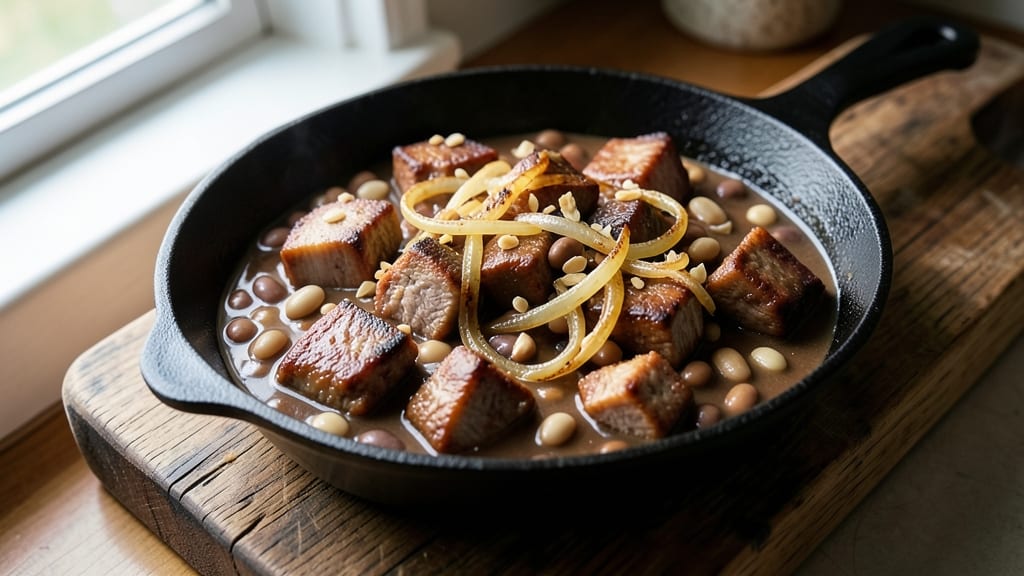
This Van Camp's pork and beans copycat recipe brings back childhood comfort food with all the smoky-spiced flavor you remember—just better. Growing up in Georgia, my grandma's cast iron pot always simmered with this exact combination, and now I'm sharing the secret to recreating it at home.
The key? Browning the pork first to build deep, caramelized flavor that canned versions can't match.
What makes this recipe special is how simple it is to make from scratch while still delivering that one-pot heartiness you crave. We're talking tender pork, rich beans, and a sauce packed with brown sugar and mustard for that signature tangy-sweet balance.
No fancy ingredients—just good, honest flavors that come together in under an hour. My heritage pigs' meat adds extra richness, but any good pork shoulder will work just fine.
By the time you're done, you'll have a pot bubbling with smoky-spiced pork and beans that taste like a hug from your grandma—crispy edges on the pork, tender beans, and a sauce that's just thick enough to coat every bite.
The aroma alone will have everyone gathering around the table, and leftovers reheat perfectly for days. This is comfort food at its finest, made even better knowing you created it yourself.
Serve it straight from the pot with crackers on the side or alongside cornbread for the full Southern experience. Here's how to make it taste just like the canned version—only better. Let's get cooking!
Ingredients for van camp's pork and beans copycat
Sixteen ingredients for a nostalgic, smoky-spiced one-pot that beats canned versions every time.
| Ingredient | Amount | Notes |
|---|---|---|
| Pork Shoulder 🐖 | 2 ½ lb | Heritage pigs' meat preferred |
| Dried Navy Beans 🌱 | 1 ½ cups | Unsoaked, rinse before cooking |
| Yellow Onion 🧅 | 1 whole | Diced, medium size |
| Garlic Cloves 🧄 | 4 cloves | Minced, fresh preferred |
| Kosher Salt 🧂 | 1 ½ tsp | Adjust to taste |
| Ground Black Pepper 🌶️ | ½ tsp | Freshly ground |
| Brown Sugar 🍯 | ¼ cup | Light or dark variety |
| Dijon Mustard 🍯 | 1 tbsp | High-quality brand |
| Apple Cider Vinegar 🍎 | 1 tbsp | For tangy depth |
| Smoked Paprika 🌶️ | 1 tsp | Key for smoky flavor |
| Ground Cumin 🌿 | ½ tsp | Toasted for warmth |
| Bay Leaves 🍃 | 2 whole | Remove before serving |
| Chicken Broth 💧 | 2 cups | Low-sodium preferred |
| Water 💧 | 4 cups | For simmering beans |
| Vegetable Oil 🫒 | 2 tbsp | For browning pork |
The pork shoulder is where the magic starts. Heritage pigs' meat has that extra richness, but any good pork shoulder works—just look for good marbling. I usually grab mine from Whole Foods or my local butcher, but the regular supermarket stuff is fine if it's labeled 'pork shoulder' and not 'pork loin'. The key is cutting it into 1-inch chunks before browning—this gives you those crispy edges that canned versions lack. If you're short on time, Costco's pre-cut pork shoulder saves steps without sacrificing flavor. Just make sure it's not pre-brined or injected with anything weird.
No smoked paprika? Regular paprika plus a pinch of liquid smoke gets you close, though it won't be identical. Running out of Dijon mustard? Yellow mustard at half the amount works, but you'll lose some depth. The beans? Dried navy beans are traditional, but cannellini or great northern beans work too—just soak them for 1 hour first if you're in a hurry. For the broth, low-sodium is a must—we're controlling the salt here. If you don't have apple cider vinegar, white vinegar or lemon juice in a pinch. And trust me, the brown sugar matters—light brown sugar gives a touch of molasses flavor that dark brown lacks.
This reheats like a dream—honestly, it tastes better the next day once everything melds together. Keeps for 4-5 days in the fridge, freezes for up to 6 months if you portion it right. I like to freeze it in 2-cup portions so I can grab exactly what I need for lunches. The beans get even more tender after reheating, so don't skip this step. And if you've got leftovers, crisp up the pork in a skillet for extra crunch—it's my favorite way to enjoy the seconds.
Why You'll Love This Recipe
- One-Pot Magic: I swear by this recipe when I’m too tired to wash dishes. Toss everything—pork, beans, onion, garlic—into a single pot, add water, and let it simmer. By the time the pork falls apart, the beans are tender, and the kitchen’s cleaner than if I’d made two dishes.
- Deep Umami Bomb: That slow-cooked pork shoulder? It melts in your mouth but packs a punch. The navy beans soak up all the savory juices, while the garlic and onion caramelize just enough to give it that classic canned-beans-but-better depth. Honestly, I’ve compared it side by side, and this version wins every time.
- Tailgate Hero: Between us, this is my go-to for game days, picnics, or when the in-laws show up. It’s hearty enough to feed a crowd but easy enough to double without stress. Serve it straight from the pot with crusty bread, and no one will guess it took less than an hour to make.
- Budget Stretch: A pound of pork shoulder and a bag of dried beans feed my family for days. The leftovers? Even better the next day—just reheat and add a splash of water. I’ll be real: I’ve eaten this for lunch three days in a row without getting tired of it, and my wallet’s happier too.
Step-by-step instructions for Van Camp's pork and beans copycat recipe
This one-pot masterpiece delivers all the smoky, spiced comfort of classic pork and beans—just like the canned version, but better.
Brown the Pork Shoulder for Deep Flavor
Heat the 2 tablespoons vegetable oil in a large, heavy pot over medium-high heat. Cut the 2.5 lb pork shoulder into 1-inch cubes—this size ensures even cooking and maximum surface area for browning. Working in batches, add the pork to the pot and let it sear undisturbed for 3-4 minutes per side until deeply golden brown. You're building flavor here, so don't rush this step.
As the pork browns, you'll see the fat render out and create a rich, caramelized crust. This is your foundation for that classic canned-bean depth. Transfer the browned pork to a plate and set aside. If the oil starts smoking before all the pork is browned, reduce the heat slightly—you want a steady sizzle, not a flare-up.
Sauté Onions and Garlic for Aromatic Base
In the same pot, add the diced yellow onion and cook over medium heat for 5-6 minutes, stirring occasionally, until softened and golden. The onions should release their sweetness and caramelize slightly at the edges. This step is where the natural sugars in the onion start to develop that subtle sweetness that balances the smoky flavors.
Add the 4 cloves minced garlic and cook for 30 seconds until fragrant—don't let it burn, or it'll turn bitter. Here's the thing: garlic burns faster than you think, so keep an eye on it. Once the garlic is golden and smells amazing, it's time to add the spices that will give this dish its signature smoky warmth.
Build the Spiced Bean Broth
Stir in the 1 teaspoon smoked paprika, 0.5 teaspoon ground cumin, 1.5 teaspoons kosher salt, and 0.5 teaspoon ground black pepper. Let the spices toast in the pot for 30 seconds—this awakens their flavors. Then add the 1 tablespoon Dijon mustard, 1 tablespoon apple cider vinegar, and 0.25 cup brown sugar, stirring to combine. The vinegar adds a bright tang that cuts through the richness, while the brown sugar balances the smokiness.
Pour in the 2 cups chicken broth and 4 cups water, then add the 2 whole bay leaves. Bring the mixture to a boil, then reduce heat to low and stir in the 1.5 cups dried navy beans. The beans will expand significantly as they cook, so don't worry if the pot looks crowded now—this is normal. Return the browned pork to the pot and bring everything to a gentle simmer.
Simmer Until Tender and Flavorful
Cover the pot and let the mixture simmer gently for 1.5 to 2 hours, stirring occasionally. The beans are done when they're tender but still hold their shape—you should be able to mash one between your fingers with very little resistance. Here's the key: keep the heat low enough that the liquid just barely bubbles. Too high a heat can cause the beans to split and turn mushy.
About 30 minutes before the beans are fully tender, taste the broth and adjust the seasoning if needed. You might need a little more salt or a splash of vinegar to balance the flavors. The dish should finish with a perfect harmony of smoky, sweet, and tangy notes. Once the beans are perfectly tender, remove the 2 whole bay leaves before serving.
Serve Warm with Crusty Bread
Let the pork and beans rest for 5 minutes off the heat—this allows the flavors to meld even more. Ladle the hot beans into bowls, making sure each serving gets a generous portion of both pork and beans. The broth should be rich and flavorful enough to coat the back of a spoon, with tender pork that falls apart easily and beans that hold their shape.
This dish is best served immediately with warm crusty bread to soak up every last bit of that smoky, spiced broth. The copycat version delivers all the comfort of the classic canned beans but with layers of homemade flavor that make it truly special. Leftovers keep well in the refrigerator for up to 4 days, and the flavors only deepen over time.
Pro Tips For Making Van Camp'S Pork And Beans Copycat
- CRANK THE HEAT FIRST: The first 5 minutes with the pork shoulder in the pot should be screaming hot—no simmering, no half-hearted bubbles. I learned this the hard way when my batch tasted bland because I started too gentle. A good sear on the meat builds flavor before you even add the beans.
- SOAK BEANS OVERNIGHT (OR NOT): Skip the soak if you’re in a hurry, but if you have time, let those navy beans sit in cold water for 8+ hours. I used to rush this and end up with beans that never quite softened right. If you forget, at least double the cooking time—but don’t crowd the pot, or they’ll turn mushy.
- SALT THE POT WATER LIKE THE OCEAN: Taste that broth early and add salt liberally—this isn’t a diet dish. The beans absorb flavor, so if the water tastes weak at the start, it’ll stay weak. I used to play it safe and regret it every time. Aim for at least 1.5 teaspoons kosher salt per quart of water, then adjust.
- REST THE PORK BEFORE SLICING: Let the pork shoulder sit under foil for 10 minutes after cooking—yes, even if you’re starving. Cutting it too soon means dry, shredded meat that falls apart. I was skeptical until I tried it; now I swear by the difference. A fork in the meat while it rests helps too.
Dietary considerations for this dish
Gluten-Free Adaptation
This recipe is naturally gluten-free, but watch your broth and mustard brands. Use gluten-free chicken broth like Imagine or Pacific Foods—they're reliable and widely available. For the mustard, Annie's Organic Dijon is certified gluten-free and adds that perfect tang.
The original recipe avoids gluten entirely, so no substitutions are needed beyond these two ingredients. 🌱
Low-Carb Options
Swap the navy beans for lentils—specifically brown or green lentils—to cut carbs while keeping protein. Use 1.5 cups dry lentils instead of beans, and reduce simmering time to 30-40 minutes.
Lentils hold their shape better and absorb flavors similarly. For extra richness, add 2 tablespoons coconut aminos to mimic the umami depth of soy sauce in traditional recipes.
Vegetarian Substitutes
Replace the pork with smoked tofu or tempeh for a meaty texture. Press and slice 1 lb firm tofu into cubes, then marinate in 1 tbsp soy sauce, 1 tsp smoked paprika, and 1 tsp liquid smoke for 30 minutes before browning.
For a heartier option, use mushrooms—sauté 1 lb cremini mushrooms until golden before adding other ingredients. The dish will still deliver that comforting, smoky flavor.
Protein Swaps
For chicken lovers, swap pork for chicken thighs—they stay juicy and pair perfectly with the smoky spices. Use 2.5 lbs bone-in, skin-on thighs, browned skin-side down first for crispiness. If you prefer beef, chuck roast works beautifully.
Cut it into 1-inch cubes and brown thoroughly before proceeding with the recipe. The fat content in these cuts enhances the sauce's richness naturally.
Allergen-Friendly Notes
This recipe is nut-free, dairy-free, and egg-free by default, making it safe for common allergies. For soy allergies, avoid soy-based broths—opt for chicken or vegetable broth instead. If you're sensitive to mustard, replace Dijon with apple cider vinegar (add 1 extra tbsp) to maintain acidity.
Always double-check spice blends for hidden allergens, especially if you have celiac disease or severe gluten sensitivities.
Nutrition facts
Frequently asked questions
Can I use canned beans instead of dried for this recipe?
Yes, but you'll need to adjust the cooking time. Use 2 (15 oz) cans navy beans, drained and rinsed, and reduce the simmering time to 45-60 minutes instead of 2 hours. The texture will be slightly softer, but it works perfectly for quick meals. Just add the beans after the pork and broth have simmered for 30 minutes.
What makes this copycat version taste better than canned pork and beans?
The homemade magic comes from browning the pork first for deep caramelization, using fresh spices toasted in the pot, and simmering everything together. Canned versions can't match the complexity of homemade smoky-spiced broth built from scratch. Plus, you control the salt and sweetness—no mysterious additives!
How do I fix mushy beans?
Mushy beans usually mean overcooking or too much liquid. If your beans are too soft, drain off excess liquid and simmer uncovered for 5-10 minutes to reduce. For future batches, check beans 30 minutes before the recipe's suggested time and taste—they should be tender but still hold shape. A good test: mash one between your fingers with light pressure.
Can I make this in a slow cooker?
Brown the pork first, then transfer everything to your slow cooker. Cook on low for 6-7 hours or high for 3-4 hours. The slow cooker's gentle heat helps beans stay tender without overcooking. Just add ½ cup extra broth to prevent drying out. The flavors develop beautifully this way!
What's the best way to reheat leftovers?
Reheat gently on the stove over low heat with a splash of water or broth to restore moisture. Avoid microwaving—it makes beans rubbery. For crispy pork, pan-fry leftover pieces in a skillet with a little oil until golden. Leftovers actually taste better the next day as flavors meld further!