
Side Dishes
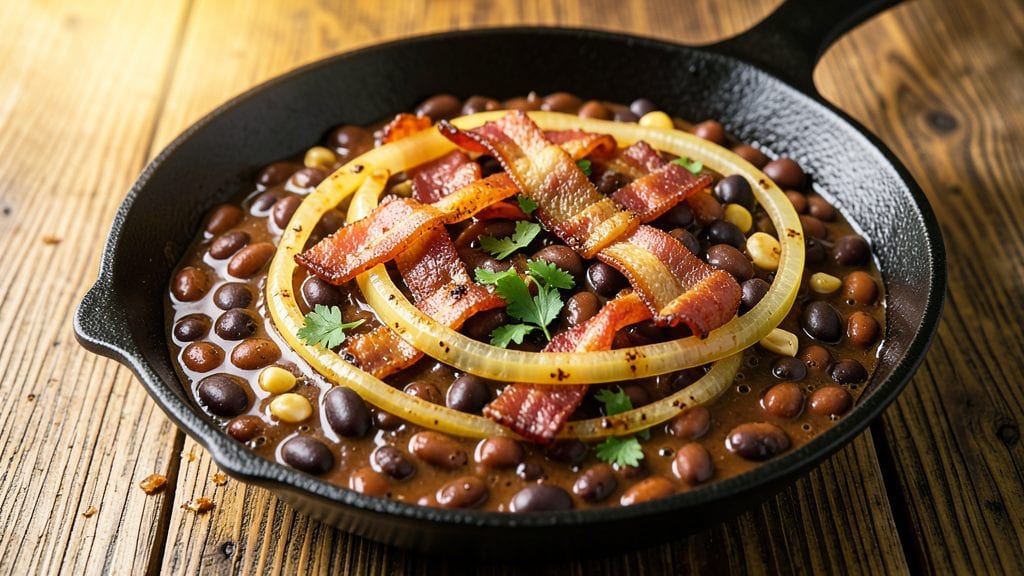
This traditional baked beans recipe delivers the rich, molasses-kissed comfort of a classic Southern side dish—where tender navy beans simmer with smoky bacon and slow-cooked spices until every bite is perfectly balanced. 🌟 I first learned the art from Mrs. Henderson in Cincinnati, where she swore by a long, low cook that develops deep flavor without a single shortcut.
The secret lies in the combination of molasses for sweetness, mustard for tang, and brown sugar to caramelize the edges. Bacon adds that essential crunch, while a splash of vinegar brightens the rich bean broth.
Unlike quick versions, this recipe rewards patience with layers of flavor that transform simple ingredients into something extraordinary.
By the time they emerge from the oven, your beans will be tender yet firm, with a glossy sheen from the molasses glaze and crispy bacon bits throughout.
The aroma alone will have everyone heading to the table, and the first bite delivers that perfect harmony of sweet, smoky, and savory that defines true comfort food.
Serve alongside grilled meats or cornbread for a meal that feels like a hug in a bowl. The beauty of this recipe is its versatility—it works for family dinners, holiday feasts, or even a cozy weeknight supper when you crave something hearty and familiar.
Ingredients for traditional baked beans
Sixteen ingredients, Southern tradition, and a slow oven for deep molasses flavor.
| Ingredient | Amount | Notes |
|---|---|---|
| Navy Beans 🥜 | 2 ½ cups | Dried, soaked overnight |
| Unsmoked Bacon 🥓 | 1 lb | Cut into 1/2-inch pieces |
| Yellow Onion 🧅 | 1 whole | Medium, chopped fine |
| Garlic Cloves 🧄 | 4 cloves | Minced, for depth |
| Molasses 🍯 | ½ cup | Unsulphured, dark variety |
| Dark Brown Sugar 🍚 | ½ cup | Packed, for caramelization |
| Yellow Mustard 🟡 | 2 tbsp | Prepared, for tang |
| Apple Cider Vinegar 🍎 | ¼ cup | For bright acidity |
| Beef Broth 🥫 | 2 cups | Low-sodium preferred |
| Water 💧 | 1 cup | For liquid balance |
| Ground Black Pepper 🌶️ | ½ tsp | Freshly cracked |
| Ground Mustard 🌶️ | 1 tsp | For subtle heat |
| Ground Cloves 🌿 | ¼ tsp | Whole, lightly crushed |
| Salt 🧂 | 1 ½ tsp | Kosher, to taste |
The beans are the foundation—navy beans hold their shape beautifully after long cooking, but pinto or kidney beans work too if that's what you have. Soak them overnight in plenty of water (they triple in size!) to ensure tender results. For the bacon, thick-cut unsmoked delivers the best crunch and smoky flavor. Look for Oscar Mayer or Costco's Kirkland brand if you're shopping for consistency. The molasses should be unsulphured—sulphured versions can taste bitter. Mrs. Henderson always used Grandma's brand, but any dark molasses will do. Brown sugar adds caramel depth, so don't skip it—Domino or C&H are reliable grocery store options.
No molasses? Maple syrup at half the amount works in a pinch, though it lacks the deep complexity. Substitute apple cider vinegar with white vinegar if needed, but the cider adds subtle fruitiness. For the mustard, Dijon can replace prepared mustard, but you'll need about 1 tbsp less since it's stronger. The spices are non-negotiable—ground cloves and mustard create that authentic Southern flavor. If you can't find ground cloves, whole cloves can be lightly crushed in a mortar and pestle. The beef broth should be low-sodium—most store brands are, but check the label. For a vegetarian version, swap the bacon for smoked paprika and use vegetable broth instead.
This recipe tastes even better the next day, so make it ahead if you can. Store leftovers in an airtight container in the fridge for up to 5 days, or freeze for 3 months. The beans thicken as they cool, so add a splash of water or broth if they seem too stiff when reheating. For serving, sprinkle with extra crispy bacon bits and a drizzle of molasses—that's the secret touch Mrs. Henderson always did. The aroma alone will have your whole house smelling like a Southern kitchen, and every bite delivers that perfect balance of sweet, smoky, and savory that makes this a true comfort classic.
Why You'll Love This Recipe
- One-Pot Magic: I swear by this recipe because it’s all in one dish—no fussing with multiple pans or pots. Just toss everything in, cover it, and let the oven do the work while you sip coffee or watch a show. Honestly, that’s my kind of cooking.
- Smoky-Sweet Obsession: The molasses and unsmoked bacon create this deep, caramelized richness that’s impossible to resist. Between us, the first bite hits like a warm hug—savory, slightly sweet, with that crispy bacon edge that makes it irresistible.
- Tailgate Champion: This is my go-to for game days, potlucks, or lazy Sundays because it’s hearty enough to feed a crowd but simple enough to double without stress. (Yes, even on a Tuesday night when you’re craving something substantial.)
- Budget Hero: Navy beans and bacon stretch into a meal that costs next to nothing but feels like a treat. Plus, the leftovers? They’re even better the next day—perfect for quick lunches or reheating for dinner when you’re too tired to cook. My wallet and taste buds thank me every time.
Step-by-step instructions for traditional baked beans
Here's the authentic method that delivers deep molasses flavor and crispy bacon every time.
🔥 Step 1: Cook the Bacon and Sauté the Aromatics
Cut the 1 lb unsmoked bacon into ½-inch pieces and cook in a large Dutch oven over medium heat until golden brown and crispy, about 8-10 minutes. Remove the bacon with a slotted spoon and set aside, leaving the rendered fat in the pot.
In the same Dutch oven, add the 1 whole yellow onion chopped fine and 4 cloves garlic cloves minced. Cook for 5-6 minutes until the onion is soft and translucent and the garlic is fragrant but not browned. This builds the flavor foundation for your beans.
👨🍳 Step 2: Combine All Ingredients in the Dutch Oven
Add the 2.5 cups soaked navy beans (drained), 0.5 cup molasses, 0.5 cup dark brown sugar, 2 tbsp yellow mustard, 0.25 cup apple cider vinegar, 2 cups beef broth, 1 cup water, 0.5 tsp ground black pepper, 1 tsp ground mustard, 0.25 tsp ground cloves, and 1.5 tsp salt to the Dutch oven. Stir well to combine all ingredients thoroughly.
Return the crispy bacon to the pot and give everything another good stir. The molasses and brown sugar will begin to caramelize slightly, creating that signature rich flavor. This is where the magic happens—don't skip the stirring to ensure even distribution of all ingredients.
🔥 Step 3: Simmer Until Tender and Flavorful
Bring the mixture to a gentle boil over medium-high heat, then reduce to a low simmer. Cover the Dutch oven and transfer to a preheated 325°F oven. Bake for 2.5 hours, stirring occasionally, until the beans are fork-tender and the sauce has thickened.
Here's the thing—traditional baked beans need that long, slow cook to develop their deep flavor. The beans should be soft enough to mash slightly with a fork but still hold their shape. If the top starts to brown too quickly, tent with foil to prevent burning while maintaining moisture.
⏰ Step 4: Rest and Serve for Maximum Flavor
Remove the beans from the oven and let them rest for 15-20 minutes before serving. This resting period allows the flavors to meld completely and the sauce to thicken further. The beans should be tender, the sauce glossy, and the bacon crispy throughout.
Serve the baked beans immediately while still warm, with the crispy bacon scattered on top. The molasses and brown sugar will give them that classic sweet-savory depth, while the apple cider vinegar adds a bright tang. Each bite should deliver that perfect balance of textures and flavors that makes traditional baked beans so special.
Pro Tips For Making Traditional Baked Beans
- CRANK THE HEAT FIRST: Dump your beans, bacon, and onions into the pot and bring it to a rolling boil for 5 minutes straight—no simmering yet. I learned this the hard way when my beans turned out mushy from a slow start; high heat breaks down the starches just enough to keep them firm later.
- USE DRY BEANS, NOT CANNED: Skip the canned shortcut unless you’re in a rush—dried navy beans develop deeper flavor and hold their shape better. Rinse them well, then soak overnight in cold water (no salt) with a splash of vinegar to soften them faster and cut down on cooking time.
- CHOP BACON SMALLER THAN YOU THINK: Tiny dice—about ¼-inch pieces—cook faster and distribute flavor evenly. I used to cut it in big chunks, and half the batch would end up undercooked while the rest turned crispy. Also, render the fat first before adding anything else.
- ADD MOLASSES LAST: Stir in the molasses only after the beans are tender and the sauce has thickened—around 2 hours in. Adding it too early can make the beans taste bitter, and you’ll need to adjust the sweetness as you go. Start with ¼ cup and taste as you bake.
Essential equipment for perfect results
Dutch Oven Essentials
Your Dutch oven is the star of this recipe—I swear by my Lodge 5.5-quart cast iron for its even heat distribution and durability. The deep sides prevent spills during stirring, and the heavy material maintains consistent oven temperatures.
If you don't own one, a heavy-bottomed stainless steel pot (like All-Clad) works too, though it may need occasional stirring to prevent sticking. 🔥
Bacon Cooking Tools
Use a slotted spoon (preferably stainless steel) to remove crispy bacon without losing those precious fat bits. I keep a small wire cooling rack handy to drain excess fat from bacon before returning it to the pot—this prevents soggy texture.
For chopping bacon, a sharp chef's knife or mandoline (set to ½-inch thickness) ensures even cooking.
Measuring Precision
Molasses and brown sugar need accurate measurements—use a liquid measuring cup for the molasses and pack the brown sugar firmly into your dry measure. A digital kitchen scale (like OXO Good Grips) eliminates guesswork for spices, where ¼ tsp ground cloves can make a huge difference.
I always measure vinegar and mustard in a small glass jar with a pour spout for clean transfers.
Oven Thermometer Check
Your oven's 325°F setting might actually be 300°F—I learned this the hard way! Invest in an oven thermometer (I use Thermoworks) to verify accuracy. Place it on the middle rack while preheating, then adjust your oven's temperature if needed.
This ensures your beans cook evenly and develop that perfect molasses caramelization without burning.
Bean Soaking Setup
For overnight soaking, I use a large glass bowl with plenty of water (about 10 cups for 2.5 cups dry beans). Add 1 tsp baking soda to help soften the beans faster.
Drain using a fine-mesh colander (like OXO Good Grips) before adding them to the pot. Pro tip: Save the soaking water for broth—it's packed with flavor! 💫
Storage Containers
For leftovers, transfer beans to glass Pyrex containers with tight-sealing lids—I avoid plastic when reheating. Label with dates using a permanent marker since baked beans last 5 days refrigerated or 3 months frozen.
For freezing, portion into quart-sized freezer bags with 1-inch headspace to prevent expansion cracks. Thaw overnight in the fridge before reheating.
Nutrition facts
Frequently asked questions
Can I make traditional baked beans without molasses?
Yes! While molasses creates that signature deep flavor, you can substitute ½ cup maple syrup for a similar sweetness level. For extra richness, add 1 tbsp coffee or 1 tsp cocoa powder—both enhance the savory depth. The beans will taste slightly different but still delicious, especially if you boost the spices like cloves and mustard.
Why do my baked beans turn out too sweet?
Too much sugar or molasses is usually the culprit. Start by reducing the brown sugar to ¼ cup and molasses to ⅓ cup. Balance the sweetness with an extra 1 tbsp apple cider vinegar or ½ tsp smoked paprika—both add complexity. Taste as you go and adjust gradually; the beans should finish with a subtle sweetness, not cloying.
Can I use canned beans instead of dried?
For 2.5 cups dried beans, use 3 (15-oz) cans navy beans, drained and rinsed. Skip the overnight soaking, but add ½ cup extra liquid (broth or water) since canned beans absorb less moisture. The texture will be slightly softer, but the flavor remains rich. For best results, simmer on the stovetop for 30 minutes before transferring to the oven.
How do I fix beans that are still hard after baking?
Undercooked beans happen when the oven isn't hot enough or the beans weren't soaked properly. Remove the beans from the oven, add ½ cup hot water or broth, and return to the oven for another 30-45 minutes. For future batches, ensure your oven reads 325°F (use an oven thermometer!) and soak beans for at least 8 hours or overnight.
What’s the best way to reheat leftovers?
Reheat gently to preserve texture. Transfer beans to a pot and warm over low heat with 2-3 tbsp water or broth, stirring occasionally. Avoid microwaving—it makes the sauce watery. For crispy bacon, add fresh bits when serving. If the beans seem thick, thin with a splash of liquid before reheating. Leftovers taste even better the next day!