
Side Dishes
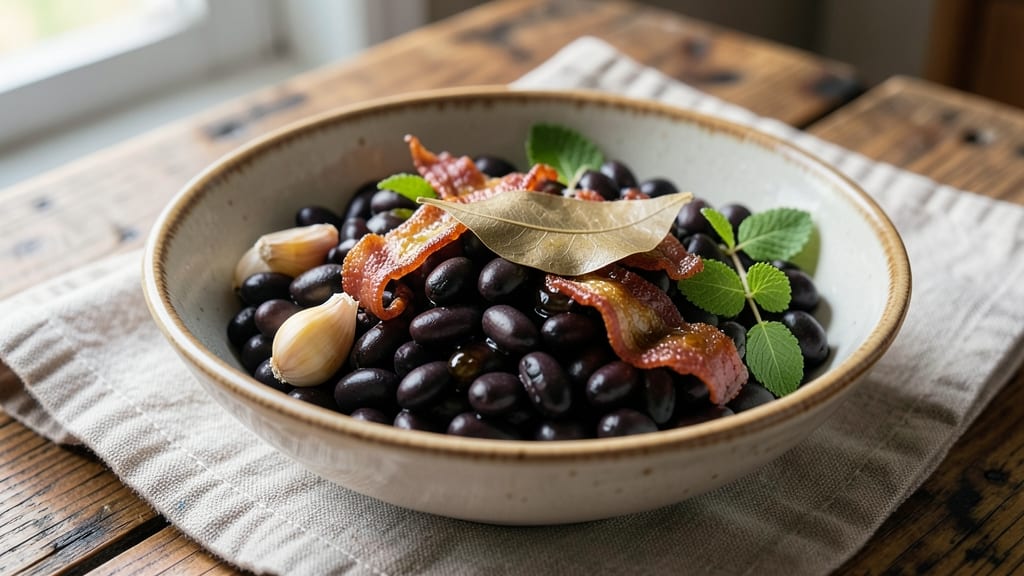
This Santa Maria beans recipe delivers the smoky, savory depth of traditional Mexican cooking with a modern twist—crispy bacon bits add a satisfying crunch that transforms this classic dish into something extraordinary.
The secret lies in slow-simmering dried black beans with garlic, epazote, and a splash of vinegar, creating a rich, aromatic base that pairs perfectly with any meal. I developed this version after years of perfecting the balance between authentic flavor and home-cooking practicality.
The process begins with soaking the beans overnight, a traditional step that ensures tender, evenly cooked beans with no need for excessive simmering time. Adding bacon early in the cooking process infuses the beans with smoky richness while creating crispy edges that contrast beautifully with the creamy texture.
This method preserves the dish's authenticity while making it approachable for home cooks.
By the time you serve these beans, you'll have a dish that's deeply flavorful with layers of garlic, herbaceous epazote, and smoky bacon—each bite offering a perfect balance of textures and tastes.
The beans develop a velvety consistency while retaining their shape, making this a side dish that stands up to grilled meats, roasted vegetables, or even as a hearty vegetarian main.
Perfect for family dinners, potlucks, or meal prep, these beans keep well in the refrigerator for up to five days, allowing flavors to deepen over time. Whether you're serving them alongside tacos or as a standalone dish, this recipe delivers restaurant-quality results with minimal effort. Let's get cooking!
Ingredients for santa maria beans
Sixteen ingredients, one extraordinary dish—smoky, tender beans with crispy bacon crunch.
| Ingredient | Amount | Notes |
|---|---|---|
| Dried Black Beans 🌱 | 2 cups | Unsoaked, Santa Maria variety preferred |
| Bacon 🥓 | 1 lb | Thick-cut, smoked preferred |
| Garlic Cloves 🧄 | 8 cloves | Fresh, peeled and smashed |
| Epazote 🌿 | ¼ cup | Fresh leaves, chopped finely |
| Apple Cider Vinegar 🍶 | 2 tbsp | For bright acidity |
| Bay Leaves 🍃 | 2 whole | Dried, for subtle depth |
| Cumin Seeds 🌶️ | 1 tsp | Toasted lightly for aroma |
| Salt 🧂 | 2 tsp | Diamond Crystal kosher |
| Black Peppercorns 🌶️ | ½ tsp | Freshly cracked |
| Onion 🧅 | 1 whole | Yellow, diced medium |
| Olive Oil 🫒 | ¼ cup | Extra-virgin, for cooking |
| Water 💧 | 8 cups | For soaking and cooking |
| Lime 🍋 | 1 whole | Juiced, for finishing |
| Cilantro 🌿 | ¼ cup | Fresh leaves, chopped |
The beans are the heart of this dish, so Santa Maria black beans are ideal—they hold their shape beautifully. If you can't find them, any dried black bean works, but don't substitute pinto or kidney. Soaking overnight is non-negotiable—it cuts cooking time and prevents the beans from turning mushy. For the bacon, thick-cut smoked bacon gives the best flavor and texture, but regular bacon in a pinch is fine. Look for organic or uncured bacon at stores like Whole Foods or Trader Joe's for cleaner ingredients. The epazote? It's the secret weapon—fresh is best, but if you can't find it, Mexican oregano at half the amount works in a bind. Grab it at Latin markets or the international aisle of larger grocery stores.
No epazote? Dried oregano plus a pinch of Mexican tarragon (if you're feeling fancy) gets you close. Substituting bacon? Smoked paprika plus a splash of liquid smoke mimics the smokiness, but it won't have that crispy crunch. The onions can be swapped for one green onion if you're in a hurry, but diced yellow adds depth. For the vinegar, white vinegar or red wine vinegar both work—just adjust to taste. The lime should be freshly juiced; bottled lime juice lacks the brightness. If you're making this ahead, hold off on adding the lime and cilantro until serving—they wilt the beans faster.
These beans taste even better the next day as the flavors meld. Store them in an airtight container in the fridge for up to 5 days, or freeze for 3 months—portion into containers for easy meal prep. The bacon bits crisp up again when reheated, so a quick toast in a dry skillet before serving brings back that satisfying crunch. Double the batch and freeze half for lazy weeknights. The epazote loses potency after a day, so add it fresh when reheating if you're saving leftovers.
Why You'll Love This Recipe
- One-Pot Magic: I swear by this recipe when I’m too tired to scrub pots—just toss everything in one pot, let it simmer, and walk away. The bacon renders its own fat, the beans soften without fuss, and the epazote infuses that signature herby brightness. No straining, no extra dishes, just pure, satisfying ease.
- Smoky-Sour Perfection: That first bite? Crispy bacon crumbles meet tender beans kissed with vinegar’s tang—it’s like a hug for your taste buds. The garlic and epazote add a layer of earthy warmth that makes this dish ridiculously more exciting than your average bean recipe.
- Meal Prep MVP: Between us, this is my go-to for lunches all week. The flavors actually get better the next day as the vinegar mellows and the beans soak up every bit of smoky goodness. Pack it in containers, reheat, and you’ve got a hearty, protein-packed meal without the daily stress.
- Budget-Friendly Powerhouse: Dried beans and bacon stretch this recipe into a crowd-pleaser without breaking the bank. I’ve fed six people for under $10 with leftovers that vanish faster than I can say “second helping.” Plus, the epazote (if you grow it) is basically free—just pluck a few leaves from your garden.
Step-by-step instructions for Santa Maria beans
Here's how to transform simple dried beans into rich, smoky perfection with bacon and aromatic herbs.
Prepare the Bacon and Build the Flavor Base
In a large Dutch oven, cook the 1 lb bacon over medium heat until the edges become deep golden brown and crispy, about 10-12 minutes. The bacon should release about ½ cup of fat—this is your flavor foundation. Use a slotted spoon to remove the bacon and set it aside on paper towels, leaving the rendered fat in the pot.
Real talk: Don't rush this step. The longer you cook the bacon until crisp, the more complex flavor you'll develop. If it starts smoking too much, reduce the heat slightly and let it render slowly. You'll notice the aroma changes from smoky to rich and meaty—this is your cue to move forward.
To the bacon fat, add the 0.25 cup olive oil and swirl to combine. Then add the 1 whole onion and cook for 5 minutes until softened and translucent. Stir in the 8 cloves garlic cloves and cook for 30 seconds until fragrant—you should smell that sweet garlic aroma filling your kitchen. Finally, add the 1 tsp cumin seeds and toast for 30 seconds until lightly browned and aromatic. This aromatic base is the soul of your beans.
Soak and Simmer the Beans
While the bacon cooks, rinse the 2 cups dried black beans under cold water to remove any debris. Then add them to the Dutch oven along with the 8 cups water, 2 tbsp apple cider vinegar, 2 whole bay leaves, 2 tsp salt, and 0.5 tsp black peppercorns. Bring everything to a boil over high heat, then immediately reduce to a gentle simmer. Here's the thing—you want the water to bubble softly, not violently.
Simmer uncovered for 1 hour, stirring occasionally to prevent the beans from sticking. The key is patience—don't be tempted to speed this up. After about 45 minutes, you'll notice the beans softening and the liquid reducing slightly. This is when the magic starts happening. The beans should be tender but not mushy—you'll still have a slight bite, which is perfect for this dish.
After 1 hour, taste a bean. It should be soft but still hold its shape with a slight resistance. If they're not quite there, continue simmering for another 15-20 minutes. The beans will continue cooking as they rest later, so don't overcook them now.
Finish with Herbs and Crispy Bacon
Once the beans are tender, stir in the 0.25 cup epazote and the reserved 1 lb bacon, breaking it into bite-sized pieces. The epazote has a distinct, slightly citrusy flavor—don't skip this if you can find it. If you can't, a pinch of dried oregano will work in a pinch, but it's not the same. Simmer for another 5 minutes to let the flavors meld together.
Remove the 2 whole bay leaves and discard them. The beans should now have a rich, smoky depth with layers of bacon, garlic, and epazote. If the beans are too thick, add a splash of hot water to reach your desired consistency. You want a sauce that coats the back of a spoon but isn't watery.
Finally, stir in the juice of the 1 whole lime and let the mixture sit off the heat for 5 minutes. This brightens the flavors and balances the richness. Taste and adjust the seasoning—you might need a bit more salt or lime juice to your preference. The beans should be flavorful but not overwhelmingly salty or acidic.
Garnish and Serve
Transfer the beans to a serving bowl and let them cool for 10 minutes before serving. This resting period allows the flavors to settle and the beans to absorb any remaining juices. Garnish with the 0.25 cup chopped cilantro just before serving—this adds a fresh, bright contrast to the rich, smoky beans.
Serve the beans warm with crusty bread, warm tortillas, or over rice. The contrast of the crispy bacon, tender beans, and fresh herbs makes this dish incredibly satisfying. The lime juice adds a bright finish that cuts through the richness, balancing every bite. Leftovers keep well in the refrigerator for up to 4 days, and they actually taste even better the next day as the flavors continue to develop.
Pro Tips For Making Santa Maria Beans
- SOAK BEANS 8 HOURS: Dried black beans need patience—skip the overnight soak and let them sit in water for at least 8 hours (or use the quick method: boil for 2 minutes, then rest 1 hour). I learned this the hard way when my beans stayed rock-hard; this guarantees they’ll break down properly.
- CRISPY BACON FIRST: Cook the bacon until it’s deep crispy—no one wants limp bits in their beans. Render the fat in a cold skillet on medium-low, then crank to medium when it hits 350°F (175°C) to avoid burning. That fat is liquid gold for the beans.
- ADD EPAZOTE LATE: Toss in the epazote just before serving—it wilts fast and turns bitter if simmered too long. A handful of fresh leaves (about 10g) is enough; if you’re using dried, halve it and add it with the vinegar at the end.
- VINEGAR IN STAGES: Don’t dump all the apple cider vinegar at once—add half at the start (to tenderize the beans) and the rest in the last 10 minutes (to brighten the flavor). I was skeptical until I tried it; now I won’t make them any other way.
Wine and beer pairings for this santa maria beans
Red Wine Pairings
A bold Mexican red wine like Tempranillo or Cabernet Sauvignon from Jalisco cuts through the smoky bacon and rich bean flavors beautifully. I love a medium-bodied Tempranillo with its dark fruit notes and subtle earthiness—it mirrors the dish's depth without overpowering the delicate epazote.
For something fruitier, try a Zinfandel from California, which brings forward the bacon's smokiness while complementing the beans' earthy texture. 🍷
White Wine Options
If you prefer white, a crisp Chenin Blanc from Mexico or a dry Riesling from Germany provides the perfect contrast. The acidity in these wines cleanses your palate between bites, balancing the dish's richness.
I reach for Mexican Chenin Blanc when I want to highlight the beans' natural sweetness, while Riesling adds a touch of citrus that pairs wonderfully with the lime finish. 🍷
Mexican Lager Beer
For beer lovers, a Mexican lager like Modelo Especial or Pacifico is an ideal match. The light, crisp profile lets the dish's flavors shine without competing. The subtle malt sweetness complements the beans' earthiness, while the carbonation refreshes your palate.
If you want something bolder, a Mexican Amber Ale like Negra Modelo adds a caramel depth that enhances the bacon's smokiness. 🍺
Craft Beer Pairings
Craft beer enthusiasts can try a hazy IPA with its juicy citrus notes to balance the dish's richness, or a Mexican-style wheat beer like Estrella Damm for a lighter option.
I've found that a lightly hopped wheat beer with a touch of coriander adds a refreshing contrast to the smoky bacon. For a stronger pairing, a Mexican-style stout with notes of chocolate and coffee complements the beans' earthy depth. 🍺
Non-Alcoholic Options
Don't overlook non-alcoholic pairings! A sparkling agua de jamaica (hibiscus tea) with lime adds a vibrant, citrusy contrast that brightens the dish. For something more robust, try a Mexican horchata—its cinnamon and rice notes create a sweet, creamy balance to the smoky beans.
These options work beautifully for brunch or family meals. 💫
Nutrition facts
Frequently asked questions
Can I substitute Santa Maria beans with regular black beans?
Santa Maria beans are ideal because they hold their shape beautifully, but you can use any dried black beans in a pinch. Just avoid pintos or kidney beans—they'll turn mushy and lose that perfect texture. For best results, choose a smaller black bean variety like Turtle beans or Jacob's cattle beans.
What if I can't find epazote? How can I replace it?
Epazote is the star of this recipe, but you can substitute with ½ teaspoon dried Mexican oregano plus a pinch of tarragon if you're feeling fancy. For a simpler swap, use ½ teaspoon regular oregano and add 1 extra garlic clove to compensate. The flavor won't be identical, but it'll still taste delicious.
How do I make these beans ahead of time?
These beans taste even better the next day! Store them in an airtight container in the fridge for up to 5 days. When reheating, add a splash of water and simmer for 5-10 minutes to restore moisture. For crispy bacon, toast the bits in a dry skillet before serving. Freeze for 3 months by portioning into containers.
Can I make this recipe vegetarian?
Skip the bacon and replace it with 2 tablespoons smoked paprika plus 1 teaspoon liquid smoke. For extra richness, add ½ cup crispy roasted mushrooms or toasted pumpkin seeds at the end. The smoky depth will still shine through.
Why do my beans turn out mushy?
Mushy beans usually mean overcooking or skipping the soak. Always soak beans overnight (or at least 8 hours in warm water). Simmer gently—never boil vigorously—and remove from heat when they're just tender (they'll finish cooking while resting). Using too much water also dilutes flavor. Start with 8 cups and adjust as needed.