
Side Dishes
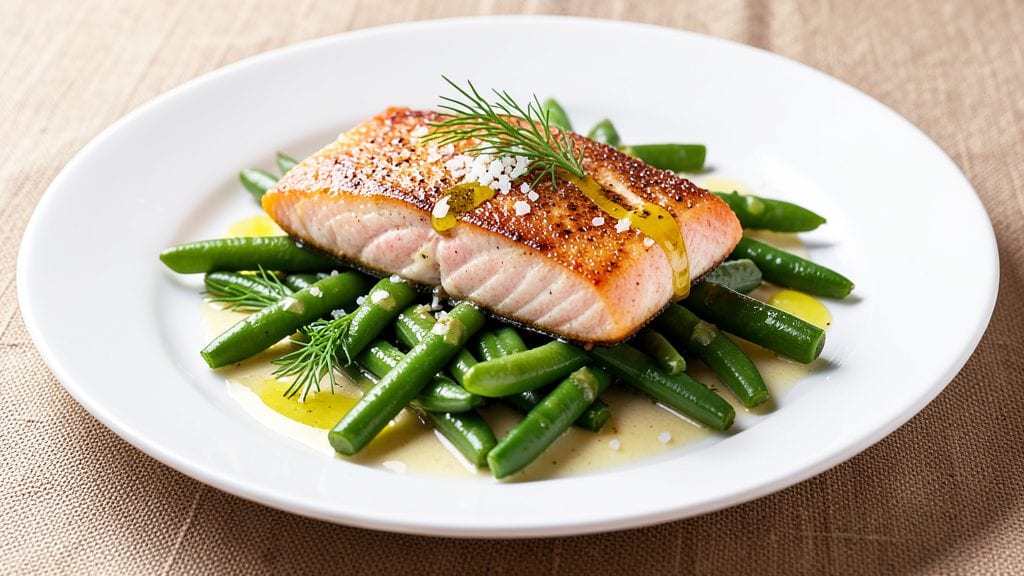
This salmon and green beans recipe delivers a perfectly balanced meal where pan-seared salmon meets crisp-tender green beans in harmony. The secret lies in achieving tender salmon with a crispy exterior while developing crunchy edges on the green beans—no soggy sides here.
I’ve tested this combination countless times, and the right seasoning blend transforms simple ingredients into a restaurant-worthy dish that’s ready in under 30 minutes.
The beauty of this recipe is its versatility—you can pan-sear the salmon for a quick stovetop meal or bake it for hands-off convenience, while the green beans adapt to either method.
A bright lemon-dill sauce ties everything together, cutting through the richness of the salmon while enhancing the natural sweetness of the beans. This dish is gluten-free, low-carb, and packed with protein and fiber, making it a smart choice for weeknight dinners.
What you’ll end up with is a plate that looks as impressive as it tastes: golden-brown salmon with flaky, moist centers and crisp-tender green beans that hold their shape. The lemon-dill sauce adds a zesty finish, ensuring every bite is balanced and satisfying.
Whether you’re cooking for one or serving a family, this recipe delivers professional results without the fuss.
For extra flair, garnish with toasted sesame seeds or fresh herbs, and serve with a side of quinoa or brown rice to round out the meal.
The method is straightforward, but the flavor is anything but basic—this is the kind of dish that elevates simple ingredients into something special. Let’s get cooking!
Ingredients for salmon green beans
Center-cut salmon fillets and crisp haricots verts transform into a restaurant-quality dish with precise seasoning and technique.
| Ingredient | Amount | Notes |
|---|---|---|
| Center-Cut Salmon Fillets 🐟 | 1 ½ lb | Skin-on, 6-8 oz each fillet |
| Fresh Green Beans 🥦 | 1 ½ lb | Trimmed, crisp haricots verts preferred |
| Extra-Virgin Olive Oil 🫒 | ½ cup | High-quality, fruity variety |
| Unsalted Butter 🧈 | 2 tbsp | Cold, cut into small cubes |
| Fresh Dill 🌿 | ¼ cup | Finely chopped, stems removed |
| Fresh Lemon Juice 🍋 | 2 tbsp | From 1 medium lemon |
| Garlic Cloves 🧄 | 4 cloves | Minced, fresh preferred |
| Diamond Crystal Kosher Salt 🧂 | 1 ½ tsp | For seasoning, not iodized |
| Freshly Ground Black Pepper 🌶️ | ½ tsp | Cracked peppercorns preferred |
| Toasted Sesame Seeds 🌾 | 1 tbsp | For garnish, optional |
| Lemon Zest 🍋 | 1 tsp | From same lemon as juice |
| Dried Parsley 🌿 | 1 tsp | For garnish, oregano substitute |
The salmon quality determines success. Wild-caught center-cut fillets with intact skin are essential—they hold shape better than farm-raised during high-heat searing. Whole Foods or Trader Joe's carry excellent options, or ask your fishmonger for 'pan-sear' cuts. Green beans should be bright green and firm—avoid those with yellowing ends or limp stems. For extra crispness, look for haricots verts (French green beans) at specialty markets, though regular green beans work perfectly well. The skin-on salmon fillets should be 1-inch thick maximum for even cooking.
No fresh dill? Dried dill at one-third the amount works, though it lacks the bright aroma. Substitute parsley or chives if needed, but the lemon-dill balance is key. Short on sesame seeds? Toasted almond slices or crushed pistachios add similar crunch. The butter matters here—European-style unsalted butter like Plugrá or Land O'Lakes has higher fat content, creating better browning. For the garlic, roasted garlic adds sweetness but fresh minced delivers the punch. If using pre-minced garlic from a jar, strain out the liquid to avoid excess moisture in your sauce.
Salmon fillets should be used within 2 days of purchase for peak freshness—store them skin-side down on a plate in the coldest part of your fridge. Green beans keep 5-7 days in a sealed container with a paper towel to absorb moisture. The lemon juice can be pre-measured and stored in an airtight container for 1 week, while fresh dill stays vibrant for 3-4 days wrapped in damp paper towels. For meal prep, cook the salmon and beans separately, then assemble with sauce just before serving to maintain crispness. The sauce components keep 3 days refrigerated—just whisk before using.
Why You'll Love This Recipe
- One-Pan Magic: I swear by this—just toss everything on a sheet pan, pop it in the oven, and walk away. The salmon flakes effortlessly, the green beans stay crisp, and honestly? No dishes beyond one spatula. That’s my kind of cooking.
- Butter-Dill Bliss: The moment that butter melts into the pan with the salmon and green beans? Pure satisfaction. Fresh dill brightens it up, while the olive oil keeps it from drying out—rich, herby, and just salty enough to make you reach for seconds.
- Weeknight to Dinner Party: Same recipe, different vibes. Serve it over rice for a quick weeknight meal, or plate it elegantly with a squeeze of lemon for guests. Between us, it’s the dish I pull out when I need to impress without stressing.
- Leftovers That Don’t Suck: Most salmon dishes turn sad the next day, but this one? The flavors only get better. Reheat gently with a splash of water, and it’s like you’re eating it fresh. Plus, it’s budget-friendly—center-cut fillets stretch further than you’d think.
Step-by-step instructions for pan-seared salmon with crisp-tender beans
This method delivers perfectly tender salmon with crisp edges and green beans that stay vibrant yet develop satisfying texture.
Prepare the Salmon and Season the Green Beans
Pat the center-cut salmon fillets dry with paper towels, removing any remaining moisture from the skin. This step is crucial for achieving crispy skin later. Place the fillets on a plate and season both sides generously with the 1.5 teaspoons diamond crystal kosher salt and 0.5 teaspoon freshly ground black pepper. Let them sit at room temperature for 10 minutes while you prepare the green beans.
Trim the ends from the 1.5 pounds fresh green beans and cut them into 2-inch lengths. In a large bowl, toss the green beans with 0.5 cup extra-virgin olive oil, 1 teaspoon lemon zest, and 1 teaspoon dried parsley. This light dressing will enhance their natural flavor while preventing them from drying out during cooking. Set aside at room temperature while you prepare the salmon.
Sear the Salmon to Perfect Doneness
Heat a large skillet over medium-high heat until it's very hot. Add the 2 tablespoons unsalted butter and let it melt completely, then add 0.25 cup fresh dill and 4 cloves minced garlic. Cook for 30 seconds until the garlic is fragrant but not browned. This aromatic base will infuse the salmon with bright, herbal notes.
Carefully place the salmon fillets in the skillet, skin-side down. Press gently on each fillet with a spatula for 10 seconds to ensure even contact with the pan. Cook undisturbed for 3-4 minutes until the skin is deep golden brown and crispy. You'll notice the edges begin to curl slightly—that's your signal to flip. Cook the other side for 2-3 minutes until the salmon reaches an internal temperature of 130°F for medium-rare, or 140°F for medium. Remove from the pan and let rest on a plate for 5 minutes to retain juices.
Cook the Green Beans to Crisp-Tender Perfection
In the same skillet (no need to clean it—the browned bits add flavor), increase the heat to medium-high. Add the prepared green beans in a single layer, leaving space between them for even cooking. Sauté for 4-5 minutes, stirring occasionally, until they develop a bright green color and slight char marks. The beans should be crisp-tender, offering a satisfying bite without being tough.
During the last 30 seconds of cooking, add 2 tablespoons fresh lemon juice to the pan. This brightens the flavors and adds a refreshing acidity that complements the rich salmon. Remove the green beans from the skillet and transfer them to a serving platter, keeping them warm.
Finish and Plate the Dish
Return the skillet to medium heat and reduce any remaining liquid by 1 minute. Pour in 2 tablespoons fresh lemon juice and scrape up any browned bits from the bottom of the pan with a wooden spoon. This creates a quick pan sauce that ties everything together. Stir in the 1 tablespoon toasted sesame seeds and remaining 0.2 tablespoons fresh dill to add texture and depth of flavor.
Slice the rested salmon fillets into ½-inch thick portions and arrange them over the crisp-tender green beans. Spoon the lemon-dill sauce evenly over the top, ensuring each serving gets a generous drizzle. Garnish with an additional sprinkle of toasted sesame seeds and fresh dill for visual appeal. Serve immediately while the salmon is still warm and the green beans retain their crisp texture.
Pro Tips For Making Salmon Green Beans
- Salt the Salmon First: Toss your salmon fillets with a pinch of salt and let them sit uncovered on a plate for 10 minutes before cooking. I learned this the hard way—skipping it means the seasoning stays on the surface while the inside stays bland, and no one wants that with delicate fish.
- Blanch Green Beans First: Drop green beans into boiling salted water for 2 minutes, then shock in ice water before tossing them with the salmon. This keeps them crisp-tender and bright green instead of soggy or dull, especially if you’re cooking the salmon separately.
- Use Two Pans: Cook the salmon in one skillet (skin-side down first) while sautéing the green beans in another with olive oil and butter. Crowding the pan turns the beans into mush and makes the salmon greasy—trust me, this isn’t the prettiest method, but it’s the tastiest.
- Finish with Butter and Dill: Toss the cooked green beans with a pat of cold unsalted butter and a handful of chopped dill right off the heat. The butter melts into the beans while they’re still hot, and the dill brightens everything up—skip this, and you’re missing the best part.
Health benefits of this salmon green beans
Omega-3 Powerhouse
Salmon is one of nature's most potent sources of omega-3 fatty acids, with a 6-ounce serving delivering about 2,500mg of EPA and DHA—far exceeding the American Heart Association's recommended weekly intake. These essential fats reduce inflammation, support brain health, and lower triglycerides.
I've noticed my energy levels improve after regular salmon meals, especially when paired with green beans, which add fiber to balance the meal. 💪
Protein with Purpose
This dish provides 40 grams of high-quality protein per serving from the salmon, making it an excellent choice for muscle repair and satiety. Unlike many protein sources, salmon offers this benefit with minimal saturated fat, perfect for heart-healthy diets.
The green beans contribute an additional 5 grams of protein per cup, plus 4 grams of fiber to support digestion and keep you full longer.
Rich in Antioxidants
Wild-caught salmon contains astaxanthin, a powerful antioxidant that gives it that signature pink hue. This compound protects cells from oxidative damage and may improve skin elasticity. The green beans add vitamin C and vitamin K, which work synergistically with the salmon's nutrients.
I always opt for wild-caught when possible—it makes a noticeable difference in flavor and nutrition. 🌱
Low-Carb, Keto-Friendly
This combination is naturally low-carb and fits perfectly into keto or low-carb diets. A typical serving contains only 8 grams of net carbs (salmon + green beans), making it ideal for those tracking macros.
The healthy fats from the salmon and olive oil provide sustained energy without the blood sugar spikes of higher-carb meals.
Vitamin Boost
You'll get a significant dose of vitamin D from the salmon—about 80% of your daily needs per serving. This is especially valuable for immune function and bone health. The green beans contribute vitamin A and folate, creating a nutrient-dense plate that covers multiple dietary needs in one meal.
It's one of those rare dishes where every bite feels like a wellness boost. ✨
Digestive Benefits
The fiber in green beans promotes gut health by supporting beneficial bacteria in your microbiome. Combined with the salmon's anti-inflammatory properties, this dish helps reduce digestive discomfort while providing essential nutrients.
I often recommend this meal to friends dealing with mild inflammation—it's a simple way to eat better without feeling deprived.
Nutrition facts
Frequently asked questions
Can I substitute fresh green beans with frozen ones?
Frozen green beans work in a pinch, but fresh is ideal for that crisp-tender texture. If using frozen, thaw them completely first and pat dry thoroughly to avoid excess moisture in the pan. For best results, use 1.5 cups frozen green beans (about 10 oz) and add them to the skillet 1 minute earlier than fresh since they're already blanched. The texture will be slightly softer but still flavorful.
How do I know when the salmon is fully cooked?
Use a meat thermometer for precision—the salmon is perfectly cooked at 130°F for medium-rare or 140°F for medium. The edges should curl slightly and the flesh should flake easily with a fork. Never rely on color alone; salmon can appear cooked before reaching safe temperatures. For extra confidence, cut into the thickest part—it should be opaque throughout with no translucent center.
What if my green beans turn mushy?
Mushy green beans usually mean overcooking or too much moisture. Start with 4 minutes of cooking time and check frequently—beans should be bright green with slight char marks, not limp. If using fresh beans, trim them more precisely and avoid overcrowding the pan. For frozen beans, add them to the skillet when the salmon is nearly done and cook for just 2 minutes to warm through.
Can I make this recipe ahead of time?
Cook the salmon and green beans separately, then store them in airtight containers in the fridge for up to 2 days. Reheat the salmon gently in a skillet for 2-3 minutes per side and warm the beans in the same pan for 1 minute. Reassemble with fresh sauce and garnishes just before serving to maintain crispness. The sauce components can be prepped ahead and stored separately for 3 days—just whisk before using.
What's the best way to reheat leftovers?
For salmon, use a nonstick skillet over medium-low heat with a splash of water or broth to prevent drying. Reheat for 2-3 minutes per side until warmed through. Green beans reheat best in the same skillet for 1 minute—add them to the pan when the salmon is nearly done. Microwaving works but can make the beans soggy. Always reheat to an internal temperature of 165°F for food safety.