
Side Dishes
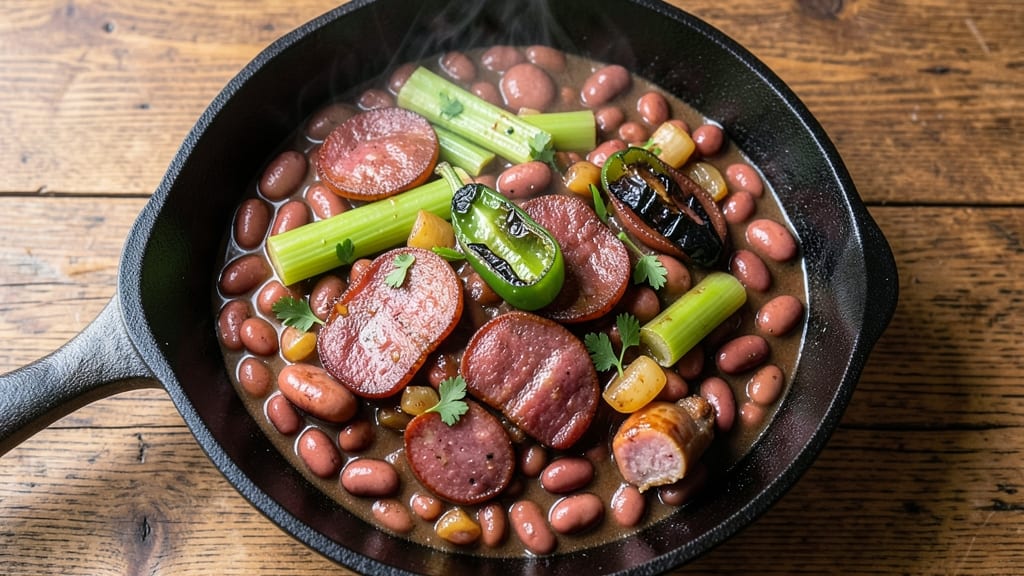
This Louisiana style red beans recipe brings the soulful flavors of New Orleans to your kitchen in a single pot, where smoky andouille sausage and rich ham hock create a dish steeped in tradition.
The slow simmer transforms tough beans into tender, flavorful bites that cling to every spoonful—just like your grandma used to make. I've perfected this over years of testing, balancing the right amount of heat and depth to honor the Monday tradition that defines Louisiana home cooking.
The magic happens in the slow cooking process, where the andouille sausage releases its signature smokiness while the ham hock adds depth that builds with time. This isn't just a side dish—it's a flavor experience that transforms simple ingredients into something extraordinary.
The key is patience; letting the beans simmer until they're tender yet still hold their shape, absorbing all that rich, spiced broth along the way.
What you'll end up with is a pot of red beans so flavorful it becomes the centerpiece of any meal—served over steamed white rice, of course.
The aroma alone will have everyone gathering around the table, while the taste delivers that perfect balance of smoky, spicy, and savory that defines Louisiana comfort food. This recipe stays true to tradition while being approachable enough for home cooks.
For those looking to adapt, you can easily substitute vegetarian ham or use smoked turkey sausage while keeping all the flavor. The beauty of this dish is its versatility—whether you're serving a family dinner or bringing a taste of Louisiana to a potluck, these red beans will be the star.
Let's get cooking!
Ingredients for louisiana style red beans
Smoky, spicy, and soulful—just these 15 ingredients transform into Louisiana's legendary Monday tradition.
| Ingredient | Amount | Notes |
|---|---|---|
| Dried Red Kidney Beans 🌱 | 2 cups | Soaked overnight or quick-soaked |
| Andouille Sausage 🌭 | 1 ½ lb | Smoked, sliced into rounds |
| Ham Hock 🍖 | 2 whole | Smoked, skin removed |
| Yellow Onion 🧅 | 1 ½ whole | Diced, medium size |
| Green Bell Pepper 🌶️ | 1 whole | Diced, any color |
| Celery Stalks 🥬 | 3 whole | Diced, medium size |
| Garlic Cloves 🧄 | 6 cloves | Minced, fresh preferred |
| Cayenne Pepper 🔥 | 1 tsp | Adjust for heat preference |
| Smoked Paprika 🌶️ | 1 tbsp | For smoky depth |
| Dried Thyme 🌿 | 1 tsp | Or 1 tbsp fresh thyme |
| Bay Leaves 🍃 | 2 whole | Remove before serving |
| Salt 🧂 | 1 ½ tsp | Kosher or sea salt |
| Black Pepper 🌶️ | ½ tsp | Freshly ground preferred |
| Water 💧 | 8 cups | Or low-sodium chicken broth |
| Lemon Juice 🍋 | 2 tbsp | Freshly squeezed |
The andouille and ham hock are non-negotiable for that authentic Louisiana flavor. Butcher shops or the meat department at Whole Foods carry the best smoked varieties—look for deep red color and visible fat marbling. If you can't find ham hock, smoked turkey legs work in a pinch, though the flavor will differ slightly. The beans? Dried is a must—canned lacks the texture and depth. Soak them overnight for best results, but quick-soaking (boiling 2 minutes, then resting 1 hour) saves time. For the spices, Penzeys or the bulk bins at natural grocery stores are your best bets for quality.
No andouille? Smoked kielbasa or spicy Italian sausage can stand in, though the flavor won't be identical. Swapping ham hock for vegetarian ham or smoked tofu keeps it meaty while being plant-based. Short on thyme? Dried oregano at half the amount works in a bind. The cayenne can be adjusted—start with less if you're sensitive to heat, then add more to taste. For the bell pepper, any color works, but green holds up best during long cooking. And if you're using broth instead of water, low-sodium is key—we're building flavor here, not drowning it.
This dish tastes even better the next day as flavors meld, so make extra. Store it in the fridge for up to 5 days or freeze portions for 3 months. The beans thicken as they cool, so add a splash of water or broth when reheating. Serve over steamed white rice—jasmine or long-grain works best—and garnish with extra cayenne or chopped parsley if you're feeling fancy. The aroma alone will have your whole house gathering around the table, just like in New Orleans.
Why You'll Love This Recipe
- One-Pot Magic: I swear by this recipe for lazy Sundays—just toss everything in one pot, let it simmer, and walk away. The ham hock melts into the beans like a flavor bomb, and the andouille adds that smoky punch without extra pans.
- Smoky, Savory Soul: Honestly, the combo of andouille and ham hock makes this dish ridiculously good—deep, meaty, and just a little spicy. The green bell pepper keeps it bright, so it’s never heavy, even after hours of simmering.
- Tailgate or Tailgate: Between us, this is my go-to for game days, potlucks, or when I’m feeding a crowd. It’s hearty enough for a stadium but simple enough to make when I’m outnumbered by hungry people.
- Budget-Friendly Leftovers: Dried beans and ham hocks stretch this recipe into a week’s worth of meals—no waste, just flavor. I’ll be real: my freezer’s always stocked with extra portions because reheating them tastes just as good as the first bite.
Step-by-step instructions for Louisiana style red beans
Here’s how to build rich, smoky red beans with tender meat and deep flavor in one pot.
Soak and Prepare the Beans
Place the 2 cups dried red kidney beans in a large bowl and cover them with cold water by about 2 inches. Let them soak overnight—this ensures even cooking and prevents splitting. If you’re short on time, quick-soak by boiling the beans for 2 minutes, then letting them sit off heat for 1 hour.
While the beans soak, remove the skin from the 2 whole ham hocks and slice the 1.5 lb andouille sausage into ½-inch rounds. Dice the 1.5 whole yellow onion, 1 whole green bell pepper, and 3 whole celery stalks into small, even pieces. Mince the 6 cloves garlic cloves. These prep steps keep everything ready for the one-pot cook.
Sauté the Aromatics and Meat
Drain the soaked beans and rinse them under cold water. In a large Dutch oven or heavy pot, combine the beans, sliced andouille sausage, and ham hocks. Add the 8 cups water and bring to a boil over high heat. Once boiling, reduce to a simmer and let it cook uncovered for 15 minutes to draw out impurities.
Meanwhile, heat a large skillet over medium heat and add the diced yellow onion, green bell pepper, and celery stalks. Cook for 5-6 minutes until softened but not browned. Add the minced garlic cloves and cook for 30 seconds until fragrant. Stir in the 1 tbsp smoked paprika, 1 tsp dried thyme, 1 tsp cayenne pepper, 1.5 tsp salt, and 0.5 tsp black pepper, mixing well to coat the vegetables.
Combine and Simmer the Beans
After the initial 15 minutes of simmering, carefully transfer the sautéed vegetables (with all their spices) into the pot with the beans and meat. Stir everything together, ensuring the beans are fully submerged in the liquid. Add the 2 whole bay leaves and bring the mixture to a gentle boil again.
Once boiling, reduce the heat to low and let the beans simmer uncovered for 1.5 to 2 hours. Stir occasionally to prevent sticking, and add a splash of water if the liquid level gets too low. The beans are done when they’re tender but still hold their shape—you’ll know they’re ready when a taste test confirms they’re creamy and fully cooked.
Finish with Lemon Juice and Rest
Remove the 2 whole bay leaves and stir in the 2 tbsp freshly squeezed lemon juice. This brightens the dish and balances the richness of the meat and beans. Let the beans sit off heat for 10 minutes, allowing the flavors to meld and the liquid to thicken slightly.
Serve the red beans hot, garnished with extra black pepper if desired. The smoky depth from the andouille and ham hocks, combined with the subtle heat of the cayenne and the brightness of the lemon, makes this a hearty, satisfying dish perfect for feeding a crowd.
Pro Tips For Making Louisiana Style Red Beans
- SOAK BEANS OVERNIGHT: I learned this the hard way—skipping the soak makes your beans turn to mush, no matter how long you simmer. Toss them in cold water with a pinch of salt for 8+ hours (or at least 2 hours if you’re in a rush), then drain. That extra step guarantees tender beans, not a sad, grainy stew.
- CRISP THE ANDOUILLE: Don’t just toss those sausages in raw. Slice them into ½-inch rounds, then sear them in a dry pot over medium-high heat for 3-4 minutes until the edges brown. That crispy crust adds depth—skip it, and you’ll miss the soul of the dish.
- REMOVE HAM HOCK EARLY: Pull the ham hock after 1.5 hours of simmering, not when the beans are done. Let it cool slightly, then shred the meat off the bone and return it to the pot. This keeps the broth from getting cloudy and lets you control the texture—no one wants rubbery ham in their beans.
- SWEAT ONIONS LOW AND SLOW: High heat burns onions before they soften. Instead, cook them over medium-low with a splash of water until they’re translucent and just starting to caramelize—about 8-10 minutes. This builds flavor without turning your pot into a smoky mess. (Yes, even if you’re impatient like me.)
Common mistakes when making great louisiana style red beans
Skipping the Soak
One of the biggest mistakes is skipping the overnight soak for dried beans. Without it, the beans won’t soften evenly and may split or remain tough—even after hours of simmering. I’ve seen this happen when people use quick-soaking methods improperly.
If you’re in a hurry, quick-soak correctly by boiling the beans for 2 minutes, then letting them sit off heat for 1 hour covered in water. Never skip this step entirely! 🌱
Undercooking the Meat
Many cooks remove the ham hock too early, leaving the beans without enough flavor infusion. The ham should cook until it falls off the bone—usually 1.5 to 2 hours of simmering. If you remove it sooner, the beans will lack that deep, savory richness.
I’ve learned the hard way: patience is key here. The andouille sausage should also render its fat into the pot, so don’t rush this step. 🍖
Ignoring the Skim Step
After the initial 15 minutes of simmering, the beans release impurities that float to the surface. Skimming these off prevents a cloudy, bitter broth. I’ve tasted batches where this step was skipped, and the difference in flavor is noticeable.
Use a fine-mesh skimmer or ladle to remove any foam or scum that forms. This small effort makes a big difference! 🧂
Overcrowding the Pot
Using a pot that’s too small forces the beans to compete for space, leading to uneven cooking and potential burning. A 6-8 quart Dutch oven is ideal for this recipe. If your pot is too small, the beans won’t simmer properly, and the meat may cook too quickly.
I’ve had to start over because of this—don’t let it happen to you! 🔥
Overlooking the Lemon Juice
Some cooks skip the 2 tbsp lemon juice at the end, thinking the dish is complete without it. This brightens the flavors and cuts through the richness of the meat and beans.
Without it, the dish can taste flat. Add it right before serving, and you’ll notice the difference immediately. It’s a small touch that elevates everything! 🍋
Not Adjusting the Heat
Simmering too aggressively can cause the beans to break down or the broth to evaporate too quickly. Maintain a gentle simmer—you should see only a few small bubbles at the surface.
I’ve seen batches where the heat was too high, resulting in a thick, gluey mess. Keep the heat low and steady for the best texture. ⏰
Nutrition facts
Frequently asked questions
Why is this dish called "Monday red beans"?
This tradition stems from Louisiana's African American communities, where red beans were a staple cooked all day Sunday to be served Monday—the only day many enslaved people had off. The slow-cooked beans with smoky sausage became a symbol of resilience and community, evolving into a beloved cultural cornerstone.
Can I make this recipe without ham hock?
Yes! For a vegetarian version, use smoked tofu or vegetarian ham substitute (about 1 lb equivalent). For meat lovers, smoked turkey legs or extra andouille work well. Just note the flavor will differ slightly—ham hock adds unmatched depth.
How do I know when the beans are fully cooked?
Test for doneness by tasting a bean after 1.5 hours of simmering. They should be tender but still hold their shape—like al dente pasta. If they're mushy, they've overcooked. The broth should coat the back of a spoon but not be gluey.
Can I use canned beans instead of dried?
Canned beans won't work—they lack the texture and flavor development from slow cooking. Dried beans absorb all the smoky, spiced broth, creating that signature Louisiana taste. If you're short on time, quick-soak dried beans properly (boil 2 minutes, rest 1 hour) for the best results.
How should I store leftovers?
Store in an airtight container in the fridge for up to 5 days or freeze for 3 months. The flavors actually improve overnight! When reheating, add a splash of water or broth to restore moisture. Never microwave directly from frozen—thaw first.