
Soups & Stews
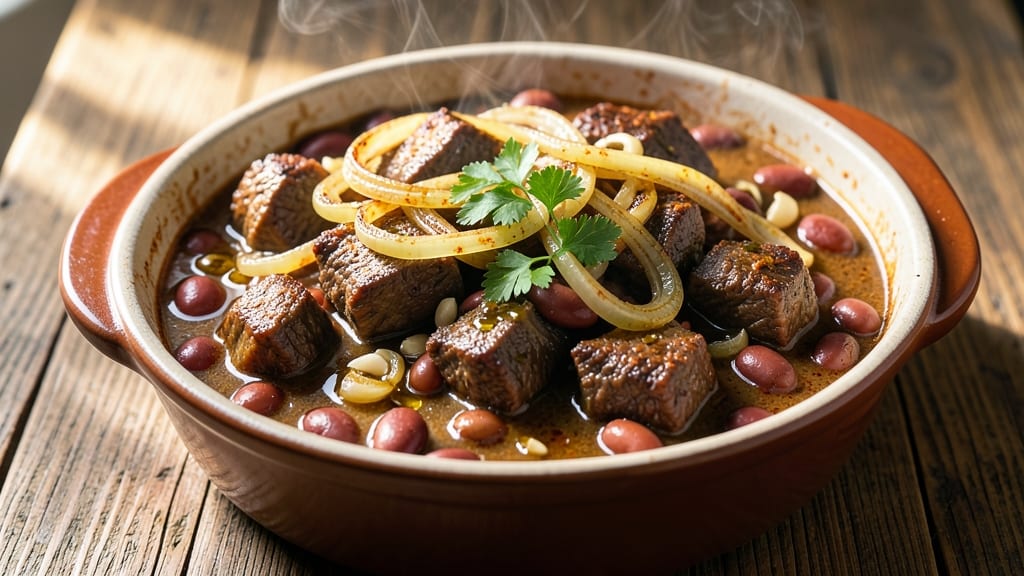
This goulash recipe with beans brings the rich, paprika-spiced warmth of Hungary to your kitchen table, where tender beef and hearty white beans simmer into a deeply satisfying stew. 🌟 Growing up, I'd watch Mrs. Henderson stir her cast-iron pot of goulash on the stove, filling our Cincinnati winters with its aromatic embrace—now I'm sharing my perfected version that balances tradition with modern convenience.
The secret lies in slow-cooked beef that practically melts in your mouth, layered with smoky paprika and sweet onions, while white beans add satisfying texture and plant-based heartiness.
Unlike quick versions, this method develops complex flavors over time, transforming simple ingredients into something restaurant-worthy. The key? Patience and proper spice blooming—no shortcuts here.
By the time you're done, you'll have a steaming bowl of goulash with tender meat, velvety sauce, and beans that soak up every flavorful drop. The aroma alone will have everyone gathering around the table, while the rich, slightly sweet-spicy taste makes it a weeknight staple or holiday centerpiece.
Serve with crusty bread to soak up every last bit.
For those short on time, I'll show you how to adapt this for a 30-minute stovetop version while keeping that authentic Hungarian soul. The traditional method builds deeper flavor, but both approaches deliver that comforting, paprika-kissed depth we all crave. Let's get cooking!
Ingredients for goulash recipe with beans
Pantry staples meet Hungarian tradition in this comforting goulash with beans.
| Ingredient | Amount | Notes |
|---|---|---|
| Chuck Roast 🥩 | 2 lb | Cut into 1-inch cubes |
| Yellow Onion 🧅 | 2 whole | Diced, medium size |
| Garlic Cloves 🧄 | 4 cloves | Minced, fresh preferred |
| Sweet Hungarian Paprika 🌶️ | 2 tbsp | Smoked variety for depth |
| Tomato Paste 🍅 | ½ cup | High-quality, no sugar added |
| Beef Broth 💧 | 3 cups | Low-sodium preferred |
| White Wine 🍷 | ½ cup | Dry, like Pinot Grigio |
| Canned Cannellini Beans 🌱 | 15 oz | Drained, rinsed, or sub lentils |
| Carrots 🥕 | 2 medium | Peeled, sliced into rounds |
| Bay Leaves 🍃 | 2 whole | Fresh if possible |
| Thyme 🌿 | 1 tbsp | Fresh, chopped, or dried |
| Black Peppercorns 🌶️ | ½ tsp | Freshly cracked |
| Salt 🧂 | 1 ½ tsp | Diamond Crystal preferred |
| Olive Oil 🫒 | 2 tbsp | Extra-virgin for richness |
| Crusty Bread 🍞 | 1 loaf | For serving, optional |
The chuck roast is your flavor anchor—look for well-marbled cuts at the butcher counter or pre-cut beef section. Costco or Whole Foods often carry the best quality, but any grocery store's chuck roast will work if it's bright red with good fat distribution. Skip the sirloin or ribeye here; those cuts stay tough. For the paprika, Penzeys or Hungarian specialty stores sell the real deal—smoky, sweet, and vibrant. If you can only find regular paprika, toast it in a dry pan for 30 seconds to deepen the flavor. The tomato paste? Rao's or Muir Glen are my go-tos—they're consistent and affordable. Don't use the watery squeeze tubes unless you're in a bind.
No white wine? Substitute extra beef broth with 1 tbsp balsamic vinegar for brightness. Cannellini beans too pricey? Great Northern beans or lentils work just as well—just adjust cooking time if using dried. The carrots can be baby carrots or even parsnips for a different twist. Fresh thyme unavailable? Dried thyme at one-third the amount keeps the essence. For the beef broth, Homemade is ideal, but Swanson or Pacific brand low-sodium options are solid shortcuts. The key is balancing acidity—if your wine or balsamic is too sharp, a pinch more sugar (or a splash of honey) tempers it beautifully.
This goulash tastes even better the next day as flavors meld—make extra and freeze portions for lazy weeknights. Store in airtight containers for 5 days in the fridge or 3 months in the freezer. I like to portion it into individual containers so I can grab a bowl straight from the freezer and reheat with a splash of water. The crusty bread? Warm it in the oven for 5 minutes to make it perfect for soaking up that rich sauce. Leftovers reheat beautifully—just stir in a splash of broth if it's too thick after refrigeration.
Why You'll Love This Recipe
- One-Pot Magic: The chuck roast practically cooks itself while you chop onions and minced garlic—no fancy techniques, just a deep pot and simmering time. Honestly, I’ve made this while scrolling through my phone; the paprika and tomato paste do all the heavy lifting.
- Paprika Powerhouse: That first spoonful of sweet Hungarian paprika? It transforms a simple beef stew into something rich and smoky without tasting like a spice packet. Between us, the slow caramelization of onions and garlic makes every bite taste like a hug from your nonna.
- Leftovers That Beg: This goulash only gets better the next day—those beans soak up all the deep, saucy flavors, and the beef? Melts like butter. I’ll be real: I’ve reheated this for lunch three days in a row, and my kids still ask for more.
- Budget-Friendly Feast: A chuck roast stretches across multiple meals, and the onion, garlic, and paprika add depth without costing a fortune. Here’s what sold me: I feed six people for under $15, and the leftovers turn into next-day tacos or sandwiches with zero waste.
Step-by-step instructions for Hungarian beef stew with paprika
Here's how to build a rich, paprika-infused goulash that simmers into perfect harmony.
🍳 Step 1: Sear the Chuck Roast Until Deeply Browned
Heat the 2 tablespoons olive oil in a heavy Dutch oven over medium-high heat until shimmering. Add the 2 lb chuck roast cut into 1-inch cubes in a single layer, working in batches if needed. Let each piece sear undisturbed for 3-4 minutes until deeply browned on all sides—this develops the deep, meaty flavor that forms the stew's foundation.
Don't overcrowd the pan or the temperature will drop. You'll know it's ready when the edges are rich mahogany brown and the meat releases easily from the pan. Transfer the browned meat to a plate and set aside temporarily. Here's the thing—this searing step is non-negotiable for developing that authentic Hungarian depth.
👨🍳 Step 2: Build the Paprika Base with Onions and Garlic
In the same Dutch oven, add the 2 whole yellow onions diced into medium-sized pieces and cook for 5-6 minutes until softened and beginning to caramelize. Here's where it gets good—stir in the 2 tablespoons sweet Hungarian paprika (smoked variety for that authentic depth) and let it toast for 30 seconds until fragrant.
Add the 4 cloves minced garlic and cook for another 30 seconds until the raw garlic aroma disappears. This quick toasting prevents the paprika from tasting bitter and builds the aromatic foundation. If the mixture starts to stick, add a splash of white wine to deglaze and scrape up all those flavorful browned bits from the bottom of the pan.
🍳 Step 3: Simmer the Stew Until Tender and Flavorful
Return the browned chuck roast to the pot. Stir in the 0.5 cup tomato paste, scraping up any stuck bits. Pour in the 0.5 cup white wine and let it simmer for 2 minutes until mostly evaporated. Add the 3 cups beef broth, 2 medium carrots sliced into rounds, 2 whole bay leaves, 1 tablespoon thyme, 0.5 teaspoon freshly cracked black peppercorns, and 1.5 teaspoons salt. Bring to a gentle boil, then reduce heat to low and cover partially.
Let it simmer uncovered for 1.5 hours, stirring occasionally, until the beef is fork-tender and pulls apart easily. The stew should reduce slightly, creating a thick, rich consistency. Real talk—this is where patience pays off. The longer it simmers, the deeper the flavors develop. If it looks too thin after an hour, uncover and simmer longer to reach the perfect texture.
🥘 Step 4: Finish with Beans and Adjust Seasoning
Add the 15 oz drained cannellini beans and stir gently to combine. Simmer uncovered for another 15-20 minutes until the beans are heated through and the flavors meld together. Taste and adjust seasoning—you might need a bit more salt or a pinch of paprika to balance the flavors. The stew should be rich but not overpowering, with the paprika adding just a hint of smoky sweetness.
Here's the moment that matters: remove the bay leaves before serving. They've done their job infusing flavor, but they can be tough if left in. Serve this hearty goulash hot with slices of crusty bread to soak up every last bit of that delicious sauce. The beans add satisfying texture while keeping the dish substantial enough to stand alone as a complete meal.
Pro Tips For Making Goulash Recipe With Beans
- Brown the Chuck First: Chuck roast needs a deep, caramelized crust before it goes into the pot—I learned this after one watery, bland batch. Sear it in batches over medium-high heat for 4-5 minutes per side until it’s golden, not just pink. Yes, it’ll be crowded, but that crust is what carries the paprika’s flavor through the whole dish.
- Sweat, Don’t Sauté Onions: Diced onions in goulash should melt into the background, not turn to mush or burn. Cook them low and slow with a pinch of salt for 8-10 minutes until translucent but still holding shape. I used to rush this, and the paprika would just cling to raw onion bits—now I treat it like the foundation it is.
- Bloom the Paprika: Toss that sweet Hungarian paprika into the hot pot after the onions and garlic, and let it sit for 30 seconds—just until you smell it waking up. Stirring it in cold or rushing it makes the flavor muted. My grandmother swore by this, and she was right: the paprika needs a moment to sing before the liquid hits.
- Stir in Beans Late: Add the beans only in the last 15 minutes of simmering, or they’ll turn to mush. I used to dump them in early, thinking they’d soak up flavor, but they just fell apart. Save them for the end so they stay tender and hold their shape—like little flavor bombs in the stew.
Essential equipment for great goulash recipe with beans
Dutch Oven Essentials
A heavy Dutch oven is non-negotiable for goulash—it retains heat beautifully while allowing you to sear, simmer, and serve all in one pot.
I swear by my Le Creuset signature round (it's been with me since my first apartment), but Lodge cast iron is a budget-friendly alternative that develops even better flavor over time. The key is getting one with a tight-fitting lid—Le Creuset's lids or Lodge's flat lids both work well.
For a lighter option, All-Clad's stainless steel Dutch oven heats up faster and is easier to handle. 🔥
Spice & Flavor Tools
Sweet Hungarian paprika is the soul of goulash, so invest in a small jar of Penzeys Hungarian sweet paprika—it's worth the splurge. For toasting spices, a mortar and pestle comes in handy if you're grinding whole spices like black peppercorns fresh.
I also keep a microplane nearby for garlic and ginger, which adds more surface area for faster flavor infusion. A fine-mesh strainer helps when you need to remove bay leaves before serving. 🌶️
Precision Cooking Gear
An instant-read thermometer (like ThermoWorks Thermapen) ensures your beef reaches 195-203°F—the perfect range for fork-tender meat. For long simmers, a digital timer (I use my KitchenAid stand mixer's timer) keeps track of those critical 1.5 hours without you hovering.
A wooden spoon with a long handle prevents splatters when stirring, and a ladle with a strainer makes skimming excess fat easy. Don't skimp on these—good tools make goulash-making effortless. ⏱️
Bean Prep Shortcuts
Canned beans save time, but if you're using dried, a large pot and potato masher help soften them faster. I like Great Northern beans for their firm texture—they hold up better in stews. For rinsing canned beans, a colander with a spout keeps messes contained.
Pro tip: Keep a small bowl of cold water nearby to rinse off any loose paprika or spices that might stick to the beans during cooking. 🌱
Serving & Storage Containers
For leftovers, glass Pyrex storage containers (with snap-on lids) preserve flavors better than plastic. I portion goulash into quart-sized containers for easy reheating. A sharp chef's knife and cutting board are essential for slicing crusty bread, while a serving spoon with a lid keeps the stew warm at the table.
For freezing, quart-sized freezer bags (like Stasher bags) save space and prevent freezer burn. Label everything—trust me, you'll thank yourself later. ❄️
Nutrition facts
Frequently asked questions
Can I make this goulash with pork or chicken instead of beef?
For pork, use pork shoulder cut into 1-inch cubes and increase simmering time to 2 hours for tenderness. Chicken works too—swap beef for bone-in chicken thighs (they stay juicier) and reduce simmering to 45 minutes after adding meat. Just adjust seasoning: pork needs more thyme, while chicken benefits from a pinch of marjoram.
How can I make this goulash without wine?
No problem! Replace the 0.5 cup white wine with 0.5 cup extra beef broth plus 1 tablespoon balsamic vinegar for acidity. For depth, add 1 teaspoon apple cider vinegar or a splash of lemon juice. The wine's purpose is to deglaze and add brightness—these substitutes mimic that while keeping the dish rich and flavorful.
Why did my goulash turn out too thin?
This usually happens when the stew simmers too long uncovered or the broth-to-meat ratio is off. To fix it: simmer uncovered for 10-15 minutes to reduce the liquid, then stir in 1 tablespoon tomato paste or 2 tablespoons cornstarch mixed with water. For prevention, start with 2 cups broth instead of 3 and skim excess fat during cooking.
Can I use dried beans instead of canned?
Yes! Soak 1 cup dried white beans overnight, then simmer for 1 hour in separate water until tender. Drain and add to the goulash during the last 20 minutes of cooking. For quicker prep, use the quick-soak method: boil beans for 2 minutes, then let them sit covered for 1 hour before cooking. Adjust liquid in the stew as needed.
What's the best way to reheat leftover goulash?
Gently reheat on the stove over medium-low heat for 10-15 minutes, stirring occasionally and adding 1-2 tablespoons broth or water if too thick. For microwave reheating, cover with a damp paper towel and heat in 1-minute intervals until steaming. Never reheat above 165°F—this keeps the meat tender and prevents drying.