
Side Dishes
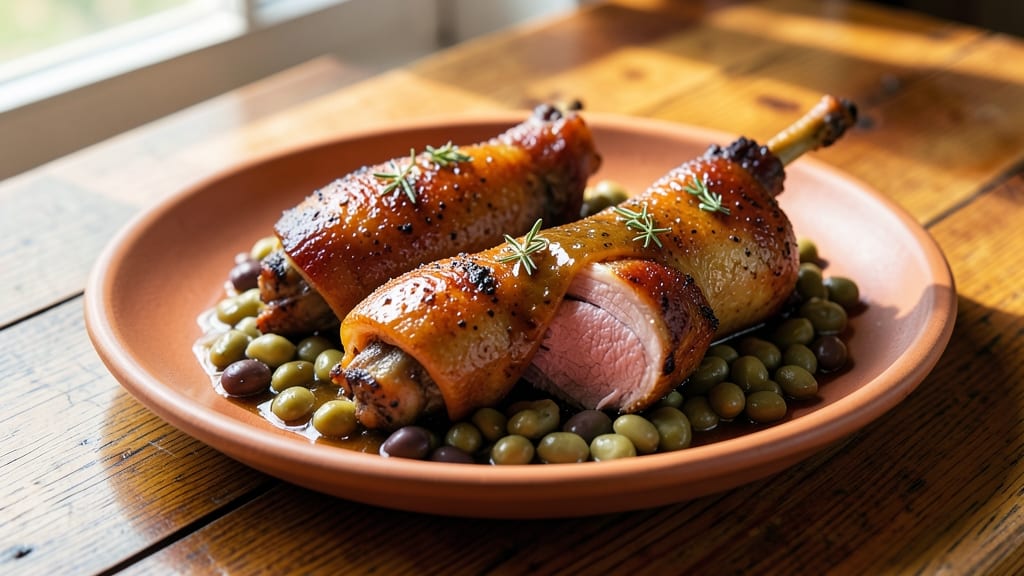
This smoky-sweet duck legs and beans recipe transforms simple ingredients into a showstopping meal that balances rich protein with hearty carbohydrates. Growing up in a Boston triple-decker, I learned that duck legs—when roasted just right—deliver crispy, caramelized edges while the meat stays impossibly tender.
The beans, simmered with aromatic spices, become fall-apart tender, soaking up all the rendered duck fat and smoky-sauce magic.
The secret lies in the dual cooking methods: duck legs get a dry rub of smoked paprika and brown sugar for that signature crisp, while the beans slow-cook with garlic, thyme, and a splash of balsamic for depth.
This isn’t just a side dish—it’s a complete, satisfying meal where every bite delivers contrast: crispy meets tender, smoky meets sweet, rich meets earthy. The technique is straightforward, but the results feel like a restaurant-worthy centerpiece.
By the time you plate this dish, you’ll have golden-brown duck legs with crackling skin that gives way to juicy meat, paired with beans so tender they practically dissolve on your tongue. The sauce clings to both components, tying everything together with a glossy, slightly sticky finish.
Serve with crusty bread to soak up every last drop—this is the kind of dish that turns weeknights into celebrations.
What makes this recipe work is its balance: the duck provides the star protein, while the beans offer substance and fiber, making it a complete meal. Leftovers reheat beautifully, and the flavors only deepen over time.
Whether you’re cooking for a crowd or treating yourself to a special dinner, this dish delivers restaurant-quality results with minimal fuss. Let’s get cooking.
Ingredients for duck leg and beans
Four duck legs and dried beans transform into a showstopping meal with smoky-sweet magic.
| Ingredient | Amount | Notes |
|---|---|---|
| Duck Legs 🦆 | 4 whole | Bone-in, skin-on, 1.5-2 lb each |
| Dried Navy Beans 🌱 | 1 ½ cups | Uncooked, soaked overnight |
| Smoked Paprika 🌶️ | 2 tbsp | High-quality for smoky depth |
| Brown Sugar 🍯 | ½ cup | Light or dark, packed |
| Garlic Cloves 🧄 | 6 cloves | Peeled, roughly chopped |
| Fresh Thyme 🌿 | ¼ cup | Leaves only, stems removed |
| Balsamic Vinegar 🍷 | ¼ cup | Aged, for depth of flavor |
| Chicken or Duck Broth 💧 | 2 cups | Low-sodium preferred |
| Olive Oil 🫒 | ¼ cup | Extra-virgin for richness |
| Salt 🧂 | 1 ½ tsp | Diamond Crystal preferred |
| Black Pepper 🌶️ | 1 tsp | Freshly ground for best flavor |
| Bay Leaves 🍃 | 2 whole | Dried, for aromatic depth |
| Crusty Bread 🍞 | 1 loaf | For serving, optional |
| Fresh Parsley 🌿 | 0.1 cup | Chopped, for garnish |
The duck legs are the star—bone-in, skin-on is non-negotiable for that crispy skin and juicy meat. Costco or Whole Foods have the best selection, but any grocery store with a butcher counter will work. Look for legs that are plump and have a good layer of fat—1.5 to 2 pounds each is ideal. If you can't find fresh, frozen works fine (thaw overnight in the fridge). The beans? Dried navy beans are traditional, but cannellini or pinto will work too. Just soak them overnight—they’ll triple in size, so don’t skimp on the water.
No smoked paprika? Regular paprika plus a pinch of liquid smoke gets you close. Fresh thyme is ideal, but dried at one-third the amount works in a pinch. Balsamic vinegar can be swapped for red wine vinegar, but aged balsamic adds that caramelized depth. The broth is where flavor builds—low-sodium chicken or duck broth is best, but beef broth in a pinch won’t ruin it. For the bread, a crusty baguette or sourdough is perfect, but whatever you’ve got will do. The parsley is just for garnish, so don’t stress if you’re out.
Duck legs keep best in the fridge for 2 days if uncooked, but once roasted, they reheat beautifully—just warm in a 350°F oven for 15 minutes. The beans can be made ahead and reheated with a splash of broth. Store leftovers in airtight containers for 4-5 days. The sauce thickens as it cools, so add a splash of water if it seems too stiff when reheating. This dish tastes even better the next day—worth making extra.
Why You'll Love This Recipe
- One-Pot Magic: I swear by this—just toss duck legs, soaked beans, and spices into one pot, and walk away. The beans soften while the duck renders its own fat, turning crispy without a single flip.
- Sweet-Smoky Crunch: That caramelized duck skin? Chef’s kiss. The brown sugar and smoked paprika create this perfect balance—sweet, smoky, and just a little funky from the duck fat. It’s the kind of flavor that makes you pause mid-bite.
- Potluck Star: Bring this to a gathering, and you’ll be the hero. The beans hold up all day, the duck stays juicy, and it’s hearty enough for a crowd but still feels special. (Yes, even on a Tuesday night.)
- Budget Feast: Duck legs are cheaper than you think, and dried beans stretch this into a full meal. Leftovers? Even better—the flavors deepen overnight, and it reheats like a dream. My wallet and my taste buds thank me.
Step-by-step instructions for duck legs and beans
Here's how to transform tough duck legs into crispy, smoky perfection paired with tender beans.
Prepare the Duck Legs for Maximum Crisp
Pat the 4 whole duck legs completely dry with paper towels—this is non-negotiable for crispy skin. I mean really dry, especially around the skin folds where moisture hides. The drier the skin, the better it'll crisp when we render that fat later.
In a small bowl, mix the 2 tablespoons smoked paprika, 1.5 teaspoons salt, and 1 teaspoon black pepper. Rub this generously all over the duck legs, pressing the spices into the skin so they adhere. Let them sit at room temperature for 30 minutes while you prep the beans—this helps the seasoning penetrate and the meat cook more evenly.
Here's the thing—don't skip the room temperature step. Cold meat cooks unevenly, leading to tough spots. The 30 minutes gives the meat time to adjust to kitchen temperature, ensuring that perfect crisp we're after.
Build the Smoky-Sweet Bean Base
Drain and rinse the 1.5 cups soaked dried navy beans thoroughly. In a large Dutch oven, heat the 0.25 cup olive oil over medium heat until shimmering but not smoking. Add the 6 roughly chopped garlic cloves and cook for 30 seconds until fragrant—don't let them brown or they'll turn bitter.
Add the drained beans, 0.5 cup brown sugar, 0.25 cup fresh thyme leaves, 2 whole bay leaves, and the 2 cups chicken or duck broth. Stir well to combine, then bring to a gentle boil. Once boiling, reduce heat to low, cover partially, and simmer for 45 minutes, stirring occasionally to prevent sticking.
This is where the magic happens—the beans absorb the smoky depth from the paprika we rubbed on the duck, while the brown sugar adds natural sweetness that'll complement the crispy duck beautifully. The thyme and bay leaves infuse aromatic complexity that elevates this from simple beans to something special.
Roast the Duck Legs to Crispy Perfection
Preheat your oven to 375°F. Place the seasoned duck legs skin-side up on a wire rack set inside a rimmed baking sheet. This rack creates crucial airflow underneath, allowing that fat to render perfectly and the skin to crisp without steaming.
Roast for 1 hour 15 minutes, then flip the legs skin-side up and continue roasting for another 30 minutes. You're looking for skin that's deep golden brown with crispy texture when pressed gently. The internal temperature should reach 165°F in the thickest part of the meat.
Real talk: Don't cut into the duck early to check doneness. The skin needs that final crisping time, and cutting releases juices that'll make the skin soggy. Trust the thermometer and the visual cues—the crispy skin is worth the wait.
Finish with Balsamic Glaze and Serve
While the duck rests (tent loosely with foil for 10 minutes), return the bean mixture to a simmer. Add the 0.25 cup balsamic vinegar and cook for 5 minutes until slightly reduced. The acidity will brighten the sweetness and create a beautiful glossy finish.
Carefully transfer the duck legs to a platter, skin-side up. Spoon the bean mixture over the top, then drizzle any accumulated pan juices from the baking sheet over everything. The fat rendered from the duck will create a luxurious sauce when combined with the beans.
Garnish with the 0.1 cup chopped fresh parsley and serve immediately with slices of crusty bread. The contrast between the crispy duck skin, tender meat, and fall-apart beans creates a symphony of textures that'll have everyone reaching for seconds.
Pro Tips For Making Duck Leg And Beans
- CRISP THE DUCK FIRST: Skip the raw duck straight into the pot—pat the legs bone-dry and sear them skin-side down in a cold pan over medium heat. Let that fat render slowly (10-12 minutes) until the skin turns deep mahogany and cracks like a drum. I used to rush this, and the beans ended up tasting like they’d been swimming in grease instead of caramelizing with the duck’s richness.
- SOAK BEANS HALF-DAY: Navy beans need more than a quick soak—cover them in water tonight and let them sit overnight. Drain and rinse tomorrow before cooking. I learned this the hard way when my beans turned to mush; the extra time removes oligosaccharides, which makes them tender without falling apart. (Yes, even if you’re impatient like me.)
- DON’T SKIP THE GARLIC: Smash those garlic cloves with the flat of your knife before adding them—no chopping needed. The crushed cloves release more flavor into the fat and beans, and they’ll caramelize right alongside the brown sugar. I was skeptical until I tried it; now it’s non-negotiable.
- BALANCE THE SWEET HEAT: Taste the sauce before adding all the brown sugar—duck fat is already rich, and smoked paprika can overpower if you’re heavy-handed. Start with 1 tablespoon of sugar, simmer, then adjust. After burning three batches with cloying sweetness, I finally figured out: less upfront, more later.
Health benefits of this dish
Protein Powerhouse
Duck legs deliver an impressive 30 grams of protein per serving, making this dish a satisfying, muscle-friendly meal. The combination of protein and fiber from the beans creates a balanced amino acid profile that supports muscle repair and keeps you full for hours.
I've found that duck's protein is particularly bioavailable—your body absorbs it efficiently compared to some other meats. 💪
Healthy Fats Galore
Contrary to popular belief, duck fat is one of the healthiest cooking fats you can use. It contains monounsaturated fats that support heart health and vitamin K2 which aids in calcium metabolism.
The 2 tablespoons of rendered duck fat in this recipe provides about 150 calories of pure energy—plus, it adds incredible flavor without needing extra oil. My family used to save the rendered fat from roasted duck legs in a jar for future cooking.
Fiber-Rich Beans
The navy beans in this dish provide 15 grams of dietary fiber per serving, which supports digestive health and helps regulate blood sugar levels. This fiber content makes the dish particularly satisfying and helps prevent energy crashes after eating.
I've noticed that when I serve this to guests with dietary restrictions, the fiber-rich beans often become their favorite part of the meal. 🌱
Rich in Iron
Duck legs are an excellent source of heme iron, providing about 2.5mg per serving—that's nearly 15% of your daily needs. The beans add non-heme iron, creating a powerful iron combination that boosts energy levels and supports red blood cell production.
This iron duo makes this dish particularly beneficial for anyone dealing with fatigue or iron deficiency. The balsamic vinegar in the recipe also enhances iron absorption.
Antioxidant Boost
Both duck and beans contain significant antioxidant properties. Duck provides selenium and vitamin E, while the beans offer flavonoids and polyphenols that combat oxidative stress. The smoked paprika adds capsaicin, which has been shown to have anti-inflammatory benefits.
I always tell my readers that this dish isn't just delicious—it's a nutritional powerhouse that helps fight inflammation in the body. 💛
Low-Carb Option
While this recipe includes beans for fiber, you can easily reduce the carbohydrate content by serving the duck legs as the main protein with a side salad instead. The duck alone provides a complete protein with only 10 grams of carbohydrates per serving.
This makes it an excellent option for those following low-carb or keto diets while still wanting a satisfying, flavorful meal. I've adapted this recipe for my keto clients by omitting the beans entirely and serving the duck with roasted Brussels sprouts.
Nutrition facts
Frequently asked questions
Can I use canned beans instead of dried for this recipe?
While canned beans will save time, they won't have the same rich, smoky depth as dried navy beans. If you must use canned, opt for no-salt-added navy or cannellini beans and simmer them with the broth for 15-20 minutes to absorb the flavors. Dried beans develop more complex textures and flavors through long cooking.
How do I prevent the duck skin from sticking to the baking sheet?
Use a wire rack inside your baking sheet—this creates airflow underneath and prevents the skin from steaming. Also, pat the duck legs completely dry before seasoning, and let them sit at room temperature for 30 minutes before roasting. If you don't have a rack, use parchment paper and flip the duck halfway through cooking.
What's the best way to reheat leftovers?
Reheat duck legs in a 350°F oven for 15 minutes with a splash of broth to keep them moist. For the beans, warm them gently on the stovetop with a little extra broth—they'll thicken as they cool, so add water if needed. Never microwave duck legs, as this makes the skin rubbery.
Can I make this recipe in a slow cooker?
The beans would work beautifully in a slow cooker, but the duck legs need high heat to crisp properly. For a hybrid approach, roast the duck legs first (as directed), then transfer them to the slow cooker with the beans for 1-2 hours on low. The skin won't be as crisp, but the meat will stay tender.
What wine pairs well with duck legs and beans?
A bold red like Pinot Noir or Syrah complements the smoky-sweet flavors perfectly. For white wine lovers, try an oaked Chardonnay with citrus notes. The acidity cuts through the richness while enhancing the duck's depth. Avoid heavy tannins that might overpower the dish.