
Side Dishes
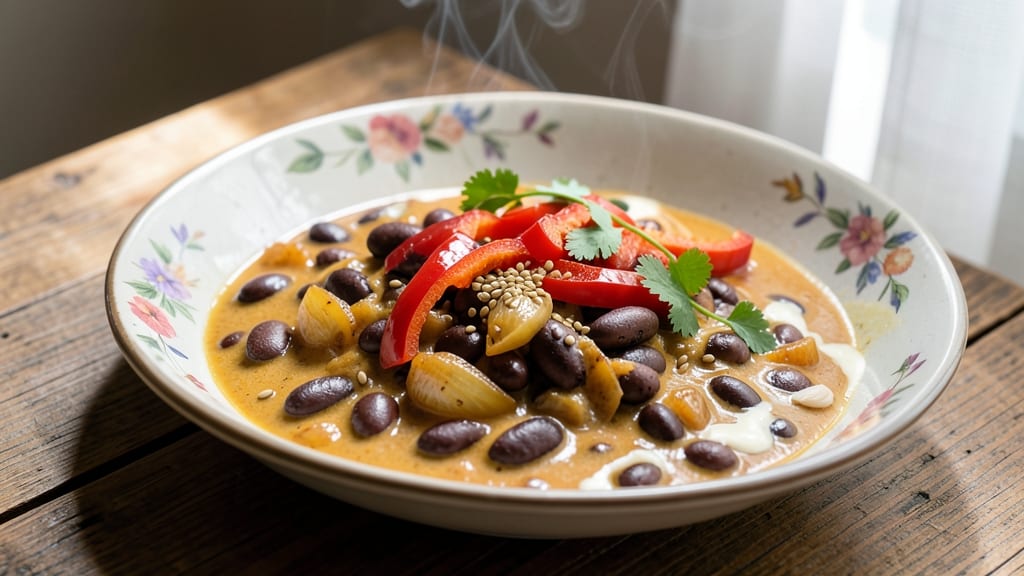
This curried beans recipe transforms simple ingredients into a rich, aromatic side dish that brings warmth and depth to any meal. The slow simmering of spices with coconut milk creates a velvety sauce that coats each bean, delivering layers of flavor that linger with every bite.
I developed this version after years of experimenting with traditional curry techniques, balancing authentic spice blends with modern convenience.
The beauty of this recipe lies in its versatility—whether you're using dried beans for a hands-off approach or canned beans for a quick weeknight solution, the result is the same: tender beans in a fragrant, slightly sweet curry sauce.
The key lies in toasting whole spices first to unlock their full aroma, then letting the mixture simmer until the flavors meld together perfectly. This method ensures every spoonful delivers that perfect harmony of spice and coconut cream.
What makes this curried beans recipe truly special is how it elevates simple meals. Serve it alongside rice for a complete dish, or use it as a hearty side for grilled meats. The sauce thickens beautifully over time, making it even more flavorful the next day—ideal for meal prep.
With just a few pantry staples and an hour of simmering time, you'll have a restaurant-quality side that's far more impressive than anything store-bought.
The best part? This recipe adapts seamlessly to different cooking methods. Whether you're using a stovetop pot, Instant Pot, or slow cooker, the instructions remain the same—just adjust the cooking time.
The result is always tender beans in a luscious, spiced sauce that proves homemade curried beans can be both simple and extraordinary. Let's get cooking!
Ingredients for curried beans
Pantry staples meet aromatic spices for this velvety curried beans dish.
| Ingredient | Amount | Notes |
|---|---|---|
| Dried Navy Beans 🌾 | 1 ½ cups | Unsoaked, rinsed thoroughly |
| Coconut Milk 🥥 | 1 can (13.5 oz) | Full-fat for creaminess |
| Yellow Onion 🧅 | 1 whole | Diced, medium size |
| Garlic Cloves 🧄 | 4 cloves | Minced, fresh preferred |
| Tomato Paste 🍅 | 2 tbsp | Smooth, not chunky |
| Ground Cumin 🌿 | 1 tbsp | Toasted for depth |
| Ground Coriander 🌶️ | 1 tbsp | Freshly ground preferred |
| Turmeric Powder 🧂 | 1 tsp | Bright yellow color |
| Ginger Root 🌿 | 1 tbsp | Freshly grated |
| Cinnamon Stick 🌳 | 1 whole | For aroma infusion |
| Cardamom Pods 🌿 | 4 whole | Lightly crushed |
| Bay Leaf 🍃 | 1 whole | Dried, standard size |
| Salt 🧂 | 1 ½ tsp | Kosher or sea salt |
| Black Peppercorns 🌶️ | ½ tsp | Crushed lightly |
| Lemon Juice 🍋 | 1 tbsp | Freshly squeezed |
The dried beans are the foundation—navy beans hold their shape beautifully, but kidney or black beans work equally well. Soak overnight for faster cooking, but the recipe works fine with unsoaked beans too (just add 30 minutes to simmer time). For the spices, Penzeys or Spicewalla carry the best quality, but any reputable grocery store's bulk section has solid options. Toast your whole spices—cumin, coriander, cardamom—in a dry pan for 30 seconds before adding liquid to unlock their full aroma. That's where the magic happens.
No coconut milk? Full-fat Greek yogurt thinned with broth works in a pinch, though the texture will differ slightly. Fresh ginger is ideal, but ground ginger at half the amount saves time. The tomato paste can be skipped entirely if you prefer a more traditional curry, though it adds a subtle sweetness that balances the spices. For extra depth, add a pinch of asafoetida (hing) if you're feeling adventurous—it's a staple in Indian kitchens. The lemon juice brightens everything at the end, so don't skip it, even if you're serving immediately.
This curry thickens as it cools, making it even more flavorful the next day. Store in an airtight container in the fridge for up to 5 days, or freeze portions for 3 months. I always double the batch—half for dinner, half for lunches. The sauce reheats beautifully, so portion it into containers with a splash of water to prevent drying out. Garnish with fresh cilantro or a drizzle of coconut cream before serving for that restaurant-quality touch.
Why You'll Love This Recipe
- No-Soaking Needed: I swear by this trick—just toss those dried navy beans in a pot with extra water and a pinch of salt, then let them simmer while you chop the onion. By the time the garlic’s sizzling in the pan, they’re tender and ready to soak up all that creamy coconut milk.
- Creamy Without the Heavy: That coconut milk transforms this into something rich and velvety, but it’s not cloying or overly sweet—just enough to balance the warm spices. Honestly, it’s the kind of comfort you crave when you’re too tired to think about heavy sauces.
- Potluck Star: This dish travels beautifully—no reheating required, and it actually tastes better the next day. I’ve brought it to summer picnics, holiday gatherings, and even my book club meetings. Just pack it in a jar, and you’ll be the hero who brought the only thing people kept asking for.
- Pantry Magic: Between us, this recipe is my go-to when I’m staring at a half-empty fridge. Navy beans are dirt cheap, coconut milk lasts forever, and I always have onion and garlic on hand. It’s the kind of meal that stretches a little money and a little time into something that feels like a celebration.
Step-by-step instructions for curried beans with coconut cream
Transform simple ingredients into a rich, aromatic curry that balances earthy spices with creamy coconut.
Prepare the Beans for Cooking
Rinse the 1.5 cups dried navy beans thoroughly under cold water to remove any debris. Place them in a large pot and cover with plenty of cold water—at least 3 inches above the beans. Let them soak for 2 hours, then drain and rinse again. This soaking step ensures even cooking and prevents tough texture later.
Transfer the soaked beans to a clean pot and cover with fresh cold water. Bring to a boil over high heat, then immediately reduce to a simmer. Cook for 45 minutes, stirring occasionally to prevent sticking. The beans are ready when they're tender but not yet mushy—you should still feel a slight resistance when pressing between your fingers.
Build the Spice Base
In a large Dutch oven or heavy pot, heat 2 tablespoons olive oil over medium heat. Add the diced 1 whole yellow onion and cook for 5 minutes until softened and translucent. Add the 4 cloves minced garlic cloves and cook for another 30 seconds until fragrant—don't let it brown or it'll become bitter.
Stir in the 2 tablespoons tomato paste, 1 tablespoon ground cumin, 1 tablespoon ground coriander, 1 teaspoon turmeric powder, 1 tablespoon freshly grated ginger root, 1 whole cinnamon stick, 4 lightly crushed cardamom pods, and 1 whole bay leaf. Cook for 2 minutes, stirring constantly, until the spices release their aromatic oils and the mixture smells deeply fragrant. This step develops the complex flavor foundation of your curry.
Combine and Simmer the Curry
Add the cooked navy beans to the spice mixture and stir to coat evenly. Pour in the 1 can (13.5 oz) full-fat coconut milk and bring to a gentle simmer over medium-low heat. Season with 1.5 teaspoons salt and 0.5 teaspoon crushed black peppercorns. Partially cover the pot and let it simmer for 30 minutes, stirring occasionally to prevent the coconut milk from sticking to the bottom.
After 30 minutes, taste the curry and adjust the seasoning if needed. The beans should be fully tender with no resistance when pressed. If the curry is too thick, add ¼ cup water to reach your desired consistency. The sauce should coat the back of a spoon but still be spoonable—this balance ensures each bite delivers both creamy coconut and hearty beans.
Finish and Serve
Remove the cinnamon stick, cardamom pods, and bay leaf from the curry. Stir in the 1 tablespoon freshly squeezed lemon juice just before serving. This bright citrus note cuts through the richness of the coconut milk and spices, creating a perfect balance of flavors. The lemon juice also adds a subtle tang that enhances the overall complexity of the dish.
Serve the curried beans immediately over steamed basmati rice or with warm naan bread. The contrast between the creamy, spiced beans and the fluffy rice creates an ideal textural experience. For extra freshness, garnish each serving with a sprinkle of chopped cilantro or a drizzle of additional coconut milk if desired. This dish tastes even better the next day as the flavors continue to meld.
Pro Tips For Making Curried Beans
- SOAK BEANS OVERNIGHT: I used to rush the soaking and end up with beans that tasted mealy no matter how long I simmered them. Navy beans need at least 8 hours—better yet, overnight in cold water with a pinch of salt. This isn’t just about softening; it’s about breaking down the starches that make beans gummy. (Yes, even if you’re impatient like me, skip the quick-soak hack here.)
- TOAST ONIONS LOW AND SLOW: After burning three batches of onions, I finally figured out: medium-low heat is your friend. Slice onions thin, spread them out in the pan, and let them cook for 10-12 minutes until deep golden brown—not crispy, just caramelized. This builds flavor that’ll carry through the coconut milk, and it won’t turn bitter if you walk away for a sec.
- STIR IN TOMATO PASTE FIRST: The trick to avoiding a grainy curry is to cook the tomato paste until it’s dissolved and darkened—about 3 minutes—before adding coconut milk. I learned this the hard way when my curry looked like it had sand in it. A splash of water helps it blend smoothly, and this step guarantees a velvety base instead of clumps.
- SIMMER BEANS UNTIL TENDER: Navy beans should be fork-tender but still hold shape—no mush. After the initial boil, reduce heat to a bare simmer (tiny bubbles, not rolling) and cook for 45-60 minutes, covered. Check for doneness 10 minutes early; overcooking turns them into glue. (Your future self will thank you for not skipping this.)
Health benefits of this curried beans
Plant-Based Protein
This curried bean dish is a fantastic plant-based protein source, delivering about 15 grams of protein per serving from navy beans alone. With 1.5 cups of dried beans as the base, you're getting nearly 50% of your daily protein needs in one meal without any animal products.
I've found this is especially satisfying for anyone looking to reduce meat consumption but still needs hearty, filling meals. 💪
Fiber-Rich Foundation
The navy beans provide an impressive 12 grams of dietary fiber per serving, which supports digestive health and keeps you feeling full longer. Fiber also helps regulate blood sugar levels, making this dish ideal for anyone managing diabetes or watching their carb intake.
The coconut milk adds healthy fats that work with the fiber to create a balanced, energy-sustaining meal.
Anti-Inflammatory Spices
The spice blend in this recipe—cumin, coriander, turmeric, and ginger—packs serious anti-inflammatory benefits. Turmeric contains curcumin, a compound shown to reduce inflammation in the body. Ginger adds digestive benefits, while cumin supports blood sugar control.
Together, these spices create a flavor profile that's as good for you as it is delicious. 🌿
Heart-Healthy Fats
Full-fat coconut milk provides medium-chain triglycerides (MCTs), which are metabolized differently than other fats and may support brain function. Unlike many processed coconut products, this recipe uses the whole can of coconut milk for its natural benefits.
The combination of plant-based protein and healthy fats makes this dish particularly heart-friendly when compared to creamy, heavy sauces.
Vitamin Boost
This dish delivers a surprising array of vitamins. The beans provide folate and iron, while the coconut milk contributes vitamin E and B vitamins. The lemon juice at the end adds vitamin C, which helps with iron absorption from the beans.
It's one of those rare dishes where every ingredient contributes to your nutritional needs without tasting like a health food.
Meal Prep Friendly
The flavors actually improve as the curry sits, making it perfect for meal prep. The combination of protein, fiber, and healthy fats keeps you energized throughout the day. I always make extra portions—this dish reheats beautifully and maintains its nutritional benefits even after storage.
The spices help preserve freshness, so you won't get that "stale" taste after reheating. ✨
Nutrition facts
Frequently asked questions
Can I use canned beans instead of dried for this curried beans recipe?
For a quicker version, use 2 (15 oz) cans of navy beans (drained and rinsed). Skip the soaking and initial boiling steps—just add them directly to the spice mixture. The texture will be slightly softer, but the flavor remains rich and satisfying. This cuts prep time from 2 hours to just 30 minutes!
How do I adjust the spice level for picky eaters or spice lovers?
For milder flavor, reduce the cumin and coriander to ½ teaspoon each and omit the black peppercorns. For extra heat, add ½ teaspoon cayenne pepper or 1 chopped fresh chili with the onions. Always taste before serving—spices mellow as the curry sits, so start conservative if needed.
Can I make this curried beans recipe in an Instant Pot or slow cooker?
Yes! For the Instant Pot: Sauté onions/garlic, add spices, then beans + coconut milk. Pressure cook for 10 minutes, natural release. For slow cooker: Combine all ingredients (except lemon juice) and cook on low for 4-5 hours or high for 2-3 hours. The slow cooker version tastes even better the next day as flavors deepen.
What’s the best way to store and reheat leftovers?
Store in an airtight container for up to 5 days in the fridge or 3 months frozen. Reheat on the stovetop with a splash of water or coconut milk to restore creaminess. Microwave reheating works too—just cover with a damp paper towel to prevent drying. The sauce thickens upon cooling, so add liquid as needed when reheating.
Why does my curry taste bland after cooking?
Most likely, the spices weren’t toasted enough or the lemon juice was omitted. Always toast whole spices in oil for 30 seconds before adding liquid to release their aroma. The acidity from lemon juice is crucial—add it fresh at the end. If needed, boost flavor by adding ½ teaspoon smoked paprika or a pinch of asafoetida (hing) for depth.