
Side Dishes
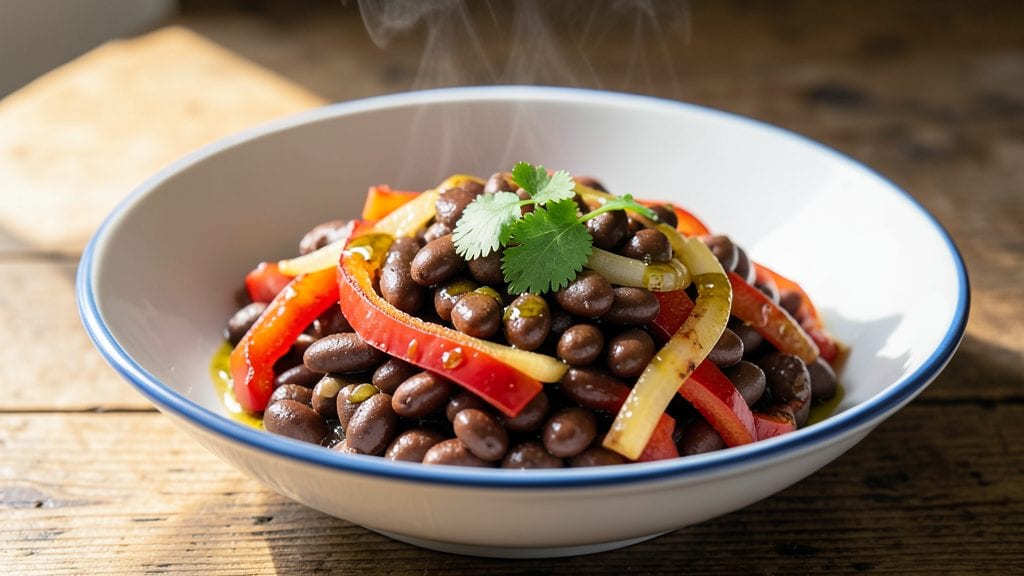
This Cuban style black beans recipe transforms simple ingredients into a smoky, sofrito-infused masterpiece that anchors every Cuban meal. The key lies in slow simmering dried black beans with garlic, bell peppers, and spices until they're tender and infused with deep, earthy flavor.
I developed this version after years of perfecting the balance between smoky sofrito and bright citrus—it's the kind of dish that tastes even better the next day.
The beauty of this recipe is its simplicity: just one pot, minimal prep, and 30 minutes of hands-off simmering time.
Traditional Cuban black beans rely on sofrito (a blend of sautéed peppers, onions, and garlic) as their flavor foundation, while cumin, bay leaves, and a touch of citrus create that signature tangy depth.
What makes this version special is the way the beans absorb all those flavors while maintaining their natural creaminess.
By the time you're done, you'll have a pot of rich, smoky black beans with just the right balance of spice and sweetness—perfect for serving alongside yellow rice or as part of a moros y cristianos (beans and rice) plate.
The aroma alone will have everyone gathering around the table, and the texture is just tender enough to melt in your mouth. This is comfort food at its finest, with no shortcuts taken.
The best part? These beans improve with time, making them ideal for meal prep. Double the batch and store in the fridge for up to 5 days, or freeze for months.
Whether you're serving a family dinner or bringing a dish to a potluck, this recipe delivers restaurant-quality results with minimal effort. Let's get cooking—your taste buds will thank you.
Ingredients for cuban style black beans
Simple pantry staples transform into smoky, sofrito-rich black beans everyone will love.
| Ingredient | Amount | Notes |
|---|---|---|
| Dried Black Beans 🌱 | 1 ½ cups | Soaked overnight or quick-soaked |
| Yellow Onion 🧅 | 1 whole | Diced, medium size preferred |
| Bell Pepper 🍆 | 1 whole | Green or red, diced small |
| Garlic Cloves 🧄 | 4 cloves | Minced, fresh preferred |
| Extra-Virgin Olive Oil 🫒 | ¼ cup | For sautéing sofrito base |
| Ground Cumin 🌿 | 2 tsp | Toasted for deeper flavor |
| Bay Leaves 🍃 | 2 whole | Dried, standard size |
| Smoked Paprika 🌶️ | 1 tsp | For authentic smoky flavor |
| Salt 🧂 | 1 ½ tsp | Kosher or sea salt |
| Black Pepper 🌶️ | ½ tsp | Freshly ground preferred |
| Fresh Lime Juice 🍋 | 2 tbsp | Brightens the flavor |
| Vegetable Broth 💧 | 2 cups | Low-sodium preferred |
| Fresh Cilantro 🌿 | ¼ cup | Chopped, for garnish |
| Avocado Oil 🫒 | 1 tbsp | For final drizzle |
The black beans are the star, so pick the dried kind—canned lacks that earthy depth. Costco or Mexican markets have the best selection, but any grocery store dried beans work. Look for large, firm beans—the bigger the bean, the creamier the texture. I always soak mine overnight (just cover with water), but quick-soaking (boil 2 minutes, then let sit 1 hour) saves time. The sofrito trio—onion, bell pepper, and garlic—needs to be finely diced (Trader Joe's has a great mandoline for this). Toast the cumin in the dry pot for 30 seconds before adding oil—that nutty aroma is non-negotiable.
No smoked paprika? Substitute 1/2 tsp liquid smoke plus 1/2 tsp regular paprika—it's a game-changer. Fresh lime juice is ideal, but bottled lime juice works in a pinch (just add 1 extra tbsp). Running low on vegetable broth? Water plus 1 extra bay leaf gets you close. The cilantro is purely for garnish—skip it if you hate the flavor (no judgment). For extra richness, stir in 1 tbsp nutritional yeast at the end—it adds that umami depth without dairy. And if you're feeling fancy, roast the bell pepper first for a sweeter base.
These beans taste even better the next day—double the batch and store in the fridge for easy lunches. Keeps for 5 days in the fridge or 3 months frozen. I portion mine into containers with a drizzle of avocado oil on top—keeps everything fresh longer. The lime juice and cilantro can be added fresh when reheating. Freeze in a single layer first, then transfer to a bag to save space. Pro tip: Add a splash of water when reheating—beans dry out fast.
Why You'll Love This Recipe
- No-Soaking Needed: I swear by this hack—just toss the dried beans in water overnight, and they’re ready to go. No fancy pre-soaking, no waiting hours; they soften just enough to soak up those smoky bell peppers and garlic like a dream.
- Smoky-Sweet Magic: That charred bell pepper and crispy onion combo? It’s the secret weapon. The olive oil caramelizes the onions until they’re golden, and the garlic? Oh, it’s toasted until it’s fragrant enough to make the whole kitchen smell like a Cuban café.
- Meal Prep MVP: Between us, this is my go-to for lunches all week. Make a big batch on Sunday, and you’ve got a protein-packed side for rice bowls, wraps, or even just straight from the pot with a spoon. (Yes, I’ve done that. No judgment.)
- Budget-Friendly Powerhouse: Dried beans and basic veggies? This recipe costs me pennies per serving. Plus, leftovers taste just as good reheated—sometimes even better, if you ask my picky teenager. She’ll fight you for seconds.
Step-by-step instructions for Cuban style black beans
Here's how to make this smoky, flavorful one-pot dish that's perfect with rice or as a standalone meal.
Prepare the Beans for Maximum Flavor
Start by rinsing the 1.5 cups dried black beans thoroughly under cold water in a colander. This removes any debris and prevents cloudy water during cooking. For best results, I recommend soaking them overnight in plenty of water—this dramatically reduces cooking time and improves texture. If you're short on time, do a quick soak: cover the beans with water in a bowl, add 1 tablespoon of salt, and let them sit for at least 2 hours or until they've doubled in size.
After soaking, drain the beans and give them a quick rinse again. This step is crucial because it removes any bitterness that might develop from the soaking liquid. Transfer the drained beans to your one-pot vessel—they'll be the base of our flavorful sofrito.
Build the Sofrito Base with Aromatics
Heat the 0.25 cup extra-virgin olive oil in your one-pot over medium heat. Add the diced yellow onion and diced bell pepper, stirring occasionally for 5-6 minutes until they soften and begin to caramelize. You'll notice the onions turn translucent and the peppers release their sweet aroma—this is when you know they're ready for the next step.
Add the 4 minced garlic cloves and cook for 30 seconds until fragrant. Be careful not to let the garlic burn—it should smell sweet and nutty, not bitter. Here's where the magic happens: add the 2 teaspoons toasted ground cumin and 1 teaspoon smoked paprika, stirring constantly for 1 minute to toast the spices and release their aromatic oils. This step builds the deep, smoky foundation of authentic Cuban flavor.
Simmer the Beans with Flavorful Broth
Pour in the 2 cups vegetable broth and add the drained beans along with the 2 whole bay leaves. Bring everything to a gentle boil, then immediately reduce heat to low. The beans should simmer gently—you'll see small bubbles breaking the surface, but it shouldn't be a rolling boil. This gentle simmer prevents the beans from becoming mushy while allowing them to absorb all those delicious flavors.
Here's the thing—don't be tempted to add extra water. The beans will release their own starch as they cook, creating a naturally thickened sauce. Cover the pot and let the beans simmer for 45-60 minutes, stirring occasionally. You'll know they're ready when they're tender but still hold their shape—press one with your finger, and it should give slightly but not be mushy.
Finish with Bright Citrus and Fresh Herbs
Once the beans are tender, stir in the 1.5 teaspoons salt and 0.5 teaspoon black pepper. Remove the bay leaves—they've done their job and can be discarded. Add the 2 tablespoons fresh lime juice and the 0.25 cup chopped fresh cilantro, stirring gently to incorporate. The lime juice brightens the dish, cutting through the richness of the beans and spices, while the cilantro adds a fresh finish.
For that final touch of richness, drizzle in the 1 tablespoon avocado oil and stir gently. The oil should coat the beans lightly, adding a pleasant mouthfeel. Taste and adjust seasoning if needed—you might want to add a bit more lime juice or salt to balance the flavors. Let the beans sit off the heat for 5 minutes before serving to allow the flavors to meld completely.
Pro Tips For Making Cuban Style Black Beans
- SOAK BEANS OVERNIGHT: I learned this the hard way—rushing soaks leave beans tough and uneven. Cover them in water by 2 inches, add a pinch of baking soda (trust me), and let them sit 12+ hours. The next day, drain, rinse, and start cooking—no extra soaking needed.
- SWEAT ONIONS LOW: Skip the sizzle. Cook onions on medium-low with a splash of water until translucent (about 8 minutes), stirring occasionally. High heat burns them before they soften, and you’ll taste it in every bite—like eating ash with your beans.
- CHAR THE PEPPERS: Cut bell peppers into thick strips, toss with olive oil, and sear them directly in a dry pan for 3-4 minutes per side until blackened in spots. Scrape off the char—it’s where the smoky depth hides. This isn’t just flavor; it’s the Cuban soul of the dish.
- SALT THE BEANS MID-COOK: Add salt after the beans soften but before they’re fully tender—around 45 minutes in. Early salting toughens them; waiting too long leaves them bland. Taste and adjust: these beans need boldness, not subtlety.
Storing and reheating this dish
Refrigerator Storage
Store your Cuban-style black beans in an airtight container with a tight-fitting lid—I use glass Pyrex containers for best results. Let them cool completely before refrigerating to prevent condensation. These beans taste even better the next day as the flavors meld together beautifully.
They’ll keep fresh in the fridge for up to 5 days, maintaining their smoky sofrito depth and creamy texture. 💪
Freezer Prep Tips
For long-term storage, portion the beans into freezer-safe containers or ziplock bags, leaving ½-inch headspace for expansion. I recommend using quart-sized bags for easy single-serving portions.
Freeze for up to 3 months—the lime juice and cilantro can be added fresh when reheating. Label with the date to track freshness. ❄️
Stovetop Reheating
My preferred method is reheating on the stovetop to preserve texture. Transfer beans to a pot and add ¼ cup water or vegetable broth to prevent drying. Heat over medium-low for 8-10 minutes, stirring occasionally.
The gentle heat reactivates the sofrito flavors without making the beans mushy. Taste and adjust salt or lime juice as needed. 🔥
Microwave Method
For quick reheating, transfer a portion to a microwave-safe bowl, cover loosely with a damp paper towel, and heat on medium power for 2-3 minutes. Stir halfway through, then continue heating in 30-second intervals until reaching 165°F.
Add a splash of water if the beans look dry. This method works best for single servings. ⚡
Freezer-to-Fridge Transition
When moving frozen beans to the fridge, thaw them overnight in the refrigerator. This gradual thawing prevents texture changes. Once thawed, store in an airtight container for up to 3 additional days.
Never refreeze beans after thawing—they’ll develop a grainy texture. Always reheat thoroughly to 165°F for food safety. 💡
Flavor Preservation
To maintain the best flavor, keep the avocado oil and fresh lime juice separate until reheating. Add them just before serving to prevent oxidation. For extra richness, stir in 1 tablespoon nutritional yeast when reheating—it adds umami without altering the original Cuban profile.
This simple trick keeps your beans tasting restaurant-fresh every time. 🌟
Nutrition facts
Frequently asked questions
Why do Cuban-style black beans need soaking?
Soaking removes anti-nutrients that cause digestive discomfort and dramatically reduces cooking time. Overnight soaking in water (or quick-soaking with salt) ensures tender, flavorful beans. Skipping this step can leave beans tough or bitter. The soaking water should be discarded—it contains impurities and natural bean bitterness.
Can I substitute canned beans for dried?
Yes, but you'll lose the deep, earthy texture that comes from dried beans. Use 2 (15 oz) cans of no-salt-added black beans, drained and rinsed. Add them at the end of cooking and reduce simmering time to 10 minutes. For best results, stir in 1 tablespoon tomato paste to mimic the natural bean starch that thickens dried beans.
What makes this recipe authentically Cuban?
The sofrito base (onion, bell pepper, garlic) and smoked paprika create that signature Cuban flavor profile. Traditional recipes also use cumin and bay leaves for warmth, while lime juice provides the bright contrast. The slow simmer allows flavors to meld deeply—key for that restaurant-quality taste. Don't skip the avocado oil drizzle at the end!
How do I fix beans that are too thick or too thin?
For thick beans: Add ¼ cup water or broth and simmer 5 minutes longer. For thin beans: Mash 2-3 beans with a fork to release starch, then simmer uncovered for 3-4 minutes to thicken naturally. Avoid adding flour or cornstarch—it alters the authentic texture. Stir well and taste test!
Are these beans spicy?
Not unless you add extra chili. This recipe uses smoked paprika for depth, not heat. For spice, stir in ½ teaspoon cayenne or diced jalapeño at the end. Traditional Cuban black beans are mild but flavorful—think smoky, savory, and slightly tangy from the lime. Adjust to taste!