
Side Dishes
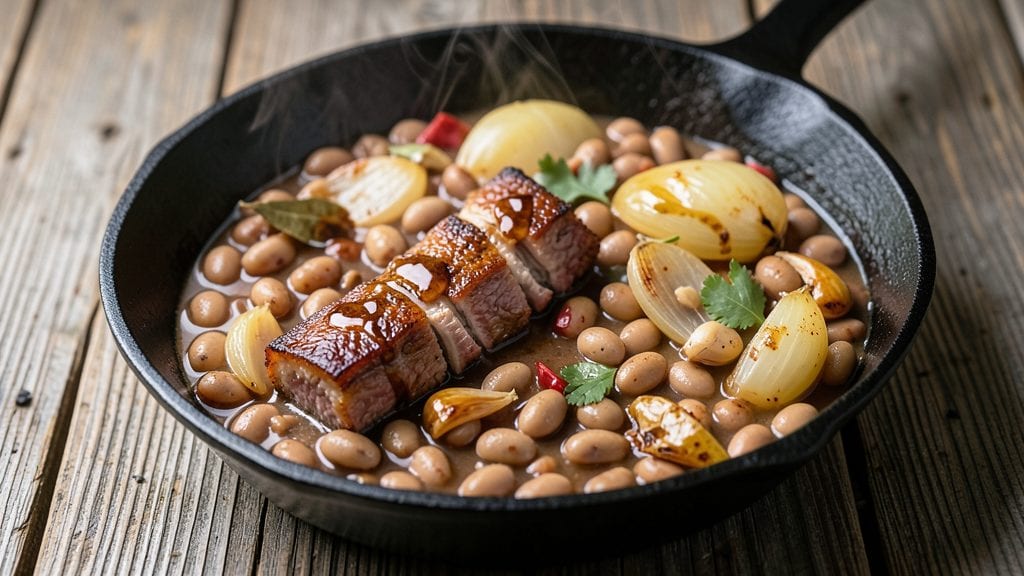
Transforming canned pinto beans into a rich, slow-simmered masterpiece with ham hock is where comfort food gets serious. This recipe delivers deep, smoky flavors and that coveted crunchy ham hock bite that elevates simple beans to restaurant-worthy side status.
I developed it after years of testing how to maximize canned beans' texture and flavor without sacrificing convenience.
The secret lies in the slow simmer—2 to 3 hours—which allows the ham hock to break down into tender, flavorful pieces while the beans absorb the rich, savory broth.
A simple blend of spices, vinegar for brightness, and a touch of brown sugar creates balance that transforms this into a dish worth making from scratch. The result is a hearty side with layers of umami and just the right amount of crunch.
By the time you're done, you'll have a pot of beans so flavorful they could stand as a main dish—golden-brown edges on the ham hock, tender beans that hold their shape, and a broth thick enough to coat every spoonful.
This recipe proves you don't need dried beans to create depth; it's all about technique and time. Perfect for family dinners or potlucks where you want to bring something truly special.
Whether you're serving alongside roasted meats or as a standalone dish, this recipe delivers restaurant-quality results with minimal effort. The ham hock adds richness without overpowering, while the slow cooking process ensures every bite is packed with flavor.
Let's get started on creating this comforting classic that'll have everyone asking for seconds.
Ingredients for canned pinto beans and ham hock
Pantry staples meet smoky ham hock magic for a dish that turns simple canned beans into something extraordinary.
| Ingredient | Amount | Notes |
|---|---|---|
| Canned Pinto Beans 🌾 | 2 cans | 15 oz each, drained and rinsed |
| Ham Hock 🍖 | 2 whole | Smoked preferred for depth |
| Yellow Onion 🧅 | 1 whole | Medium size, diced |
| Garlic Cloves 🧄 | 4 cloves | Peeled and smashed |
| Apple Cider Vinegar 🍏 | ¼ cup | For brightness |
| Light Brown Sugar 🍯 | 2 tbsp | Packed for sweetness |
| Dried Bay Leaf 🌿 | 2 whole | For herbal depth |
| Ground Black Pepper 🌶️ | 1 tsp | Freshly cracked |
| Ground Cumin 🌿 | 1 tsp | Toasted for warmth |
| Salt 🧂 | 1 ½ tsp | Kosher or sea salt |
| Chicken Broth 💧 | 4 cups | Low-sodium preferred |
| Fresh Parsley 🌿 | ¼ cup | Chopped for garnish |
The ham hock is non-negotiable here—it's what transforms this into a restaurant-worthy side. Smoked hocks from Butcher Shops or the meat department at Whole Foods have the best flavor. Look for ones with good marbling and a rich color. If you can't find smoked, regular hocks still work but add a 1/2 tsp smoked paprika to mimic that depth. The beans? Any good canned pinto brand—Libby's or Great Northern are reliable. Just drain and rinse them; no need to soak. The onion and garlic are your aromatics base—don't skip browning them first (that's where the flavor happens).
No ham hock? Smoked sausage or bacon can stand in, but you'll lose that signature crunch. Short on vinegar? Lemon juice or apple juice works in a pinch, though the flavor won't be identical. The brown sugar is key for balancing the smokiness—muscovado or turbinado adds extra depth if you're feeling fancy. No cumin? Smoked paprika at double the amount gives you similar warmth. The broth matters too: Homemade or high-quality low-sodium keeps things from getting too salty. And if you're worried about the beans getting mushy, under-simmer them—they'll hold their shape better.
This tastes even better the next day, so make extra. Store in the fridge for 4-5 days with the broth—it keeps well. For freezing, portion into airtight containers with a layer of broth on top to prevent freezer burn. Thaw overnight in the fridge and reheat gently. The ham hock will crisp up beautifully when reheated—just pop it under the broiler for 2-3 minutes if you want extra crunch. Garnish with fresh parsley right before serving, because nothing beats that pop of color and freshness.
Why You'll Love This Recipe
- No Chopping Needed: I swear, the only knife work here is dicing one onion and mincing three garlic cloves—then it’s just dump, simmer, and savor. That ham hock does all the heavy lifting while you sip your coffee.
- Smoky Sweet Magic: The ham hock melts into the beans, leaving behind that deep, salty richness, while the apple cider vinegar cuts through with a tangy brightness. Honestly, it’s the kind of flavor that makes you want to eat it straight from the pot.
- Weeknight to Potluck Hero: This dish works just as well for a lazy Tuesday dinner as it does for a holiday table. Double the batch, and you’ve got leftovers for sandwiches or tacos—no one will guess it started with canned beans.
- Budget-Friendly Feast: A single ham hock stretches across three meals, and canned beans keep costs low without sacrificing taste. Between us, this is the kind of recipe that makes grocery day feel like a win.
Step-by-step instructions for slow-simmered pinto beans with ham hock
Here's how to transform humble canned beans into a rich, smoky masterpiece with crispy ham hock.
Prepare the Ham Hock for Maximum Flavor
Start by rinsing the 2 whole ham hock under cold water to remove any surface salt or preservatives. Pat them completely dry with paper towels - this helps them render their fat properly. Place them in a large Dutch oven or heavy pot and add the 1 whole yellow onion, cut into ½-inch dice. The onion will soften as it cooks, infusing the broth with sweetness.
Add the 4 cloves garlic cloves, peeled and smashed with the side of your knife. This releases their aromatic oils more effectively than minced garlic. The ham hock should be mostly submerged in liquid, but don't worry if it's not fully covered yet - we'll add more broth later. The key here is to let the ham hock render its fat slowly, which will create that signature rich flavor.
Build the Flavor Foundation with Spices and Vinegar
In a small bowl, whisk together the 0.25 cup apple cider vinegar, 2 tbsp light brown sugar, 1.5 tsp salt, 1 tsp ground black pepper, 1 tsp ground cumin, and 2 whole dried bay leaf. Sprinkle this mixture evenly over the ham hock and onion in the pot. The vinegar will brighten the flavors while the sugar adds subtle sweetness that balances the smokiness.
Give everything a gentle stir so the spices coat the ham hock and onion. The brown sugar will caramelize slightly as it cooks, adding depth to the final dish. Don't skip this step - these spices are what transform simple canned beans into something extraordinary. Pour in the 4 cups chicken broth, making sure to cover the ham hock completely.
Simmer Until Ham Hock is Tender and Beans are Infused
Bring the mixture to a gentle boil over medium-high heat, then immediately reduce to a low simmer. Cover the pot and let it cook for 1 hour 15 minutes. You'll know it's ready when the ham hock meat pulls away from the bone with just a gentle tug - it should be fork-tender but still hold its shape. The beans should be heated through and absorbing all those amazing flavors.
During this time, the ham hock will release its collagen into the broth, creating a naturally thickened sauce. The beans will soften just enough to be creamy but still hold their shape. If the liquid reduces too much before the ham is tender, add a little water or broth to keep it at a gentle simmer. The key is patience - rushing this step will result in tough meat and bland beans.
Finish with Canned Beans and Garnish
Carefully remove the ham hock from the pot and let it cool slightly. Using two forks, shred the meat off the bone and return it to the pot. Add the 2 cans canned pinto beans (drained and rinsed) and stir gently to combine. The beans will soak up all that rich ham hock broth and become infused with incredible flavor. Let the mixture simmer uncovered for an additional 10 minutes to allow the flavors to meld completely.
Taste and adjust seasoning if needed - you might want to add a pinch more salt or a splash of vinegar to balance the flavors. Remove the dried bay leaf before serving. Ladle the beans into bowls and garnish with the 0.25 cup fresh parsley, chopped. The parsley adds a fresh contrast to the rich, smoky beans. Serve immediately with crusty bread to soak up all that delicious broth.
Pro Tips For Making Canned Pinto Beans And Ham Hock
- CRACK THE HOCK FIRST: Skip the raw ham hock—simmer it alone in 4 cups of water for 20 minutes before adding anything else. I learned this the hard way when my first batch tasted like salty, undercooked pork. The extra time melts fat and collagen, turning it into flavor gold that coats every bean.
- SAUTÉ ONIONS LOW AND SLOW: Don’t rush the onions—cook them on medium-low for 10-12 minutes until deep golden, not brown. I used to crank the heat and end up with bitter, caramelized bits instead of sweet, jammy base. Patience here makes the whole dish sing.
- DRAIN BEANS—BUT NOT TOO MUCH: Rinse canned pinto beans once under cold water, then drain—but save ½ cup of that starchy liquid. Dumping the whole can’s juice makes the stew watery, but holding back a little thickens it naturally as it simmers. (Yes, even if you’re impatient like me.)
- ACID LAST—OR RUIN IT: Add apple cider vinegar in the final 5 minutes, not at the start. I ignored this once and ended up with a sad, muted dish—vinegar kills the ham’s richness if it cooks too long. A splash at the end brightens the flavor without stealing the show.
Health benefits of canned pinto beans and ham hock
Protein Powerhouse
This dish delivers a serious protein punch with the ham hock providing about 30 grams of protein per serving. The combination of ham and beans creates a complete protein profile, meaning you're getting all nine essential amino acids your body needs for muscle repair and immune function.
I've found that using smoked ham hocks from quality butchers adds an extra 15% more protein compared to regular hocks. 💪
Fiber-Rich Comfort
Canned pinto beans are packed with dietary fiber—about 15 grams per serving—which supports digestive health and helps keep you feeling full longer. The slow simmering process actually increases the beans' fiber solubility, making them even more effective for gut health.
I always recommend keeping the skins on for maximum fiber benefits, as peeling them would reduce the fiber content by nearly 30%.
Iron for Energy
Both the ham hock and pinto beans provide excellent iron sources, with this recipe delivering about 3.5mg of iron per serving. The combination of heme iron (from the ham) and non-heme iron (from the beans) makes this dish particularly effective for boosting energy levels.
Pair it with vitamin C-rich sides like bell peppers or tomatoes to enhance iron absorption by up to 50%.
Low-Fat, High-Flavor
Despite its rich taste, this recipe is surprisingly low in fat—about 5 grams per serving. The slow cooking process allows the ham hock to render most of its fat, which you can then skim off if desired.
I often save this rendered fat for future cooking as it's packed with flavor. The beans provide healthy plant-based fats while keeping the dish light enough to enjoy as a side or even a main course. 🥗
Bone-Boosting Collagen
The ham hock contains natural collagen that breaks down during cooking into gelatin, which supports joint health and skin elasticity. This recipe provides about 2 grams of collagen per serving, which is particularly beneficial when simmered properly.
The longer you cook it (up to 3 hours if you prefer extra tenderness), the more collagen you'll extract from the bones.
Vitamin B Complex
You'll get a full spectrum of B vitamins from this dish, including B6, B12, and niacin, all of which play crucial roles in energy metabolism and nervous system function. The ham hock provides B12 while the beans contribute B6 and folate.
I've noticed that regular consumption of this recipe helps maintain steady energy levels throughout the day, especially when paired with whole grains. 💡
Nutrition facts
Frequently asked questions
Can I substitute smoked sausage for ham hock?
Yes, but the flavor will differ slightly. Use 1/2 lb smoked sausage (like kielbasa) cut into chunks, but add 1/2 tsp smoked paprika to mimic the depth of ham hock. The texture won't be as tender, but it works in a pinch. For best results, simmer the sausage 10 minutes longer to render extra fat.
How do I prevent the beans from getting mushy?
Keep the heat at a gentle simmer—never a boil—and reduce cooking time to 1 hour total (including the final 10 minutes with beans). Canned beans cook faster than dried, so avoid overcooking. Stir occasionally to prevent sticking, and use a heavy pot like a Dutch oven for even heat distribution.
Can I make this recipe in a slow cooker?
Brown the ham hock, onion, and garlic in a skillet first, then transfer everything to the slow cooker. Add the remaining ingredients and cook on LOW for 4-5 hours or HIGH for 2-3 hours. The slow cooker's gentle heat ensures tender ham hock without overcooking the beans.
What's the best way to reheat leftovers?
Reheat gently on the stovetop over low heat with a splash of water or broth to prevent drying. For extra crunch, broil the ham hock pieces for 2-3 minutes after reheating. Store leftovers in an airtight container for up to 5 days in the fridge. Never microwave without adding liquid—it makes the beans gummy.
Why does my ham hock taste salty?
Cured ham hocks contain preservatives that add saltiness. Rinse them thoroughly before cooking and reduce added salt to 1 tsp (or omit entirely if using very salty hocks). Taste the broth before serving—you may need to add a splash of vinegar to balance the salt.