
Side Dishes
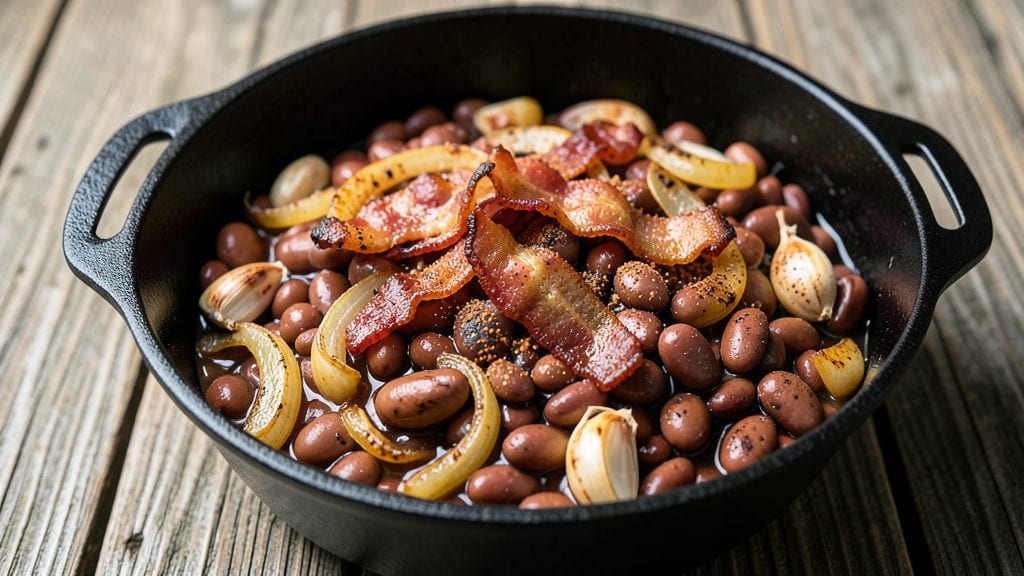
This campfire beans recipe transforms a simple side into the heart of your outdoor meal—where smoky flavors and slow-cooked richness meet over open flames.
The secret lies in layering bacon, beans, and spices in a Dutch oven, letting the fire do the work while you enjoy the crackling embers and fresh air. I’ve perfected this method after years of testing, ensuring every bite delivers that deep, caramelized flavor only campfire cooking can achieve.
What sets these beans apart is the balance of textures and flavors—tender beans, crispy bacon bits, and a savory broth that thickens beautifully over low heat. The recipe uses pinto beans (or your choice) soaked overnight for perfect tenderness, while smoked bacon adds that unmistakable campfire aroma.
A blend of spices—garlic powder, smoked paprika, and a touch of molasses—elevates the dish from ordinary to unforgettable.
The Dutch oven is your key tool here, trapping heat and infusing the beans with that smoky campfire essence you crave. Cooking over coals or a grill means you’ll have a warm, hearty side ready when the main course is done—no stove or oven required.
The result? A dish that’s hearty enough for a full meal but simple enough to prepare while you wait for the steaks to grill.
Serve these beans with cornbread, a crisp green salad, or even as a standalone dish with crusty bread. The leftovers reheat beautifully, making them perfect for post-campfire picnics or lazy Sunday brunches. Here’s how to make them—where every ingredient and technique matters for that authentic outdoor taste.
Ingredients for campfire beans
Smoky bacon, tender beans, and campfire spices—here’s what you’ll need for hearty Dutch oven beans.
| Ingredient | Amount | Notes |
|---|---|---|
| Smoked Bacon 🥓 | 6 oz | Thick-cut for best flavor |
| Dry Pinto Beans 🌽 | 1 ½ cups | Soaked overnight, drained |
| Yellow Onion 🧅 | 1 whole | Diced, medium size |
| Garlic Cloves 🧄 | 4 cloves | Minced, fresh preferred |
| Smoked Paprika 🌶️ | 1 tbsp | For authentic campfire taste |
| Garlic Powder 🧄 | 1 tsp | Enhances smoky flavor |
| Ground Black Pepper 🌶️ | ½ tsp | Freshly ground preferred |
| Molasses 🍯 | 1 tbsp | For subtle sweetness |
| Beef Broth 💧 | 2 cups | Low-sodium preferred |
| Kosher Salt 🧂 | 1 ½ tsp | Adjust to taste |
| Extra-Virgin Olive Oil 🫒 | 1 tbsp | For Dutch oven coating |
| Fresh Parsley 🌿 | ¼ cup | Chopped, for garnish |
| Dutch Oven 🍲 | 1 whole | 5-7 quart size |
The bacon is non-negotiable here—thick-cut smoked bacon gives you that perfect crunch and rich flavor. Costco or Trader Joe's usually have great pre-packaged options, but if you're at a regular grocery store, grab whatever's on sale. The pinto beans? Dry beans are a must—canned just won’t give you that same texture. Soak them overnight in plenty of water (about 4 cups per cup of beans), then drain. Pro tip: Add a pinch of baking soda to the soaking water to help soften them faster. For the spices, smoked paprika is the secret weapon—it’s what gives that authentic campfire taste. If you can’t find it, regular paprika plus a dash of liquid smoke works in a pinch.
No smoked paprika? Substitute 1/2 tbsp regular paprika plus 1/4 tsp liquid smoke. Running low on molasses? Maple syrup or brown sugar will do, though molasses has that deeper, richer flavor. Fresh parsley is ideal for garnish, but dried parsley at half the amount works if that’s all you’ve got. The beef broth can be bouillon powder mixed with hot water if you’re out of liquid. And if you’re short on time, quick-soak the beans—just boil them for 2 minutes, then let them sit off the heat for an hour. The Dutch oven is key here—if you don’t have one, a heavy pot with a tight lid will work, but you’ll lose some of that campfire magic.
These beans taste even better the next day—double the batch if you’re planning leftovers. Store them in an airtight container in the fridge for up to 5 days, or freeze for 3 months. To reheat, just warm on the stove with a splash of water or broth. The bacon bits crisp up beautifully when reheated, so don’t skip them! For extra smokiness, add a few drops of liquid smoke when reheating. And if you’re taking them camping, prep everything ahead of time—just assemble and cook over the fire. No cleanup, all flavor.
Why You'll Love This Recipe
- One-Pot Magic: I swear by this recipe because it’s literally dump-and-go. Toss in the dry beans, bacon, onion, and garlic—no soaking, no fuss—just let that smoky paprika work its charm while you sip coffee or watch the fire.
- Smoky Bacon Bomb: That crispy bacon isn’t just for flavor—it’s the star. The salty, smoky bits cling to the beans like a hug, and the paprika? It turns this into something ridiculously satisfying, like a campfire hug in a bowl.
- Tailgate or Taco Night: Serve it warm with cornbread at a picnic, or let it cool for taco fillings the next day. Honestly, I’ve eaten these straight from the pot, in a sandwich, and even over rice—this recipe just works no matter what.
- Budget-Friendly Powerhouse: Dry pinto beans and bacon stretch for days, and the flavors only get better. I make a big batch on Sundays, and by Wednesday, I’m still pulling leftovers from the fridge—no takeout needed.
Step-by-step instructions for smoky campfire beans
Here's how to create rich, smoky beans that taste like they've been simmering over an open fire.
Cook the Smoked Bacon Until Crispy
Place the 6 oz smoked bacon in the 5-7 quart Dutch oven over medium heat. Cook for 8-10 minutes, stirring occasionally, until the bacon is golden brown and crispy. You'll know it's ready when the fat starts to render out and the edges curl slightly. This rendered fat will become the flavor base for your beans.
Remove the bacon from the Dutch oven using tongs and transfer it to a paper towel-lined plate. Let it cool for 5 minutes, then crumble it into small pieces with your fingers. Reserve the bacon fat in the Dutch oven—you'll use it to sauté your aromatics. Don't drain the fat completely as it contains valuable flavor compounds.
Sauté Aromatics in the Bacon Fat
Add the 1 whole yellow onion and 4 cloves minced garlic to the Dutch oven with the bacon fat. Cook over medium heat for 5-6 minutes, stirring frequently, until the onions are softened and translucent. You should smell the garlic releasing its aroma—this is when they're ready for the next step.
Sprinkle in the 1 tablespoon smoked paprika, 1 teaspoon garlic powder, and 0.5 teaspoon ground black pepper. Stir for 30 seconds to toast the spices and deepen their flavors. The mixture should look slightly darker and smell intensely smoky. This is the foundation of your campfire flavor profile.
Combine Beans and Liquid
Add the 1.5 cups drained pinto beans to the Dutch oven along with the 2 cups beef broth, 1 tablespoon molasses, and 1.5 teaspoons kosher salt. Stir well to combine all ingredients. The liquid should just cover the beans—if it looks too thin, add a splash of water. You want enough liquid to create a hearty stew but not so much that it becomes soupy.
Bring the mixture to a gentle boil over medium-high heat, then immediately reduce the heat to low. Cover the Dutch oven with its lid and let it simmer for 45-50 minutes. You'll know it's ready when the beans are tender and the liquid has reduced slightly, creating a thick, flavorful sauce. Stir occasionally to prevent sticking.
Finish with Crispy Bacon and Fresh Parsley
After the beans have simmered, stir in the crumbled bacon you prepared earlier. The crispy bacon will add texture and extra smoky flavor to each bite. Let the mixture cook uncovered for an additional 5 minutes to allow the flavors to meld together. You should see the bacon fat glistening on top of the beans.
Remove the Dutch oven from heat and stir in the 0.25 cup chopped fresh parsley. The parsley adds a bright, fresh contrast to the rich, smoky flavors. Taste and adjust the seasoning if needed—you might want to add a pinch more salt or a splash of molasses for balance. The beans should have a perfect harmony of smoky, sweet, and savory flavors.
Serve Warm from the Dutch Oven
Let the campfire beans rest for 5 minutes before serving. This resting time allows the flavors to settle and the beans to absorb any remaining liquid. Serve directly from the Dutch oven for that authentic campfire experience, or transfer to a serving bowl if preferred.
Each serving should be rich and hearty, with tender beans swimming in a smoky, slightly sweet sauce. The crispy bacon bits add delightful texture, while the fresh parsley provides a bright finish. This dish pairs perfectly with cornbread or crusty bread to soak up every last bit of flavor.
Pro Tips For Making Campfire Beans
- CRANK THE HEAT FIRST: Start your beans over high heat with the bacon—this renders the fat fast and prevents that sad, greasy sludge at the bottom. I used to simmer gently from the start, and my beans would turn out more like mush than campfire magic. Two minutes of aggressive sizzling makes all the difference.
- SOAK BEANS OVERNIGHT (OR NOT): Skip the soak if you’re in a hurry, but if you’ve got time, let those pintos sit in cold water for 8–12 hours. The trade-off? Soaking cuts cooking time by 30 minutes, but if you forget, just add an extra 15 minutes of simmering. My first time forgetting nearly ruined a pot—now I keep a jar of beans by the sink.
- CHOP ONIONS SMALLER THAN YOU THINK: Tiny dice, not slices. Onions burn fast over campfire heat, and you’ll end up with charred chunks instead of sweet, caramelized flavor. Aim for 1/8-inch pieces—yes, it takes longer, but your beans will taste like they’ve been simmering for hours, not minutes. (I learned this after one very bitter batch.)
- SAVE THE BACON FAT: Drain the bacon halfway through cooking, but save that golden grease—it’s liquid flavor. Stir it back in with the beans at the end, especially if your fire’s been uneven. That fat clings to the beans like a hug, turning a good dish into a great one. (Yes, even if you’re lazy about draining—just don’t skimp on the amount.)
Wine and beer pairings for this dish
Red Wine Pairings
For these smoky campfire beans, a medium-bodied red wine like Zinfandel or Shiraz complements the dish beautifully. Look for a California Zinfandel with notes of blackberry and vanilla—it mirrors the molasses sweetness while cutting through the bacon fat.
A 2018 Bogle Vineyards Old Vine Zinfandel (around $15) is my go-to for its balance of fruit and spice. The wine’s acidity also helps cleanse your palate between bites of rich, smoky beans. 🍷
Crisp White Options
If you prefer white wine, a slightly oaky Chardonnay with a touch of lees aging works surprisingly well. I recommend a La Crema Sonoma Coast Chardonnay—its buttery notes pair with the bacon fat, while the citrus brightness contrasts the molasses.
For something lighter, try a dry Riesling from Germany, like Dr. Loosen Blue Slate, which adds a mineral edge that balances the dish’s sweetness.
Beer Pairings
A malty amber ale like Fat Tire from New Belgium Brewing is perfect for these beans. The caramel and biscuit notes echo the molasses and smoky paprika, while the slight hop bit refreshes your palate.
For a darker option, try a brown ale like Samuel Smith’s Nut Brown Ale—its toasty, nutty flavors complement the bacon and beans beautifully. 🍺
Non-Alcoholic Choices
Don’t overlook non-alcoholic options! A smoky ginger beer like Feather Ginger Beer adds a spicy kick that enhances the campfire flavors. For something sweeter, try a sparkling hibiscus tea (like Tazo Hibiscus Tea chilled and carbonated with soda water)—it balances the richness without overpowering the dish.
Both options are refreshing and highlight the beans’ depth.
Regional Beer Twists
In the South, a bourbon barrel-aged beer like Goose Island Bourbon County Stout adds a caramelized depth that pairs wonderfully with the molasses. For a Pacific Northwest twist, try a hazy IPA like Deschutes The Abyss—its juicy hop flavors contrast the smoky richness.
Each regional beer brings a unique layer to the dish, making it feel even more special over the campfire. 🌟
Nutrition facts
Frequently asked questions
Can I use canned beans instead of dry beans for this recipe?
While canned beans will save time, they won't give you the same rich texture. For best results, stick with dry pinto beans soaked overnight. If you must use canned, drain and rinse them thoroughly, then simmer for an extra 10-15 minutes to thicken the sauce. The difference in flavor and mouthfeel is noticeable!
How do I adjust this recipe for a cast iron skillet instead of a Dutch oven?
You can absolutely use a cast iron skillet, but expect slightly different results. Use a 12-inch skillet for similar capacity, and reduce the broth by 1/2 cup since cast iron conducts heat differently. Cover tightly with a lid and cook over medium-low heat to prevent burning. Stir more frequently to avoid sticking.
What's the best way to reheat leftovers?
Reheat gently on the stove over low heat with a splash of water or broth to restore moisture. For campfire reheating, place the beans in a foil packet with a little extra bacon fat or broth, then warm over the coals for 10-15 minutes. Never microwave—it makes the beans mushy and loses that campfire essence!
Can I make this recipe vegetarian?
Swap the bacon for smoked tofu or tempeh, crumbled and pan-fried until crispy. Use vegetable broth instead of beef broth, and add 1/2 teaspoon liquid smoke to maintain that smoky campfire flavor. The texture will be slightly different but still delicious.
Why did my beans turn out too watery?
This usually happens when you use too much liquid or don't cook long enough. For next time, reduce the broth to 1.5 cups and simmer uncovered for 10-15 minutes at the end to thicken. You can also mash a few beans with a fork to help thicken the sauce naturally.