
Side Dishes
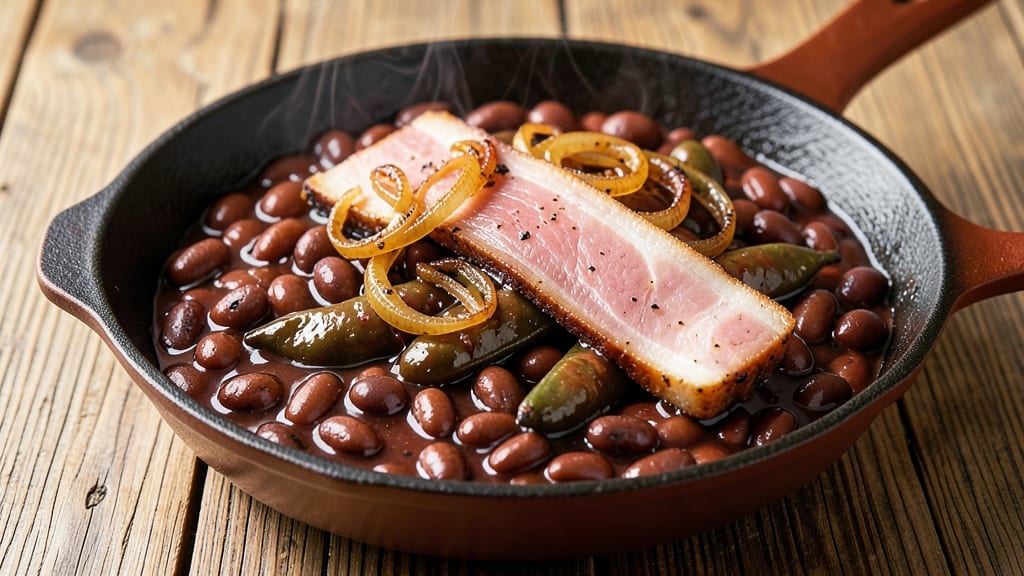
This Bush's baked beans and ham recipe delivers the sweet-smoky comfort of a classic one-pot tradition that’s been a holiday staple for generations. The combination of tender navy beans, slow-cooked ham, and a rich molasses-brown sugar sauce creates a dish that’s equal parts nostalgic and satisfying.
I’ve refined this recipe to balance authenticity with modern convenience, whether you’re using an oven, slow cooker, or stovetop.
The beauty of this recipe lies in its simplicity—just a handful of ingredients simmered together until the flavors meld into perfect harmony. The ham adds depth, while the molasses and brown sugar create that signature caramelized sweetness.
What sets this version apart is the foolproof technique for achieving tender beans and a sauce that thickens just enough to coat every bite without being gluey.
By the time you’re done, you’ll have a steaming pot of restaurant-quality baked beans that taste like they’ve been simmering all day. The aroma alone will have everyone gathering around the table, and the first bite delivers that familiar, comforting flavor profile—sweet, smoky, and rich.
This dish is hearty enough to stand alone but pairs beautifully with cornbread, grilled meats, or even as a side for a potluck.
Best of all, it’s a one-pot wonder, meaning minimal cleanup and maximum flavor. Whether you’re preparing for a holiday feast or a cozy weeknight dinner, this recipe delivers the same satisfying results. Let’s get cooking!
Ingredients for bush's baked beans and ham
Sweet-smoky harmony in one pot—just twelve ingredients transform into restaurant-quality comfort.
| Ingredient | Amount | Notes |
|---|---|---|
| Navy Beans (Dry) 🥣 | 1 ½ lbs | Rinsed thoroughly before cooking |
| Smoked Ham Hock 🍖 | 1 whole | For deep smoky flavor |
| Brown Sugar 🍯 | 1 cup | Packed for accurate measurement |
| Molasses 🍯 | ½ cup | Unsulphured preferred |
| Ketchup 🍅 | ½ cup | Classic Bush's style |
| Yellow Onion 🧅 | 1 whole | Diced into small pieces |
| Garlic Cloves 🧄 | 4 cloves | Minced for even distribution |
| Mustard 🍯 | 2 tbsp | Yellow or Dijon variety |
| Apple Cider Vinegar 🍎 | 2 tbsp | For tangy brightness |
| Black Peppercorns 🌶️ | 1 tsp | Freshly cracked for aroma |
| Bay Leaves 🍃 | 2 whole | Removed before serving |
| Water 💧 | 6 cups | Or low-sodium ham broth |
| Bacon (Optional) 🥓 | 6 oz | Diced for extra richness |
The smoked ham hock is non-negotiable for authentic depth—look for thick-cut, bone-in pieces at specialty butchers or well-stocked grocery stores like Whole Foods or Kroger. Diamond Crystal kosher salt (not table salt) enhances flavor without overpowering the molasses. For the beans, navy beans deliver that classic texture, but great northerns work in a pinch. The molasses should be unsulphured—Goya or Bridgford brands are reliable. Pre-rinse the beans to remove any debris that could make the sauce cloudy during simmering. If using bacon, opt for thick-cut from Oscar Mayer or Costco—it renders beautifully without turning greasy.
No molasses? Maple syrup plus a pinch of cinnamon mimics the depth, though the smokiness will differ slightly. Substitute apple juice for vinegar if needed, but reduce by 1 tbsp to maintain balance. Dijon mustard adds complexity if yellow mustard isn't available, though it'll alter the color. For a vegetarian version, swap the ham hock for smoked paprika (1 tbsp) and liquid smoke (½ tsp). The ketchup can be homemade (blend tomatoes, vinegar, and spices) or Heinz for consistency. Freshly cracked peppercorns are worth the effort—they release aroma during simmering, but pre-ground works in a bind.
This dish improves overnight—the flavors meld beautifully when reheated. Store in an airtight container for up to 5 days in the fridge or 3 months frozen (portion into meal-sized containers for convenience). For slow cooker prep, combine all ingredients except bacon (add that last 30 minutes) and cook on low for 8 hours or high for 4 hours. Oven method? Brown the ham and onions first in a Dutch oven for deeper flavor. Leftovers? Freeze for up to 3 months—thaw overnight in the fridge before reheating.
Why You'll Love This Recipe
- One-Pot Magic: I swear by this recipe—just toss everything in one dish, pop it in the oven, and walk away. No chopping, no fuss, and honestly? The ham hock does all the work by melting into rich, smoky flavor without me lifting a finger after stirring.
- Sweet-Smoky Bomb: That molasses and brown sugar combo? It’s like a hug in a bowl—deep, caramelized, and just a hint of tang from the ketchup. The ham hock adds this incredible depth, so you’re not just eating beans; you’re eating comfort with every bite.
- Leftovers That Beg for More: Between us, this recipe makes enough to feed a crowd or save you for days. The beans get even better the next day—so tender and infused with that smoky ham flavor. I’ll be real: I’ve reheated this for breakfast with eggs, and no one judges me.
- Budget-Friendly Crowd-Pleaser: Dry navy beans and a ham hock stretch this dish far without breaking the bank. It’s the kind of meal where you can feed five people for the price of takeout, and they’ll actually want seconds. Plus, the prep is so simple, you’ll wonder why you ever bought canned beans.
Step-by-step instructions for Bush's baked beans and ham
This classic one-pot dish delivers rich, smoky-sweet flavors with minimal effort.
Prepare the Beans and Aromatics
Rinse the 1.5 lbs navy beans thoroughly under cold water to remove any debris. Place them in a large Dutch oven or heavy pot with the 6 cups water. Add the 1 whole smoked ham hock and bring to a boil over high heat. Once boiling, reduce heat to medium-low and simmer uncovered for 2 hours. This initial cooking softens the beans and infuses the liquid with ham flavor.
While the beans simmer, dice the 1 whole yellow onion into small, even pieces and mince the 4 cloves garlic. Crack the 1 tsp black peppercorns using a mortar and pestle or small spice grinder for maximum aroma. The onions and garlic will be added later, but having them prepped ensures smooth execution when we combine everything.
Build the Sweet-Smoky Sauce Base
After the 2-hour simmer, stir in the 1 cup packed brown sugar, 0.5 cup unsulphured molasses, and 0.5 cup ketchup. Add the diced yellow onion, minced garlic, 2 tbsp mustard, and 2 tbsp apple cider vinegar. The mixture will look thick and syrupy at first, but don't worry—it will meld beautifully as it cooks. Add the 2 whole bay leaves and bring everything to a gentle simmer over medium heat.
If using the optional 6 oz bacon, add it now. Cook the bacon until crispy, then remove with a slotted spoon and set aside, leaving the rendered fat in the pot. This bacon fat adds another layer of richness to the beans. The sauce should coat the back of a spoon but still be pourable—this is the ideal consistency for proper bean development.
Simmer to Perfect Tenderness
Cover the pot and reduce heat to low. Let the beans simmer gently for 3 to 4 hours, stirring occasionally to prevent sticking. The beans are done when they're fork-tender with just a hint of resistance in the center. You'll know they're ready when they hold their shape but are soft enough to mash slightly between your fingers. The sauce should thicken and become glossy as the beans absorb the flavors.
During the final hour, check the liquid level occasionally. If it looks too thin, uncover the pot and simmer uncovered for 10 to 15 minutes to reduce slightly. The beans should be swimming in a rich, thick sauce—not watery, but not so thick that it resembles a paste. The ham hock will continue to render fat, which helps create that signature glossy finish.
Finish and Serve
Once the beans reach perfect tenderness, remove the ham hock and bay leaves. Discard the bay leaves but save the ham hock for another use—it's delicious shredded for sandwiches or added to soups. If you used bacon, crumble it back into the beans now. Taste and adjust seasoning if needed, adding more brown sugar or vinegar to balance sweetness and tang.
Transfer the beans to a serving dish and let them rest for 10 minutes before serving. This resting period allows the flavors to meld completely and the sauce to thicken slightly. Serve warm with cornbread or crusty bread to soak up every last bit of that smoky-sweet sauce. The beans should be rich, tender, and perfectly balanced between sweet, smoky, and tangy flavors.
Pro Tips For Making Bush'S Baked Beans And Ham
- SOAK BEANS OVERNIGHT: I learned this the hard way—rushing the soak leads to tough beans. Cover dry navy beans in water (3:1 ratio) and let them sit 12+ hours. Drain and rinse before cooking; this cuts down time and keeps the texture creamy. (Yes, even if you’re impatient like me.)
- TRIM THE HAM HOCK: That fatty layer on the ham hock? It renders down into grease, not flavor. Use kitchen shears to slice off the thickest fat patches before adding it to the pot. You’ll still get smoky depth without a slick, greasy sauce.
- LOW AND SLOW IS NON-NEGOTIABLE: After burning three batches, I finally figured out: 300°F is the sweet spot. Too high, and the molasses and sugar scorch before the beans soften. Too low, and you’re staring at a sad, undercooked mess. Cover the dish and let it simmer—no peeking.
- STIR IN THE KETCHUP LATE: Sounds weird, but it works: add the ketchup only in the last 30 minutes. Early on, it burns and turns bitter. Waiting lets the beans and ham build flavor first, so the ketchup just ties everything together—no weird aftertaste. (Your future self will thank you.)
Regional styles of this bush's baked beans and ham
Southern BBQ Tradition
This recipe traces its roots to Southern barbecue pits, where beans and pork simmered for hours over open flames. The smoked ham hock is essential—it adds that deep, smoky backbone that defines Southern-style baked beans.
I always look for thick-cut, bone-in hocks from local butchers or specialty stores like Whole Foods for the best flavor. The molasses and brown sugar combo became iconic during the Civil War era when sugar was scarce, and cooks relied on molasses for sweetness. 🌶️
Texas-Style Twist
In Texas, the dish gets a spicier kick with 1-2 tbsp of chili powder added during the final hour of simmering. I like to use Penzeys Texas-style chili powder for that authentic heat.
Texans also often add diced jalapeños or hot sauce (like Cholula) at the end for extra fire. The beans here are slightly firmer than traditional Southern versions, reflecting Texas's love for hearty, robust flavors.
New England Clam Bake
Up north, this dish takes on a coastal influence with the addition of clams or mussels. I’ve seen versions where 12-15 fresh clams are steamed in the pot during the final 30 minutes, absorbing the smoky-sweet flavors.
The apple cider vinegar becomes even more prominent here, balancing the briny seafood. Serve with cornbread muffins for a true New England clambake experience. 🍽️
Modern Slow-Cooker Adaptation
For today’s busy cooks, the slow cooker has become the go-to method. Transfer all ingredients to a 6-quart slow cooker and cook on low for 8 hours or high for 4 hours. The key difference?
Add ½ cup extra liquid (water or broth) to prevent burning. I like to finish with a sprinkle of smoked paprika for extra depth. This version is perfect for meal prep—just reheat and serve!
Carolina Mustard Heat
In the Carolinas, the dish leans into hot mustard for a tangy, fiery twist. Swap the yellow mustard for 1 tbsp Carolina Gold hot mustard and add ½ tsp cayenne pepper during the final hour.
The result is a sauce that’s both sweet and spicy—a perfect balance for those who love heat. I’ve found that Dijon mustard works in a pinch, though it lacks the same bold kick. 🔥
Holiday Potluck Favorite
This dish is a potluck staple across the South, often served in disposable aluminum pans lined with foil for easy transport. For extra presentation, I like to top it with crumbled bacon and chopped green onions right before serving.
The ham hock can be shredded and mixed back in for a richer texture. It’s the kind of dish that disappears quickly—always bring extra! 🎄
Nutrition facts
Frequently asked questions
Can I use canned beans instead of dry?
For a quicker version, use 3 (15 oz) cans of navy beans, drained and rinsed. Reduce the initial simmer time to 1 hour (instead of 2) since canned beans are pre-cooked. The texture will be slightly softer but still delicious. Just be sure to add the sauce ingredients after the beans have heated through.
Why does my sauce turn out too thin?
This usually happens when too much liquid is added or the beans aren't simmered long enough. For a thicker sauce, uncover the pot and simmer for an extra 10-15 minutes to reduce the liquid. You can also stir in 1 tbsp cornstarch mixed with 1 tbsp cold water at the end for instant thickening. The sauce should coat the back of a spoon but remain pourable.
What's the best way to reheat leftovers?
Reheat in a pot over medium-low heat, stirring occasionally, until warmed through (5-7 minutes). For microwave reheating, cover with a damp paper towel and heat in 1-minute intervals, stirring between each. The sauce may thicken further when reheated—just add 1-2 tbsp water or broth if needed. Never reheat to a boil to prevent splitting the sauce.
Can I make this recipe vegetarian?
Yes! Replace the ham hock with 1 tbsp smoked paprika + ½ tsp liquid smoke for smoky flavor. Add 1 cup vegetable broth to maintain moisture. For extra richness, stir in 2 tbsp soy sauce or 1 tbsp balsamic vinegar during the final hour. The beans will still develop that signature sweetness, though the depth of flavor will differ slightly from the ham version.
How do I store and freeze these beans?
Store in an airtight container in the fridge for up to 5 days. For freezing, portion into meal-sized containers and freeze for up to 3 months. Thaw overnight in the fridge before reheating. The texture holds up well when frozen, though the sauce may separate slightly—just stir vigorously when reheating.