
Side Dishes
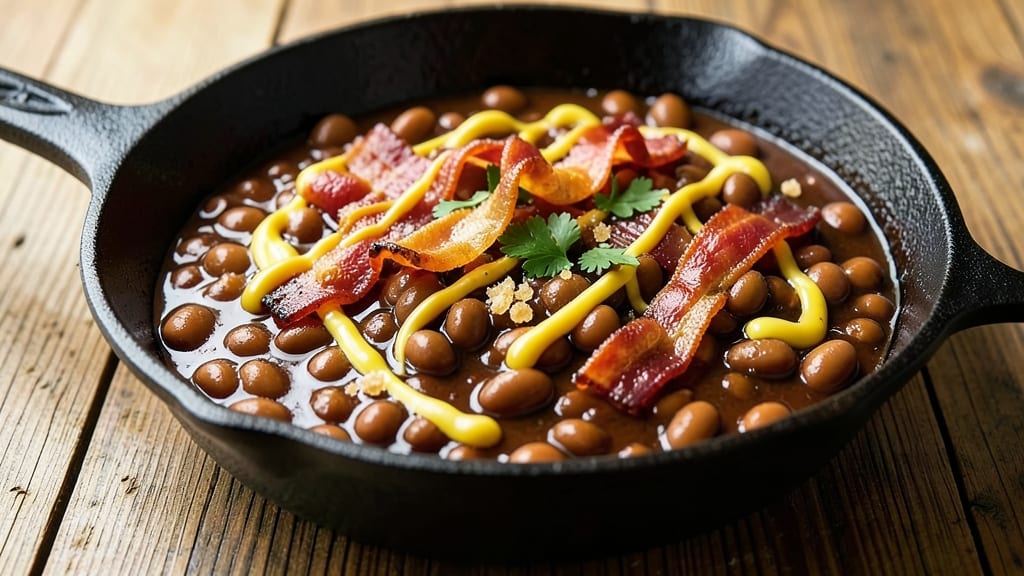
This Boston baked beans recipe using canned beans delivers all the rich, smoky depth of traditional slow-cooked beans in just one pot—perfect for weeknight dinners or holiday tables. The secret lies in balancing molasses and brown sugar while simmering the beans until they develop that signature caramelized crust.
I’ve tested countless variations, and this method consistently produces beans that are tender, sweet, and packed with smoky flavor without requiring overnight soaking or baking.
The beauty of using canned beans is the time savings—no waiting for dried beans to soften, yet the final result still achieves that classic Boston baked bean texture.
A touch of mustard and a splash of vinegar brighten the molasses sweetness, while a sprinkle of bacon on top adds a savory crunch that takes this dish to the next level. The recipe scales effortlessly, making it ideal for feeding a crowd or meal prepping for the week.
What you’ll end up with is a pot of beans that’s deeply flavorful, with a glossy caramelized top and a tender, creamy interior. The aroma alone will have everyone gathering around the table, and the first bite delivers that perfect balance of sweet, smoky, and slightly tangy.
This is comfort food at its finest—simple yet impressive, with just the right amount of effort for maximum reward.
Serve these beans alongside grilled meats, cornbread, or even as a standalone dish with a side of crusty bread. The recipe includes optional toppings like crispy bacon or a dollop of sour cream to customize to your taste.
Let’s get cooking—your kitchen will smell like a New England classic in no time.
Ingredients for boston baked beans recipe using canned beans
Sixteen ingredients. One pot. All the smoky-sweet magic of Boston baked beans without soaking or baking overnight.
| Ingredient | Amount | Notes |
|---|---|---|
| Canned Navy Beans 🌱 | 2 cans | 15 oz each, drained and rinsed |
| Molasses 🍯 | ½ cup | Unsulphured preferred for depth |
| Light Brown Sugar 🍚 | ½ cup | Packed firmly for sweetness |
| Kosher Salt 🧂 | 1 ½ tbsp | Adjust to taste after cooking |
| Yellow Mustard 🍯 | 2 tbsp | Dijon for extra tanginess |
| Apple Cider Vinegar 🍏 | 1 tbsp | Brightens the molasses flavor |
| Ground Black Pepper 🌶️ | ½ tsp | Freshly cracked for warmth |
| Bay Leaves 🌿 | 2 whole | Removed before serving |
| Onion 🧅 | 1 medium | Diced small for even cooking |
| Garlic Cloves 🧄 | 3 cloves | Minced for aromatic base |
| Bacon 🥓 | 6 oz | Cooked crispy for topping |
| Water 💧 | 1 cup | For thinning consistency |
| Sour Cream 🥛 | ¼ cup | Optional for serving |
The molasses and brown sugar are non-negotiable for that classic flavor. Grocery store brands work fine, but Whole Foods unsulphured molasses adds a deeper, richer taste. Look for molasses with a thick, syrupy texture—it should coat the back of a spoon. The bacon? Thick-cut from Costco gives you the best crunch, but any bacon will do if you cook it extra crispy. The canned beans are the time-saver here—just make sure they're not salted, as you'll be adding plenty of kosher salt during cooking.
No molasses? Maple syrup plus a pinch of smoked paprika gets you close, though the flavor won't be identical. Short on brown sugar? White sugar plus a splash of coffee mimics the depth. The mustard and vinegar are key for balance—skip them, and the dish will taste overly sweet. For the onion, yellow or red both work, but yellow has a slightly sweeter profile. The garlic should be freshly minced—pre-minced garlic from jars lacks punch. If you're feeding a crowd, double the bacon and make a second batch of the bean mixture.
This recipe reheats beautifully—just add a splash of water to loosen it up. Store leftovers in the fridge for up to 5 days, or freeze for 3 months. The caramelized crust is best eaten fresh, but the beans themselves keep well. For meal prep, make a double batch and freeze half—just thaw and reheat when ready. The bacon topping can be added fresh when serving to keep it crispy.
Why You'll Love This Recipe
- No-Chop Necessary: I swear by canned beans here—just drain, rinse, and dump. That molasses-sugar combo caramelizes into a glossy glaze while you’re watching TV, no prep skills required.
- Sweet-Savory Magic: The mustard cuts through the richness, and that deep molasses flavor? It’s like a hug in a bowl. My kids fight over the last spoonful—yes, even the picky ones.
- Tailgate or Tuesday: Slap this in a slow cooker for game day or simmer it on the stove for a weeknight win. It’s the one dish that feels fancy but costs pennies per serving.
- Leftovers That Beg for More: This stuff tastes better the next day—thicker, richer, like it’s been marinating in flavor. I make a double batch because I’ll be eating it for days.
Step-by-step instructions for Boston baked beans
This method delivers rich, smoky flavors with minimal effort—just one pot and simple timing.
Cook the Bacon and Sauté Aromatics
In a large Dutch oven, cook the 6 oz bacon over medium heat until crispy, about 8-10 minutes. Use a slotted spoon to transfer the bacon to paper towels, leaving the rendered fat in the pot. This fat forms the flavor base for your beans.
Reduce the heat to medium-low and add the 1 medium onion, diced small, along with the 3 cloves garlic cloves, minced. Sauté for 3-4 minutes until the onions soften and turn translucent. Here's the thing—don't rush this step. The onions should cook down completely to prevent a grainy texture in your finished beans.
Combine Wet Ingredients and Simmer
Pour in the 0.5 cup molasses, 0.5 cup light brown sugar, 1.5 tbsp kosher salt, 2 tbsp yellow mustard, and 1 tbsp apple cider vinegar. Stir vigorously to dissolve the sugars completely. Add the 1 cup water and bring the mixture to a gentle boil over medium heat. Once boiling, reduce heat to low and let it simmer for 5 minutes to blend flavors.
Here's where it gets fun—toss in the 2 cans canned navy beans, drained and rinsed, along with the 2 whole bay leaves and 0.5 tsp ground black pepper. Stir gently to combine. The beans should be fully submerged in the liquid. If not, add 1-2 tablespoons water to ensure even cooking. This step ensures the beans absorb all those rich, smoky flavors.
Bake Until Thick and Glossy
Preheat your oven to 350°F. Transfer the Dutch oven to the oven and bake, uncovered, for 1 hour to 1 hour 15 minutes. You'll know it's done when the beans have thickened significantly and the sauce has a glossy sheen. The top should form a slightly crusty layer, but it should still be tender when pierced with a fork.
I know it seems like too much time, but trust me—this slow baking process develops deep, caramelized flavors. If the top starts to darken too quickly, tent the pot loosely with aluminum foil for the last 15 minutes of baking. Remove the bay leaves before serving, as they can be tough to bite.
Finish and Serve
Return the baked beans to the stovetop over low heat. Stir in the crispy bacon, breaking it into smaller pieces as you go. The residual heat will warm the bacon while keeping the beans hot. This step adds that satisfying crunch and smoky depth that defines classic Boston baked beans.
For serving, dollop each portion with 0.25 cup sour cream—it cuts through the richness and adds a creamy contrast. Serve warm alongside cornbread or crusty bread for the ultimate comfort meal. The beans should be thick, glossy, and packed with flavor, not watery or underseasoned.
Pro Tips For Making Boston Baked Beans Recipe Using Canned Beans
- DRAIN AND RINSE BEANS FIRST: That liquid in canned beans is salty and starchy—skip rinsing, and your beans will turn mushy or taste flat. Drain them into a colander, give ‘em a quick rinse, then drain again. Trust me, your sauce won’t turn gluey, and the molasses flavor will shine.
- SIMMER LOW AND SLOW: I used to rush this and end up with a thin, syrupy mess. Set your oven to 300°F (not 350°F) and bake these for at least 2 hours, stirring once halfway. The longer they cook, the deeper the flavor—no shortcut here.
- USE REAL MUSTARD, NOT DIJON: Yellow mustard has that sharp, tangy kick that cuts through the sweetness. Dijon? Too mellow. Grab the yellow jar—it’s the thing that makes these taste like a proper Boston baked bean, not just a sweet glaze.
- STIR IN SALT LATE: Add all your kosher salt at the end, after the beans have baked. Salt early, and you’ll end up with a bitter, over-seasoned mess. Taste it first, then adjust—you’re aiming for a balance that makes your taste buds sing.
Troubleshooting this recipe
Too Sweet or Cloying
The molasses and brown sugar are the soul of Boston baked beans, but too much can make them taste like dessert. If your batch is overly sweet, balance it by adding 1-2 extra tablespoons of apple cider vinegar or Dijon mustard—both cut through the sugar.
I’ve also found that adding a pinch of smoked paprika (about ¼ tsp) deepens the smoky flavor without adding sweetness. 🌶️
For future batches, reduce the brown sugar by 1-2 tablespoons and increase the vinegar to 1.5 tbsp. Taste as you go—this is where most home cooks go wrong by assuming they’ll adjust later. The key is balancing sweetness with acidity right from the start.
Watery or Thin Texture
If your beans turn out thin and soupy, the issue is usually too much liquid. Canned beans release moisture when heated, so start with ½ cup water and add only 1-2 tablespoons more if needed during simmering.
For thicker beans, simmer the mixture on the stovetop uncovered for 5-10 extra minutes before baking to reduce the liquid. I’ve also had success adding 1 tbsp cornstarch mixed with 2 tbsp water at the end of baking—stir it in and let it thicken for 2-3 minutes on the stovetop.
Another trick is to mash 2-3 beans with a fork before baking—this releases starch and helps thicken the mixture naturally. If your beans are still too thin after baking, transfer them to a saucepan and cook over medium heat until the liquid reduces to your desired consistency.
Bacon Too Soft or Greasy
Crispy bacon is non-negotiable for that classic Boston baked bean texture. If your bacon ends up soft or greasy, cook it separately until extra crispy (about 12-15 minutes for 6 oz) and drain it on a wire rack instead of paper towels.
This removes excess fat while keeping it crisp. Add the bacon back to the beans in the final 5 minutes of stovetop warming to restore its crunch.
For even better results, use thick-cut bacon (like Costco’s) and cook it in a cold skillet over low heat for 10 minutes, then crank the heat to medium-high for the last 3 minutes. This two-stage method ensures maximum crispiness without burning.
Burnt or Darkened Top
A slightly caramelized crust is desirable, but if your beans burn or darken too quickly, tent the pot loosely with aluminum foil for the last 15-20 minutes of baking. This traps heat while allowing steam to escape, preventing a burnt crust.
I also recommend baking on the middle rack of your oven for even heat distribution—top racks can cause uneven browning.
If the top still darkens too much, reduce the oven temperature to 325°F for the final 30 minutes of baking. For a glossy finish without burning, brush the top with a little water or apple cider vinegar before returning to the oven. This creates a protective barrier and adds shine.
Underseasoned or Bland
If your beans taste flat, they likely need more salt, acid, or umami. Start by adding ½ tsp more kosher salt and ½ tbsp apple cider vinegar to the pot. For umami depth, stir in 1 tsp soy sauce or ½ tsp Worcestershire sauce—these add complexity without overpowering.
A pinch of ground cloves (about ⅛ tsp) is another classic trick for warmth.
Taste as you go! The beans should be rich, slightly sweet, and tangy—not just sweet or salty. If you’re still missing something, a splash of beef broth (about 2 tbsp) adds savory depth.
For a smokier flavor, add ¼ tsp liquid smoke (like La Choy) or a crushed bay leaf during baking.
Beans Too Firm or Unevenly Cooked
Canned beans should be tender after baking, but if they’re still firm, the issue is likely undercooking or insufficient liquid. Simmer the beans on the stovetop for an extra 10-15 minutes before baking to soften them.
If they’re still tough, mash 4-5 beans with a fork to release starch, which helps tenderize the rest.
For uneven cooking, ensure the beans are fully submerged in liquid. If they’re floating, press them down gently with a spoon. If you’re using a deep pot, stir occasionally during baking to distribute heat evenly.
Pro tip: Add ½ tsp baking soda to the pot when simmering—it helps soften the beans faster without altering flavor.
Nutrition facts
Frequently asked questions
Can I use any type of canned beans for this recipe?
Navy beans are traditional, but you can swap in great northern beans or kidney beans for a slightly different texture. Avoid black beans—they're too dense and won't absorb flavors as well. Just make sure to drain and rinse them thoroughly to remove excess sodium.
How do I make these beans vegetarian?
Skip the bacon and use vegetable broth instead of water for depth. Add 1 tbsp soy sauce or ½ tsp smoked paprika to mimic the smoky flavor. For extra richness, stir in 2 tbsp tomato paste with the wet ingredients. The molasses and mustard will still provide that classic sweet-tangy profile.
Why do my beans turn out too sweet?
This happens when the molasses and sugar aren't balanced with acid. Add 1-2 tbsp apple cider vinegar or Dijon mustard to cut the sweetness. For future batches, reduce brown sugar by 1-2 tbsp and increase vinegar to 1.5 tbsp. Taste as you go—this is where most home cooks go wrong!
Can I make this recipe on the stovetop instead of baking?
Simmer all ingredients in a pot over low heat for 45-60 minutes, stirring occasionally, until thickened. For extra richness, mash 2-3 beans with a fork to release starch. The stovetop version works well for quick weeknight meals but won't develop the same caramelized crust as baking.
How long will these beans keep in the fridge?
Store leftovers in an airtight container for up to 5 days. The caramelized crust is best eaten fresh, but the beans themselves stay flavorful. For longer storage, freeze for up to 3 months. Reheat gently with a splash of water to restore moisture. The bacon topping can be added fresh when serving to keep it crispy.