Main Courses
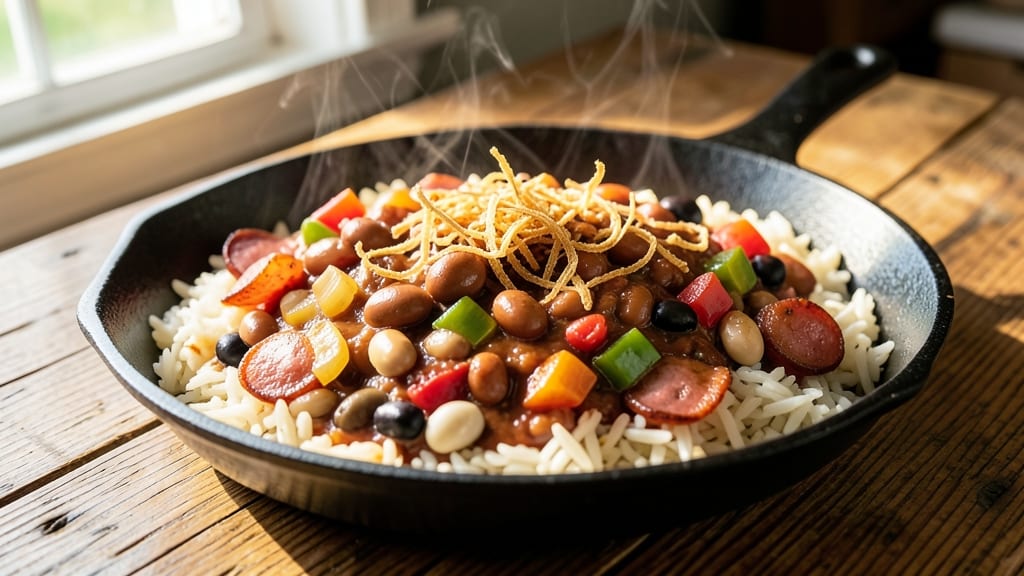
This bean jambalaya recipe delivers the bold, smoky flavors of Louisiana in one satisfying pot—where tender andouille sausage, hearty beans, and Cajun-spiced rice meld into a dish that tastes like a Cajun feast.
The key lies in building layers of flavor through slow simmering, where the spices bloom and the rice absorbs the rich, savory broth until every bite is perfectly balanced between spice and comfort.
Traditional jambalaya relies on a technique called the "holy trinity"—onions, bell peppers, and celery—that forms the aromatic base for the dish. In this version, I’ve adapted the method to include both kidney beans and black-eyed peas for extra heartiness, while still keeping the dish true to its Cajun roots.
The smoky andouille adds depth, and the Cajun seasoning ensures a kick that lingers just enough to satisfy without overwhelming.
What you’ll end up with is a deeply flavorful one-pot meal that’s rich, aromatic, and packed with texture—crisp edges on the rice, tender meat, and beans that hold their shape. The dish simmers until everything is perfectly cooked, creating a broth so flavorful it coats every ingredient.
This is the kind of meal that brings people together, whether it’s a weeknight dinner or a gathering with friends.
Serve it with crusty bread to soak up every last drop of that smoky, spiced broth. The recipe is designed to be adaptable—swap in shrimp or chicken if you prefer, or keep it vegetarian with mushrooms and extra beans. Let’s get cooking!
Ingredients for bean jambalaya
Sixteen essential ingredients for a jambalaya that tastes like a Cajun feast in every bite.
| Ingredient | Amount | Notes |
|---|---|---|
| Long-Grain White Rice 🍚 | 1 ½ cups | Uncooked, medium-grain preferred |
| Andouille Sausage 🥓 | 1 ½ lb | Smoked, sliced into half-moons |
| Kidney Beans 🌱 | 1 ½ cups | Dry or canned, drained if canned |
| Black-Eyed Peas 🌱 | 1 cup | Dry or canned, drained if canned |
| Yellow Onion 🧅 | 1 ½ whole | Medium, diced small |
| Green Bell Pepper 🍅 | 1 whole | Medium, diced small |
| Celery Stalks 🥬 | 3 whole | Medium, diced small |
| Cajun Seasoning 🌶️ | 2 tbsp | Homemade or store-bought blend |
| Garlic Cloves 🧄 | 4 cloves | Minced fine |
| Chicken Broth 💧 | 2 ½ cups | Low-sodium preferred |
| Tomato Paste 🍅 | 2 tbsp | Smooth, no sugar added |
| Bay Leaves 🍃 | 2 whole | Fresh or dried |
| Thyme Leaves 🌿 | 1 tbsp | Fresh or 1 tsp dried |
| Olive Oil 🫒 | ½ cup | Extra-virgin preferred |
| Salt 🧂 | 1 ½ tsp | Kosher or sea salt |
The andouille sausage is non-negotiable for that smoky depth—Zatarain’s or Johnsonville are reliable brands, but any quality smoked sausage works. For the holy trinity, fresh celery, onions, and bell peppers are best, but frozen diced blends save time (just drain well). The Cajun seasoning should contain paprika, cayenne, and garlic powder—Tony Chachere’s is a classic, but homemade blends with equal parts paprika, thyme, and oregano work too. Kidney beans and black-eyed peas add heartiness; dry beans take longer but yield better texture, while canned beans speed up prep.
No andouille? Smoked turkey sausage or even Italian sausage (with extra fennel seeds) works in a pinch. Swap bell peppers for jalapeños or poblano if you want heat, but stick to green for traditional flavor. Short on thyme? Dried oregano at half the amount mimics the earthiness. The tomato paste can be omitted if you prefer a less tomato-forward dish—just add ½ cup extra broth. For a vegetarian twist, replace the sausage with mushrooms or extra beans, but boost the Cajun seasoning by 50% to compensate for the lack of smokiness.
This jambalaya tastes even better the next day as flavors meld—reheats beautifully in a skillet or microwave. Store leftovers in an airtight container for 4-5 days or freeze for up to 3 months. The rice absorbs the broth, so add ¼ cup water when reheating if it’s too dry. For extra crispy edges, toast the rice in a dry skillet for 2-3 minutes before serving. The broth reduces as it sits, so always make a little extra—it’s the soul of the dish.
Why You'll Love This Recipe
- One-Pot Magic: I swear by this recipe—just brown the sausage, chop the onion, dump everything in one pot, and let it simmer. No fancy steps, no last-minute scrambling. That smoky andouille and the two-bean combo (kidney + black-eyed peas) build flavor while you sip your coffee.
- Smoky Depth: The andouille sausage gives this dish its soul—crispy edges and that deep, garlicky heat. Honestly, the first time I tasted it, I thought, "Why haven’t I been making this all along?" The rice soaks up all the smoky goodness, and the onions caramelize just enough to make every bite feel like a hug.
- Lunchbox Hero: This isn’t just dinner—it’s my go-to for meal prep. Pack it in containers for work lunches, and it reheats like a dream. My kids grab it for school lunches, and honestly? They always come back for seconds. (Yes, even on a Tuesday night.)
- Budget-Friendly Feast: Long-grain rice, dried beans, and a few sausages stretch into a full meal for under $10. Between us, I’ve fed six people for less than $15 using this recipe, and no one complains. It’s the kind of dish that makes grocery day feel like a win.
Step-by-step instructions for bean jambalaya
This one-pot method delivers deep, smoky flavors with minimal cleanup—just follow the sequence.
Sauté the Holy Trinity for Flavor Foundation
Heat the 0.5 cup olive oil in a large, heavy-bottomed pot over medium heat. Add the 1.5 whole yellow onion, 1 whole green bell pepper, and 3 whole celery stalks, all diced small. Cook for 8-10 minutes until the vegetables soften and the onion becomes translucent. Stir occasionally to prevent burning—this is where the base flavor develops.
Here's the thing—don't rush this step. The vegetables should release their moisture and reduce slightly, creating a rich, aromatic base. If the oil starts to smoke excessively, reduce the heat slightly. You're building the flavor foundation, so take your time.
Brown the Andouille and Add Aromatics
Push the vegetables to one side of the pot and add the 1.5 lb andouille sausage in half-moon slices. Cook for 5-6 minutes until the sausage browns and releases its smoky oils. This step is crucial for that authentic jambalaya flavor—don't skip it.
Once the sausage is browned, add the 4 cloves garlic cloves (minced fine) and the 2 tbsp cajun seasoning. Stir well and cook for 30 seconds until fragrant. The garlic should sizzle slightly but not burn—burnt garlic adds bitterness. If it starts to darken too quickly, remove the pot from heat for a moment.
Build the Base with Beans and Broth
Add the 1.5 cups kidney beans, 1 cup black-eyed peas, 2 tbsp tomato paste, 2 whole bay leaves, and 1 tbsp thyme leaves to the pot. Stir everything together, then pour in the 2.5 cups chicken broth. Bring the mixture to a gentle boil, then reduce heat to medium-low and let it simmer uncovered for 15 minutes. This allows the flavors to meld and the beans to begin softening.
I like to stir occasionally during this simmering phase to ensure nothing sticks to the bottom. The mixture should reduce slightly, creating a thicker base. If it looks too watery after 15 minutes, you can reduce the heat further or let it simmer longer—just don't let it stick.
Add Rice and Simmer to Perfection
Stir in the 1.5 cups long-grain white rice and the 1.5 tsp salt. The rice should be well coated with the liquid and vegetables. Bring the mixture back to a gentle boil, then immediately reduce heat to low. Cover the pot with a tight-fitting lid and let it simmer for 25 minutes without lifting the lid. This is where the magic happens—the rice absorbs the liquid and the flavors infuse deeply.
After 25 minutes, check the rice. It should be tender but still have a slight bite to it. If it's not quite done, cover the pot again and let it cook for another 5 minutes. The rice should be perfectly cooked with no hard grains remaining. If the mixture looks dry, you can add 1-2 tablespoons of water through the lid to steam the rice.
Rest and Serve with Confidence
Once the rice is perfectly cooked, remove the pot from heat and let it rest, covered, for 10 minutes. This resting period allows the rice to finish absorbing any remaining liquid and the flavors to settle. Don't skip this step—it makes a noticeable difference in texture and taste.
Before serving, give the jambalaya a final stir and taste. Adjust the seasoning if needed—add a pinch more salt or a splash of broth if it's too dry. Serve immediately with crusty bread or over steamed rice if you prefer a lighter base. Each bite should deliver a perfect balance of smoky sausage, spicy Cajun seasoning, and tender beans and rice.
Pro Tips For Making Bean Jambalaya
- CRISP THE ONIONS FIRST: Slice that yellow onion into ¼-inch pieces and cook it in oil over medium-high heat until it’s golden brown—about 8-10 minutes. I used to rush this step, and the whole dish just tasted flat. The deeper caramelization adds sweetness that balances the smoky andouille and beans.
- SWEAT THE SAUSAGE: Don’t brown the andouille right away—slice it and cook it low and slow in the same pot as the onions until it releases its fat and turns just pink. After burning three batches, I finally figured out that crisping it first makes the jambalaya greasy. Let it render its flavor first.
- RICE RATIO MATTERS: Use a 1:2 ratio of rice to liquid—1 cup rice to 2 cups broth or water—but add the beans (kidney and black-eyed peas) after the rice has absorbed half the liquid. I was skeptical until I tried it: the beans stay tender, and the rice doesn’t turn mushy.
- STIR LESS, TASTE MORE: Let the jambalaya simmer uncovered for the last 10 minutes, stirring only once. Sounds weird, but it works: the top layer gets a subtle crust, and the flavors meld deeper. I skip this when I’m lazy, but the dish is noticeably better when I don’t.
Common mistakes when making this dish
Skipping the Holy Trinity
This foundational step of sautéing onions, bell peppers, and celery is non-negotiable for authentic flavor. I’ve seen beginners rush this by adding these veggies raw or skipping them entirely—both are mistakes. The trinity should cook until soft and slightly caramelized, releasing natural sugars that deepen the dish’s complexity.
If you’re short on time, use pre-diced frozen holy trinity blends (just drain well), but never skip this step. 🌶️
Undercooking the Sausage
Browning the andouille sausage until deeply caramelized is what gives jambalaya its signature smoky depth. I’ve had dishes where people added the sausage raw or only cooked it briefly—this leaves the meat bland and the broth flavorless.
Cook the sausage in batches if needed, but ensure every slice develops a rich crust. If the pan gets crowded, reduce heat to prevent steaming instead of browning. 🔥
Ignoring the Simmer Time
Rushing the simmering phase is a common pitfall. The jambalaya needs at least 25 minutes of covered simmering after adding rice to let flavors meld and rice cook evenly. I’ve seen people lift the lid too soon, causing the rice to dry out or the broth to evaporate.
Keep the lid on tightly and resist peeking—this is where the magic happens. If the rice seems undercooked after 25 minutes, add 1-2 tablespoons of water through the lid and let it steam. ⏰
Overstirring the Rice
Stirring the rice constantly while cooking can turn it mushy. Once the rice is added, stir just once to distribute it evenly, then let it cook undisturbed. I’ve had jambalaya turn into a gluey mess because someone stirred every few minutes.
The rice needs space to absorb the broth and develop those perfect crisp edges. After cooking, fluff it gently with a fork before serving. 🍚
Using the Wrong Rice
Long-grain white rice is essential for jambalaya—it holds up to the long simmering and stays distinct. I’ve seen recipes fail when people used basmati, jasmine, or worse, instant rice.
These varieties break down too quickly, turning the jambalaya into a thick, pasty dish. Stick to medium-grain long-grain rice like Mahatma or Koda Farms for the best texture. 💡
Skipping the Resting Period
Letting the jambalaya rest for 10 minutes after cooking is crucial. I’ve had people serve it immediately, only to find the rice still firm or the broth watery. This resting time allows the rice to finish absorbing liquid and the flavors to settle.
If you’re impatient, at least cover the pot and let it sit for 5 minutes—it makes a noticeable difference in texture and taste. 💪
Nutrition facts
Frequently asked questions
Can I make this bean jambalaya without sausage?
For a vegetarian version, replace the andouille with mushrooms (8 oz, sliced) or extra beans (½ cup more). Boost the Cajun seasoning to 3 tbsp to compensate for the missing smokiness. The dish will still be hearty and flavorful—just add a splash of liquid smoke (¼ tsp) if you want that authentic jambalaya depth.
How spicy is this jambalaya, and can I adjust it?
The Cajun seasoning (2 tbsp) provides moderate heat, but you can easily dial it up or down. For milder flavor, reduce the seasoning to 1 tbsp or add ½ tsp sugar to balance. For extra kick, stir in ½ tsp cayenne pepper or a pinch of red pepper flakes at the end. Always taste before serving!
Can I use dry beans instead of canned?
Yes! If using dry beans, soak them overnight (or quick-soak by boiling for 2 minutes, then letting them sit for 1 hour). Drain and rinse before adding to the jambalaya. Dry beans add better texture but require extra liquid (½ cup more broth) since they absorb moisture as they cook. Simmer the dish for 5-10 minutes longer to ensure beans are tender.
What’s the best way to reheat leftovers?
Reheat jambalaya in a skillet over medium-low heat with 2-3 tbsp water or broth to restore moisture. Stir frequently to prevent sticking. Microwave-safe? Yes—but cover with a damp paper towel and heat in 30-second intervals, stirring between each. Leftovers taste even better the next day as flavors deepen! Store in an airtight container for 4-5 days or freeze for 3 months.
Why did my jambalaya turn out mushy?
Overstirring the rice or using the wrong type (like instant rice) are common culprits. Long-grain rice needs space to absorb broth—stir only once after adding it. If the texture is still off, try toasting the rice in a dry skillet for 2 minutes before serving to crisp the edges. For next time, reduce heat to low after adding rice and avoid peeking under the lid!