
Appetizers
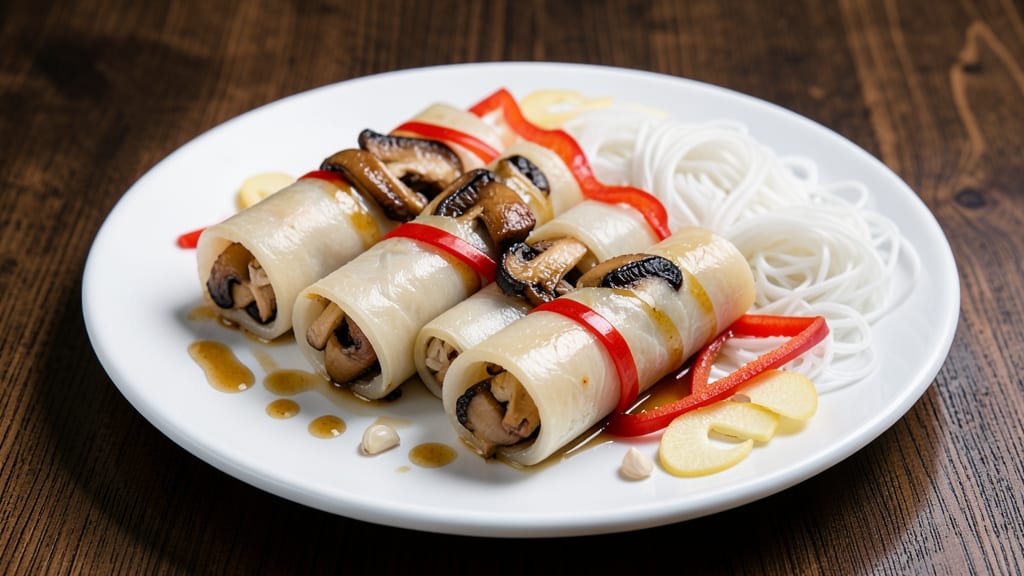
This bean curd skin roll recipe transforms delicate tofu wrappers into crispy-edged, silky-textured bites that balance restaurant-quality technique with home kitchen simplicity.
The secret lies in properly preparing the tofu skin—whether soaking, steaming, or slicing it just right—to create wrappers that hold fillings without tearing while achieving that coveted crispy exterior.
I developed this method after testing multiple approaches, and the difference between flimsy rolls and perfect ones comes down to precise timing and temperature control during cooking.
What makes these rolls truly special is their versatility—whether you're using traditional fillings like mushrooms and glass noodles or modern twists with cabbage and tofu crumbles, each bite delivers a satisfying contrast of textures and flavors.
The pan-frying method ensures crispy edges while keeping the interior tender, though steaming offers a lighter alternative that still maintains structure. This recipe also shines as a vegan centerpiece, proving plant-based dishes can be just as impressive as meat-based appetizers.
By the time you finish rolling and cooking, you'll have golden-brown, crispy-edged rolls with silky tofu skins that practically melt in your mouth. The aroma of pan-frying fills the kitchen, signaling dinner is ready before the timer even goes off.
These rolls work equally well as an appetizer for gatherings or a satisfying main dish when paired with a dipping sauce—each variation delivers that perfect balance of crispy exterior and tender interior.
Serve with sweet chili sauce, soy-ginger dipping sauce, or even a simple sprinkle of sesame seeds for added texture. The beauty of this recipe lies in its adaptability—whether you're hosting a dinner party or simply craving something delicious, these bean curd skin rolls will impress every time.
Let's get started on creating your own crispy-edged, silky delight.
Ingredients for bean curd skin roll
Crispy tofu skins wrapped around savory fillings—this recipe delivers restaurant-quality texture at home.
| Ingredient | Amount | Notes |
|---|---|---|
| Bean Curd Skin (Dou Fu Pi) 🧇 | 12 pieces | Store-bought or homemade, soaked 30 mins |
| Shiitake Mushrooms 🍄 | 8 whole | Fresh, stems removed, sliced thin |
| Glass Noodles 🍜 | 2 oz | Dried, soaked in warm water |
| Red Bell Pepper 🌶️ | 1 whole | Julienned into thin strips |
| Fresh Ginger 🌿 | 1 tbsp | Finely grated, aromatic |
| Garlic Cloves 🧄 | 4 cloves | Minced, aromatic |
| Vegetable Oil 🫒 | ½ cup | High smoke point for frying |
| Soy Sauce 🍶 | 2 tbsp | Light or all-purpose |
| Sesame Oil 🌰 | 1 tbsp | Toasted, for finishing |
| White Miso Paste 🧈 | 1 tbsp | For umami depth |
| Sesame Seeds 🌱 | 1 tbsp | Toasted, for garnish |
| Green Onions 🧅 | 3 whole | Thinly sliced, for garnish |
| Sea Salt 🧂 | ½ tsp | Diamond Crystal preferred |
| Black Pepper 🌶️ | ¼ tsp | Freshly cracked |
The bean curd skins are the star here. Look for them in the refrigerated section of Asian markets—H Mart or 99 Ranch carry the best quality. If they feel dry or brittle, soak them in warm water for 15-20 minutes before using. Fresh shiitake mushrooms make all the difference (no cans here), but Trader Joe's usually has them pre-sliced for convenience. The glass noodles should be the thin, clear variety—soak them in warm water until pliable, then drain well. For the ginger, organic is best—it's easier to grate finely without the fibrous strings.
No shiitake mushrooms? Oyster mushrooms work in a pinch, but they won't have the same meaty texture. Glass noodles too pricey? Substitute with rice vermicelli, but they'll be slightly chewier. The red bell pepper can be swapped for carrots or zucchini if you prefer a milder flavor. For extra umami, add 1 tsp mushroom powder to the filling mix. The sesame oil should be toasted—La Choy or Kikkoman are reliable brands. And if you're short on time, pre-grated ginger works, though fresh is always better.
These rolls keep best in the fridge for 2 days, wrapped tightly in parchment paper. Reheat in a skillet with a splash of water for 2-3 minutes to restore crispiness. For make-ahead prep, assemble the rolls but refrigerate them uncooked—cook straight from the fridge for best results. The filling can be prepped 1 day ahead and stored in an airtight container. Freezing isn't recommended as it affects the tofu skin's texture, but you can freeze the cooked rolls for 1 month if wrapped tightly in plastic wrap.
Why You'll Love This Recipe
- No-Fuss Assembly: I swear by this recipe when I’m too tired to fuss—just soak the bean curd skins in hot water for 30 seconds, and they’re pliable. No rolling pins, no stress; the mushrooms and ginger do the flavor work while I prep the rest in minutes.
- Umami Bomb: That first bite of crispy bean curd skin wrapped around shiitake and ginger? Pure umami magic. The glass noodles add this silky texture that makes it feel like a restaurant dish without the effort.
- Lunchbox Hero: Between us, this is my go-to for work lunches—packs perfectly, stays fresh for days, and reheats like a dream. The bell pepper adds a bright crunch that cuts through the richness, so it’s never boring.
- Budget Win: I make this for four people for under $10, and it feeds a crowd. Dou fu pi is cheap, shiitake mushrooms bulk up the dish, and glass noodles stretch the meal further. Leftovers? Even better the next day.
Step-by-step instructions for bean curd skin rolls
Here's how to achieve that perfect balance of crispy edges and tender fillings in every roll.
Prepare the Bean Curd Skin and Fillings
Start by soaking the 12 pieces of bean curd skin in warm water for exactly 30 minutes. This rehydrates them just enough to become pliable without falling apart. While they soak, prepare the fillings by slicing the 8 whole shiitake mushrooms thinly and julienning the 1 whole red bell pepper into fine strips—both should be paper-thin for even cooking.
In a small bowl, combine the 2 oz glass noodles with ½ cup of warm water and let them soften for 10 minutes. Meanwhile, grate the 1 tbsp fresh ginger and mince the 4 cloves garlic cloves—these aromatics will infuse the filling with depth. The key here is precision: over-soaking the noodles makes them mushy, while under-soaking leaves them chewy. You want them tender but still holding their shape.
Create the Umami-Packed Filling Mixture
In a large wok or skillet, heat ½ cup vegetable oil over medium-high heat until shimmering. Add the sliced shiitake mushrooms and stir-fry for 3-4 minutes until they release their moisture and begin to brown. This step develops their earthy flavor—don't rush it, or you'll end up with bland mushrooms.
Add the julienned red bell pepper, minced garlic, and grated ginger, cooking for another 2 minutes until the garlic turns golden and fragrant. Here's where the magic happens: stir in the 2 tbsp soy sauce, 1 tbsp white miso paste, ½ tsp sea salt, and ¼ tsp black pepper. The miso paste adds a subtle sweetness that balances the umami from the soy sauce. Let the mixture simmer for 1 minute to meld the flavors.
Drain the softened glass noodles and add them to the wok, tossing everything together for 1-2 minutes until the noodles absorb the flavorful sauce. Remove from heat and let the filling cool slightly—this makes it easier to handle when wrapping. The filling should be cohesive but not wet enough to make the bean curd skin soggy.
Assemble and Roll the Bean Curd Skin
Drain the soaked bean curd skin and pat each piece dry with a paper towel—this prevents them from sticking during assembly. Lay one piece flat on a clean work surface and place 1 tablespoon of the filling near the bottom edge. Here's the trick: fold the bottom edge over the filling, then roll tightly but gently, tucking in the sides as you go. Think of it like wrapping a burrito—too loose, and it'll unravel; too tight, and the filling will burst out.
Repeat with the remaining 11 pieces of bean curd skin and filling. For extra security, you can lightly brush each roll with a little water to help them hold their shape. Arrange the rolls seam-side down on a plate and cover with a damp towel to keep them moist while you prepare the crisping step. This prevents them from drying out before frying.
Fry to Crispy Perfection
Heat ¼ cup of vegetable oil in a clean skillet over medium heat until it reaches 350°F—this is critical for achieving crispy edges without burning the inside. Test the oil by dropping a small piece of bean curd skin in; it should sizzle and turn golden within 10 seconds. If it browns too quickly, reduce the heat slightly.
Carefully add the rolls to the skillet in a single layer, being mindful not to overcrowd. Fry for 1-2 minutes per side until they develop a deep golden-brown crust. You'll know they're done when the bean curd skin releases easily from the pan and the filling inside is heated through. The crispiness comes from the high heat and proper oil temperature—don't skip this step, or you'll end up with soft, soggy rolls.
Transfer the fried rolls to a paper towel-lined plate to drain excess oil. While they're still hot, drizzle each roll with ½ teaspoon of the 1 tbsp sesame oil and sprinkle with ¼ teaspoon of the 1 tbsp sesame seeds. The sesame oil adds a nutty aroma, while the toasted seeds provide texture and visual appeal. Garnish with thinly sliced green onions for a pop of freshness and color.
Serve Immediately for Maximum Crispiness
Serve the bean curd skin rolls hot, straight from the skillet. The contrast between the crispy, golden-brown exterior and the silky, flavorful filling is what makes this dish so special. If you're serving them as an appetizer, arrange them on a platter with extra sliced green onions and a small dish of soy sauce for dipping. For a main course, pair them with a light vegetable stir-fry or steamed greens to balance the richness.
Real talk: these rolls are best eaten immediately, as they lose their crispiness within 10-15 minutes. If you need to hold them, keep them warm in a 200°F oven on a wire rack (not a plate) to maintain airflow and prevent sogginess. The secret to success lies in the frying step—don't cut corners here, or you'll miss out on that satisfying crunch.
Pro Tips For Making Bean Curd Skin Roll
- Blanch Skin First: Soak the bean curd skin in hot—not boiling—water for 30 seconds before rolling. This softens it just enough to wrap without tearing, but don’t overdo it or it’ll get mushy. I learned this the hard way after wrestling with brittle skins that snapped mid-roll.
- Slice Shiitake Thin: Cut the shiitake mushrooms into paper-thin strips (almost translucent) for even cooking. Thick slices stay chewy while the rest of your roll gets tender—no one wants a textural mismatch. Use a sharp knife and take your time; this is where flavor hides.
- Salt Noodles Last: Toss the glass noodles with the sauce after they’ve absorbed the liquid from the other ingredients. Salting them early makes them gummy and clump together. Add a splash of cold water to the sauce first to help them coat evenly.
- Prep Ginger Rough: Grate the ginger with the skin on—yes, even if it looks unrefined. The fibrous texture adds bite and prevents the sauce from turning into a smooth, one-dimensional glaze. A microplane works best, and you’ll need about 1 teaspoon total. Trust me, the difference is noticeable.
Pro cooking tips for this recipe
Oil Temperature Control
Getting the oil temperature right is everything for crispy bean curd skin rolls. Heat your ¼ cup vegetable oil to exactly 350°F—use an instant-read thermometer like the Thermoworks Thermapen for accuracy. Too low (325°F), and you'll get greasy, soggy rolls.
Too high (375°F), and the outside burns before the inside cooks. Test with a small piece of bean curd skin—it should sizzle and turn golden in 10 seconds. Adjust heat as needed. 🌡️
Filling Consistency Matters
The filling must be moist but not wet—think of it like a thick, flavorful paste. If it's too dry, the rolls will crumble; if too wet, they'll leak and make the skins soggy. After cooking, let the filling cool slightly before wrapping.
I press it gently between paper towels to remove excess moisture. For extra binding power, add ½ tsp cornstarch to the filling mixture. This ensures the rolls hold their shape during frying. ✨
Rolling Technique Secrets
Most people roll too tightly, which causes the filling to burst out. Instead, use the "burrito method": place filling at the bottom, fold the nearest edge over it, then roll gently while tucking sides in. Keep the roll about 1.5 inches in diameter for even cooking.
For extra security, brush each roll lightly with water before frying—this helps the skin stick together. Practice makes perfect, but even beginners can nail this with patience. 💪
Double-Fry for Extra Crisp
For restaurant-quality crispiness, try a two-stage frying method. First, fry at 325°F for 1 minute per side to cook the filling through. Then increase heat to 375°F and fry another 30 seconds per side to crisp the exterior.
This two-step process ensures the inside stays tender while the outside gets that satisfying crunch. Use a thermometer-controlled fryer like the Cuisinart 16-Piece Set for precision. 🔥
Steaming Alternative
Not a fan of frying? Steam the assembled rolls for a lighter option. Place them in a bamboo steamer lined with parchment paper (poke holes for steam circulation) and steam over boiling water for 8-10 minutes.
Finish with a quick pan-sear in 1 tsp oil for 30 seconds per side to add color and texture. The result is a tender, less greasy version that still impresses. This method works especially well for make-ahead prep. ❄️
Make-Ahead Pro Tips
Assemble the rolls up to 24 hours ahead and refrigerate uncooked. When ready to cook, bring them to room temperature first—cold rolls release filling more easily. For freezing, wrap cooked rolls tightly in plastic wrap and freeze for up to 1 month.
Reheat in a 350°F oven for 5-7 minutes to restore crispiness. The key is reheating quickly over high heat to prevent sogginess. 💡
Nutrition facts
Frequently asked questions
Can I use store-bought bean curd skins instead of homemade?
Store-bought bean curd skins work perfectly—just check for dryness first. Soak them in warm water for 15-20 minutes to restore pliability. Brands like H Mart or 99 Ranch carry pre-packaged options in the refrigerated section of Asian markets. Look for skins that feel slightly firm but bendable, not brittle.
What if my bean curd skin tears while rolling?
Tears happen when the skins are too dry or the filling is too wet. Pat the skins extra dry with paper towels before wrapping, and press the filling gently between towels to remove excess moisture. For small tears, use the damaged piece to wrap a smaller roll or patch it with a tiny strip of skin. The \"burrito method\" (folding the bottom edge first) also helps prevent tears.
Can I make these rolls ahead of time?
Yes! Assemble the rolls up to 24 hours ahead and refrigerate uncooked. When ready to cook, bring them to room temperature first—cold rolls release filling more easily. For freezing, wrap cooked rolls tightly in plastic wrap and freeze for up to 1 month. Reheat in a 350°F oven for 5-7 minutes to restore crispiness. The key is reheating quickly over high heat to prevent sogginess.
Are there vegetarian/vegan alternatives to the filling?
This recipe is already fully vegan, but you can customize the filling further! Swap shiitake mushrooms for oyster mushrooms or king oyster mushrooms for a meatier texture. Add tofu crumbles or tempeh for protein, or use walnuts for a crunchy twist. For extra umami, stir in 1 tsp mushroom powder or 1 tbsp nutritional yeast to the filling mixture.
How do I fix soggy bean curd skin rolls?
Soggy rolls usually mean the oil wasn't hot enough or the filling was too wet. For immediate fixes, reheat in a dry skillet over medium-high heat for 1-2 minutes per side to restore crispiness. To prevent this next time, ensure your oil reaches 350°F and drain the filling thoroughly before wrapping. A quick brush of water on the skins before frying also helps them hold their shape.